In the latest Netflix release, ‘Made in Korea’, we follow the journey of Shenba, a young woman from a picturesque hill town in Tamil Nadu, who has been captivated by Korean culture since her childhood. Her commitment to immersing herself in K-dramas is so intense that it leads her to precariously stand atop an elephant, trying to catch a weak internet signal. This striking visual serves as a metaphor for her determination, but unfortunately, the film, directed by Ra Karthik, fails to explore the deep-rooted ties between Tamilian culture and the Korean wave.
The narrative hints at a legendary connection between a Korean queen and Tamil roots, yet it stops short of delving into the specific cultural elements that have led many young Indians, like Shenba, to embrace Korean entertainment. Instead, we see Shenba using Korea more as a backdrop for her personal growth rather than a space for cultural exchange. She relies heavily on her boyfriend, Mani, played by Rishikanth, to make the pivotal decision to move to Seoul for work, presenting a rather passive protagonist.
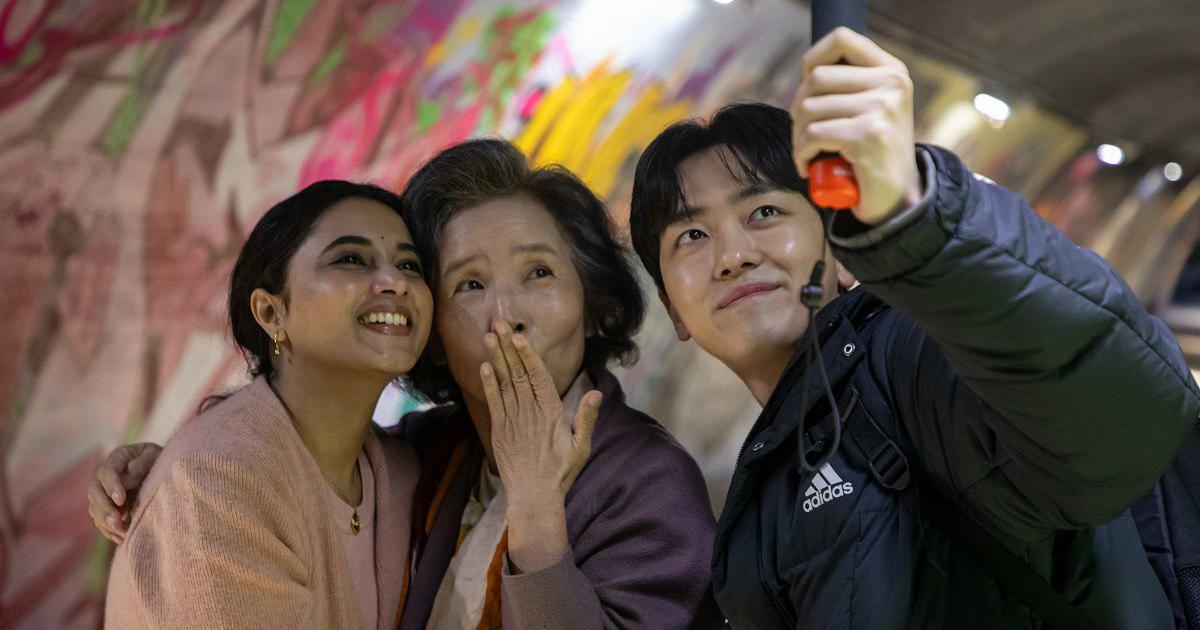
Interestingly, the film suggests that landing a job in Seoul is a breeze. However, once Shenba arrives, her experience turns into an emotional rollercoaster. The absence of Mani and the revelation that her much-anticipated job is nothing but a scam leave her feeling lost and disheartened. It’s in her moments of despair that the story introduces two key characters: a supportive young man, No Ho-jin, and an elderly woman portrayed by Park Hye-Jin, known for her role in ‘Squid Game’. These figures ultimately guide Shenba towards finding her community, independence, and a sense of purpose in the bustling city.
In contrast to the vibrant culture of Seoul, the film seems to miss a golden opportunity to weave in more of the nuances that connect Indian and Korean cultures. While Shenba’s journey is relatable, the lack of depth in exploring the reasons behind her obsession with Korea leaves viewers longing for more. ‘Made in Korea’ could have been a celebration of cross-cultural ties, yet it ends up feeling like a missed chance to ask the bigger questions about identity and belonging.