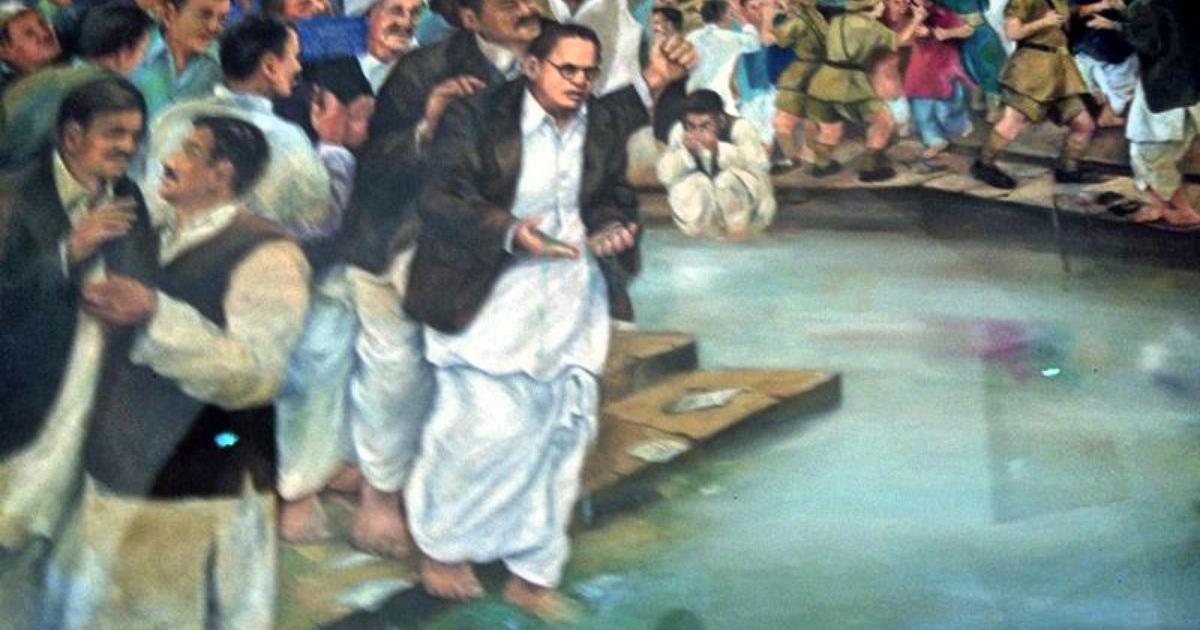
On Mahad Satyagraha Day, a new book sheds light on an intriguing intersection between two formidable thinkers — Friedrich Nietzsche and B.R. Ambedkar. While Nietzsche famously lauded the Manusmriti, the ancient Brahmanic text, in 1895, Ambedkar took the drastic step of burning it in a public display of protest in 1927. This paradox of admiration and condemnation is explored in the recently released work, The Ambedkar–Nietzsche Provocations: The Genius of the Chandala and the Gospel of the Superman, authored by Ankit Kawade, who was honored with the Navayana Dalit History Fellowship.
Kawade’s exploration began during his undergraduate years in Pune from 2013 to 2016, where he frequently passed by a large duplex house intriguingly named “Manusmruti.” This homage to a text that has long been criticized for its disparaging views on women and marginalized communities sparked questions in his mind. How could a high-caste Hindu woman choose to name her residence after a document so infamous for its casteist and misogynistic ideologies? This contemplation led Kawade to delve deeper into the complexities surrounding the Manusmriti and its implications on Indian society.
The Manusmriti, or Manavadharmasastra, has faced scrutiny for centuries, with its codification of social hierarchies that have marginalized vast sections of society. The increasing awareness of its derogatory nature is evident in recent political movements as well. In November 2022, members of the Viduthalai Chiruthaigal Katchi, an anti-caste political party in Tamil Nadu, distributed over 100,000 copies of a 32-page booklet that excerpts from the Manusmriti, making its contents accessible to the public. This initiative, led by Thol. Thirumavalavan, aims to confront the historical injustices perpetuated by such texts and to challenge their ideological underpinnings.
In his book, Kawade seeks to unravel how two thinkers could arrive at such contrasting conclusions from the same text. Nietzsche’s approval of the Manusmriti stands in stark contrast to Ambedkar’s vehement rejection. The author examines the philosophical differences that shaped their ideologies and how these reflections continue to resonate in contemporary discussions on caste, gender, and identity in India. Through a nuanced comparison, Kawade invites readers to question the relevance and interpretation of ancient texts in today’s socio-political landscape.
This profound examination of Nietzsche and Ambedkar offers valuable insights into the ongoing debates surrounding caste and feminism in India. As society becomes increasingly aware of the implications of texts like the Manusmriti, the discussions initiated by Kawade’s work urge readers to reflect on their historical significance and contemporary interpretations. The contrasting views of Nietzsche and Ambedkar provide a foundation for re-evaluating the legacy of such texts and their impact on current societal structures.