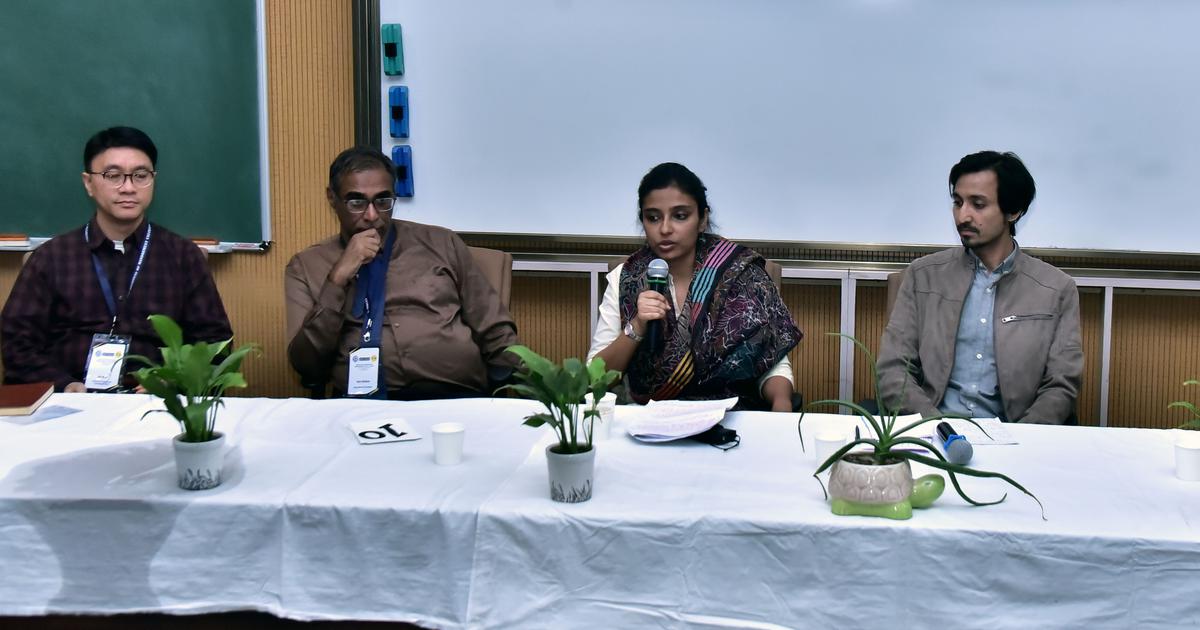
In a rapidly evolving world, the interplay of language, facts, and authority in literature and translation has never been more critical, especially in South Asia. This was the focal point of a thought-provoking conference titled “Making and Unmaking Facts,” organized by Fact or Value, DECISION, and IIM Calcutta in February 2026. The event brought together scholars and experts to delve into how facts are constructed, validated, and contested within various social and political landscapes.
The relevance of this dialogue is heightened in our current context, where public discourse is often muddled by notions of post-truth, misinformation, and competing claims of expertise. As the boundaries of factual knowledge blur, the question arises: who determines what qualifies as truth? This conference sought to navigate these complex waters while broadening conversations around translation, authority, science communication, artificial intelligence, and the inherent risks associated with both inflexible dogmatism and unbridled relativism.
Among the prominent voices at the conference were Anuj Misra, Professor of the History of Science; Bill Mak, Professor of History of Science at the University of Science and Technology; and Doyeeta Majumder, who led the discussions. They were joined by scholars from various disciplines, including economics and public policy, indicating the multi-faceted nature of the issues at hand.
Doyeeta Majumder initiated the conversation by probing how language and translation serve as mediators in the making and unmaking of facts. This inquiry is particularly pertinent in a multilingual nation like India, where the nuances of language can dramatically influence the interpretation of information. The panelists emphasized that translation is not merely a linguistic exercise but a complex process involving cultural and contextual sensitivities.
The dialogue also illuminated the role of authority in the realm of knowledge dissemination. As misinformation proliferates, the need for reliable sources becomes paramount. The group discussed how academic disciplines contribute to establishing authority but also face challenges in maintaining it amidst shifting societal values. The balance between expertise and public access to information was a recurring theme, as speakers highlighted how technology, especially AI, complicates these dynamics.
The risks associated with rigid certainty were underscored, particularly in the context of how knowledge is often weaponized in political narratives. Conversely, corrosive relativism threatens the very fabric of informed discourse, making it difficult to reach consensus on even basic facts. The conference’s discussions beckon a deeper reflection on the responsibility borne by translators, scholars, and communicators in this age of information overload.
As South Asia grapples with the complexities of information and its translation, the insights generated from events like this conference could provide a foundation for future discourse. By examining the intersection of language and knowledge, participants emphasized the importance of critical engagement in an era where the truth is often contested. The dialogue at IIM Calcutta serves as a reminder that the quest for understanding in a multi-lingual and multicultural society must continue, especially as the stakes of misinformation grow ever higher.