Exploring the Possibility: Could India’s Spiritual Leadership Redefine the Muslim World?
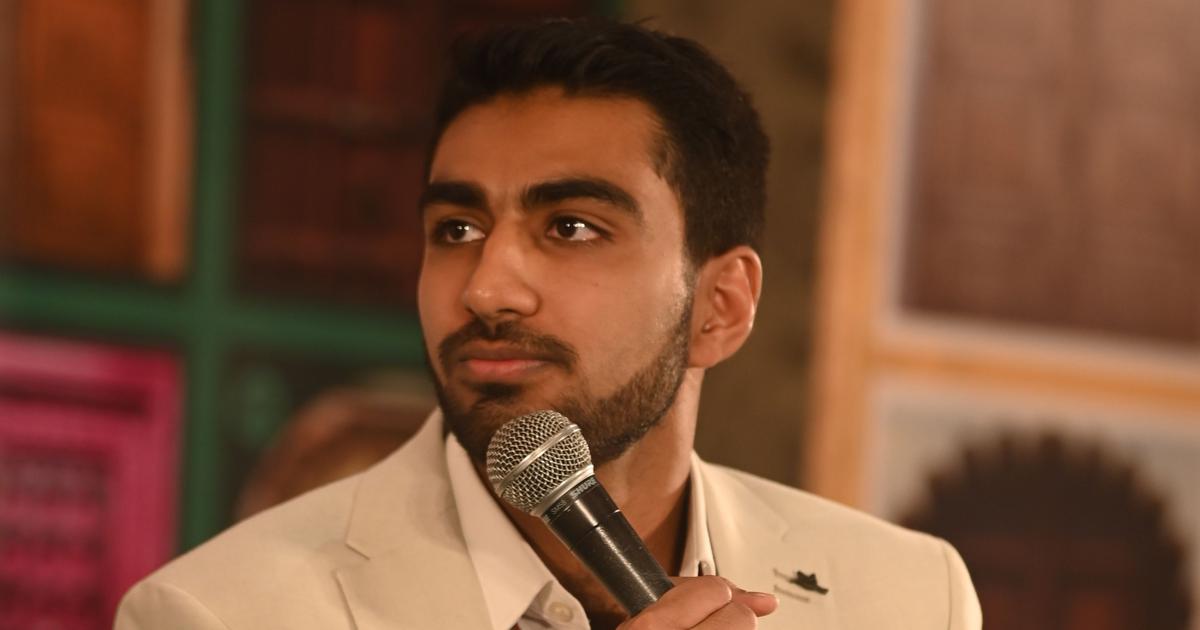
In a fascinating exploration of history, journalist Imran Mulla delves into the intertwined destinies of the last Ottoman caliph, Abdulmejid II, and the illustrious Asaf Jahi dynasty of Hyderabad in his debut book, Indian Caliphate: Exiled Ottomans and the Billionaire Prince. This narrative unfolds against the backdrop of the early 20th century, a time when the spiritual leadership of the Muslim world could have pivoted towards India.
When Mulla first encountered the last Ottoman caliph during his studies at Cambridge, he could not have foreseen how this chance meeting would lead him to unearth significant historical connections between two powerful figures separated by geography and time. Mulla’s journey took him from the serene landscapes near Ellora to the archives of London, revealing a captivating tale that combines personal anecdotes with broader geopolitical themes.
At the heart of Mulla’s narrative lies a question that has lingered in the collective consciousness: could the remnants of the Ottoman Empire’s spiritual authority have found a new home in India? Through meticulous research, Mulla presents the life of Abdulmejid II, who, after the collapse of his empire, sought refuge far from his homeland. His story is interwoven with that of the Nizam of Hyderabad, a ruler with vast wealth and a cautious approach, navigating the complexities of a world in transition.
As Mulla recounts the life of Princess Durrushevar, who made the poignant journey from Istanbul to Nice and ultimately to Hyderabad, the narrative becomes not only a historical account but also a personal saga of resilience and adaptability. Durrushevar’s life exemplifies the struggle of maintaining cultural identity while embracing new realities, painting a picture of a woman who carved a unique path in a time of great upheaval.
Moreover, Mulla’s work sheds light on the dynamics of power, identity, and spirituality within the Muslim community during a crucial period. By examining the ambitions of the Nizam and the British colonial strategies that shaped the era, he illustrates the diversity and complexity of Muslim leadership in India. This historical reflection resonates with contemporary discussions on identity and leadership within the Muslim world, inviting readers to reconsider the legacy of the Ottoman Empire and its potential influence on modern spiritual governance.
Mulla’s insights invite us to ponder how the intersections of past and present can shape the future of spiritual leadership in the Muslim community. As India continues to emerge as a significant player on the global stage, the reflections drawn from the lives of Abdulmejid II, the Nizam, and Durrushevar may very well inform the discourse surrounding Islamic leadership today.