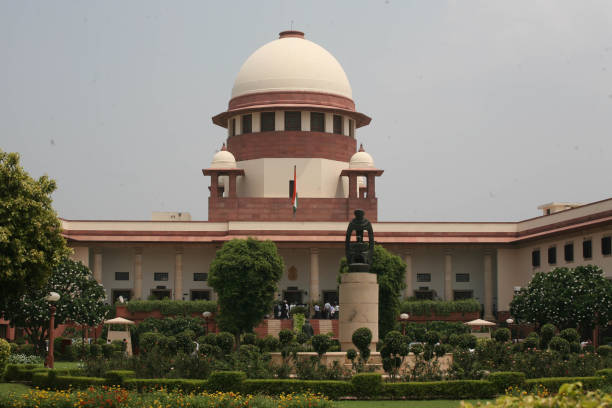
In a landmark observation, the Supreme Court of India has provided critical clarity on the intersection of religious identity and legal protections for Scheduled Castes (SC). The ruling emphasizes that the benefits and legal safeguards tied to SC status are fundamentally linked to specific religious affiliations.
The Core Ruling:
The Supreme Court stated that individuals who convert to religions other than Hinduism, Buddhism, or Sikhism will result in the loss of their Scheduled Caste status. This decision has significant implications for how social benefits and legal protections are distributed among converted individuals.
Loss of Legal Protections:
One of the most impactful aspects of this ruling concerns the SC/ST Prevention of Atrocities Act, 1989. The court clarified:
A person who has converted to Christianity cannot claim SC status.
Consequently, such individuals are ineligible to invoke the protections offered under the SC/ST Prevention of Atrocities Act.
Why It Matters:
This interpretation reinforces the current legal framework where SC status is reserved for those within the fold of religions traditionally recognized under the umbrella of the Scheduled Caste order. For many, this marks a definitive boundary on how constitutional reservations and special penal laws are applied in a religiously diverse landscape.
Key Takeaway:
Religious conversion to faiths like Christianity or Islam (implied by the exclusion of Hinduism, Buddhism, and Sikhism) effectively strips an individual of the legal standing required to use SC-specific legislative benefits.