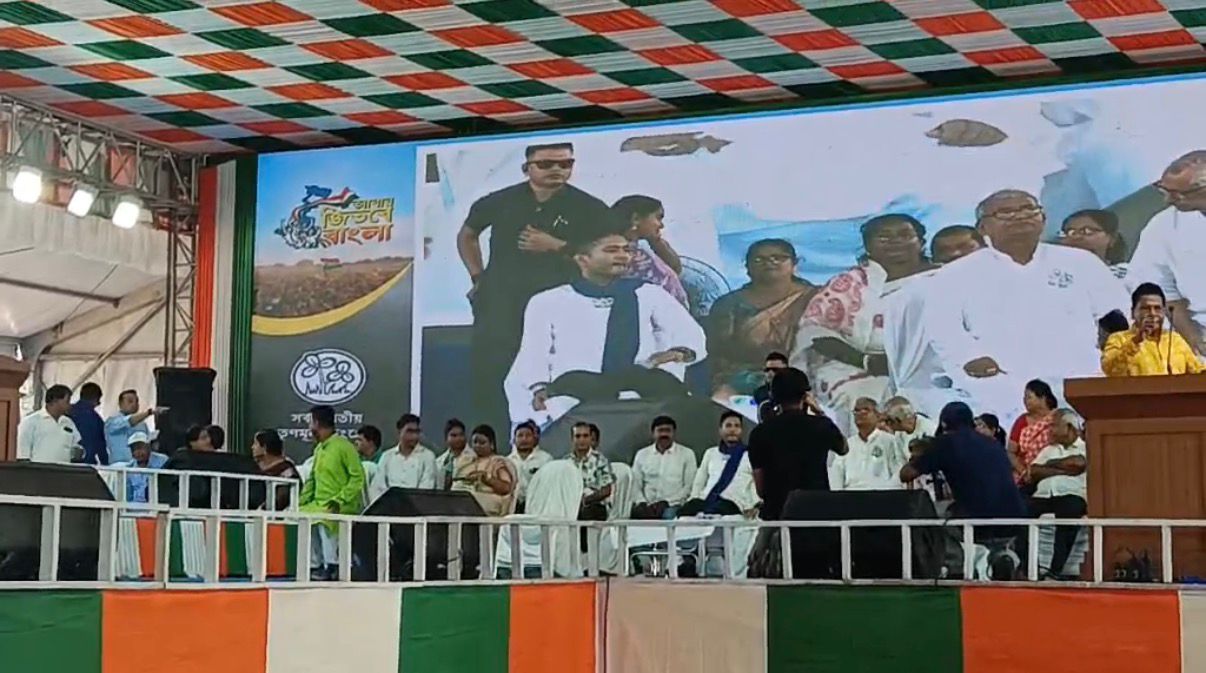
The recent public gathering, as seen in the visuals, reflects growing political engagement and concern among citizens regarding governance in West Bengal. Under the leadership of All India Trinamool Congress (AITMC), several key developmental commitments remain unfulfilled, raising serious questions about administrative efficiency and long-term planning.
One of the most prominent failures is the long-pending Ghatal Master Plan, which was envisioned as a permanent solution to the chronic flooding in Ghatal and adjoining areas. Despite repeated assurances over the years, the project has seen little to no tangible progress. Seasonal floods continue to disrupt lives, agriculture, and local economies, highlighting a lack of urgency and execution from the state government.
Equally concerning is the decline in education and industrial growth. Government schools and colleges face issues such as inadequate infrastructure, teacher shortages, and declining academic standards. At the same time, industrial stagnation has led to rising unemployment, forcing many youths to migrate outside the state in search of better opportunities. This stands in stark contrast to the earlier industrial push during the tenure of Communist Party of India (Marxist) (CPIM), when structured policies aimed at land reforms and industrialization created a more stable economic base.
In today’s address, Abhishek Banerjee highlighted the development of a “tea and snacks industry” as a potential growth driver. However, such statements appear disconnected from the larger structural issues facing the state. Small-scale industries alone cannot compensate for the lack of large and medium industrial investments, nor can they address widespread unemployment.
In conclusion, the current governance model under AITMC reflects gaps in planning, implementation, and vision. A policy shift towards more structured, inclusive, and industry-focused governance—reminiscent of CPIM’s earlier framework—may be essential to revive West Bengal’s socio-economic trajectory.
Disclaimer:
The views expressed in this article are solely those of the author and are based on their personal analysis. They do not reflect the official views, position, or editorial stance of the Indian Press Union (IPU). Readers are encouraged to verify information through official sources.