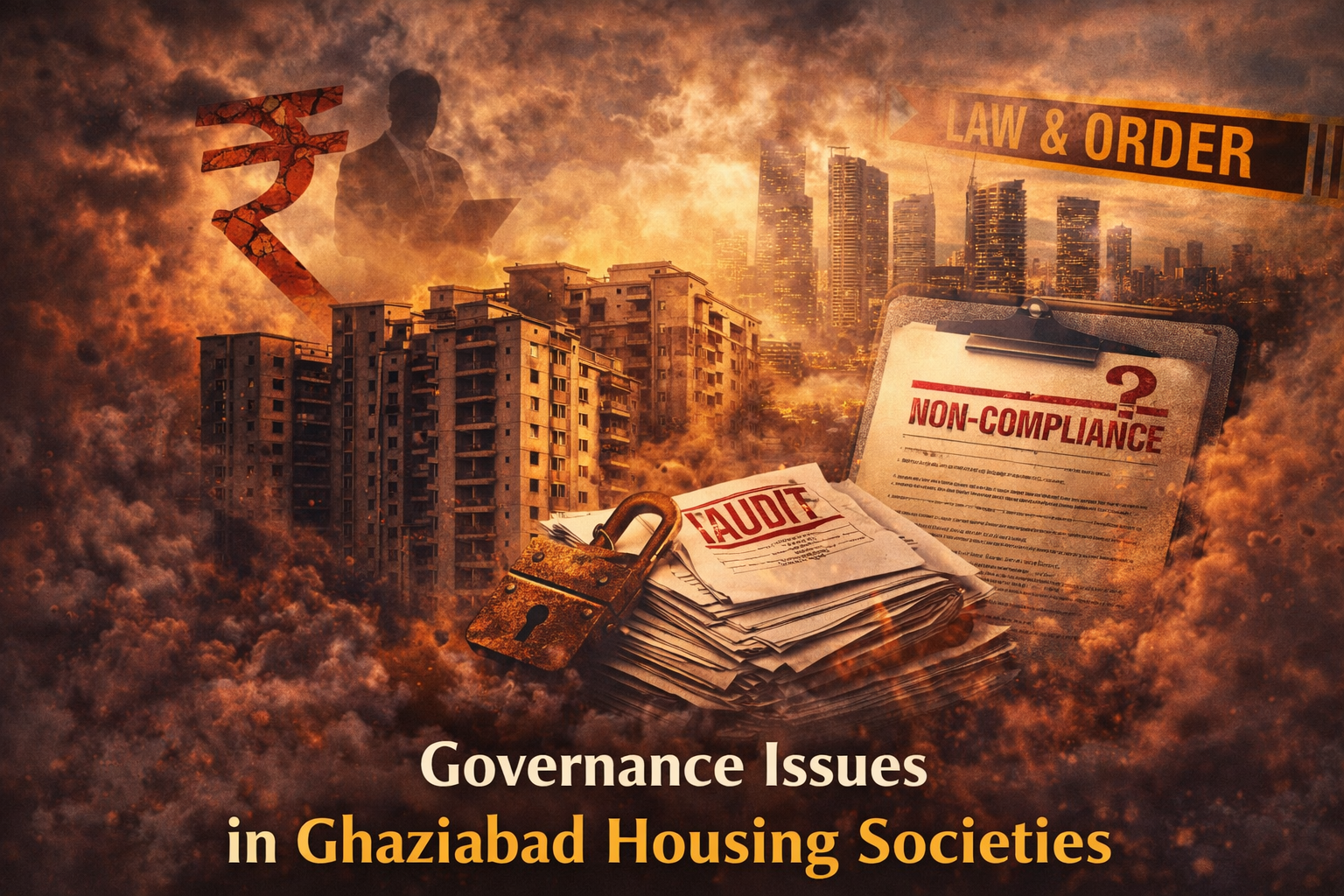
In recent times, several issues have come to light in housing societies across Ghaziabad. These are not isolated incidents, but appear to reflect broader gaps in governance, compliance, and accountability.
Apartment Owners Associations (AOAs), which are expected to function as lawful and representative bodies, are in many instances not operating in full alignment with prescribed norms. Questions relating to the validity of office bearers, conduct of elections, and transparency in financial practices are increasingly being raised by residents.
One such case relates to Migsun Homz Apartment Owners Association, where, as per available official records and communications, the District Administration has taken cognizance of certain governance-related concerns.
The office of the City Magistrate, Ghaziabad has initiated an inquiry into multiple aspects, including:
• Financial transactions, particularly those related to fire safety expenditure
• Legal status and functioning of the AOA
• Issues concerning the pending Completion Certificate and its implications for safety compliances such as Fire NOC
Further, communications from the Ghaziabad Development Authority (GDA) indicate that certain statutory compliances linked to the builder and project approvals remain under examination.
In such situations, residents often face uncertainty, limited transparency, and challenges in effectively raising their concerns. In some cases, this may also affect open participation in society-level decision-making.
At a broader level, these concerns are not confined to a single society. They point towards structural issues in the governance framework of urban housing communities.
The objective of raising these issues is straightforward — to strengthen transparency, accountability, and trust in residential governance.
Encouragingly, administrative processes have been initiated in Ghaziabad, including the formation of an inquiry mechanism under the supervision of the City Magistrate. This is a constructive step; however, sustainable improvement will require systemic and institutional reforms.
Way Forward: Institutional Strengthening
To address these challenges effectively, a coordinated approach may be considered:
• Periodic verification of AOA legal status and governance compliance
• Introduction of governance-linked financial controls, including structured KYC norms
• Strengthening audit accountability through frameworks guided by ICAI
• Strict enforcement of safety and statutory compliances
• Clear demarcation of accountability between builders, associations, and regulatory authorities
• Enhanced transparency and greater resident participation
Conclusion
Housing societies represent the closest level of governance experienced by citizens. The quality of governance at this level directly impacts safety, financial integrity, and overall quality of life.
The focus, therefore, should be on strengthening institutional systems to prevent such issues from arising, rather than addressing them only after they escalate.