The Great Migration of Power: Preparing Future-Ready Citizens Through Experiential Learning
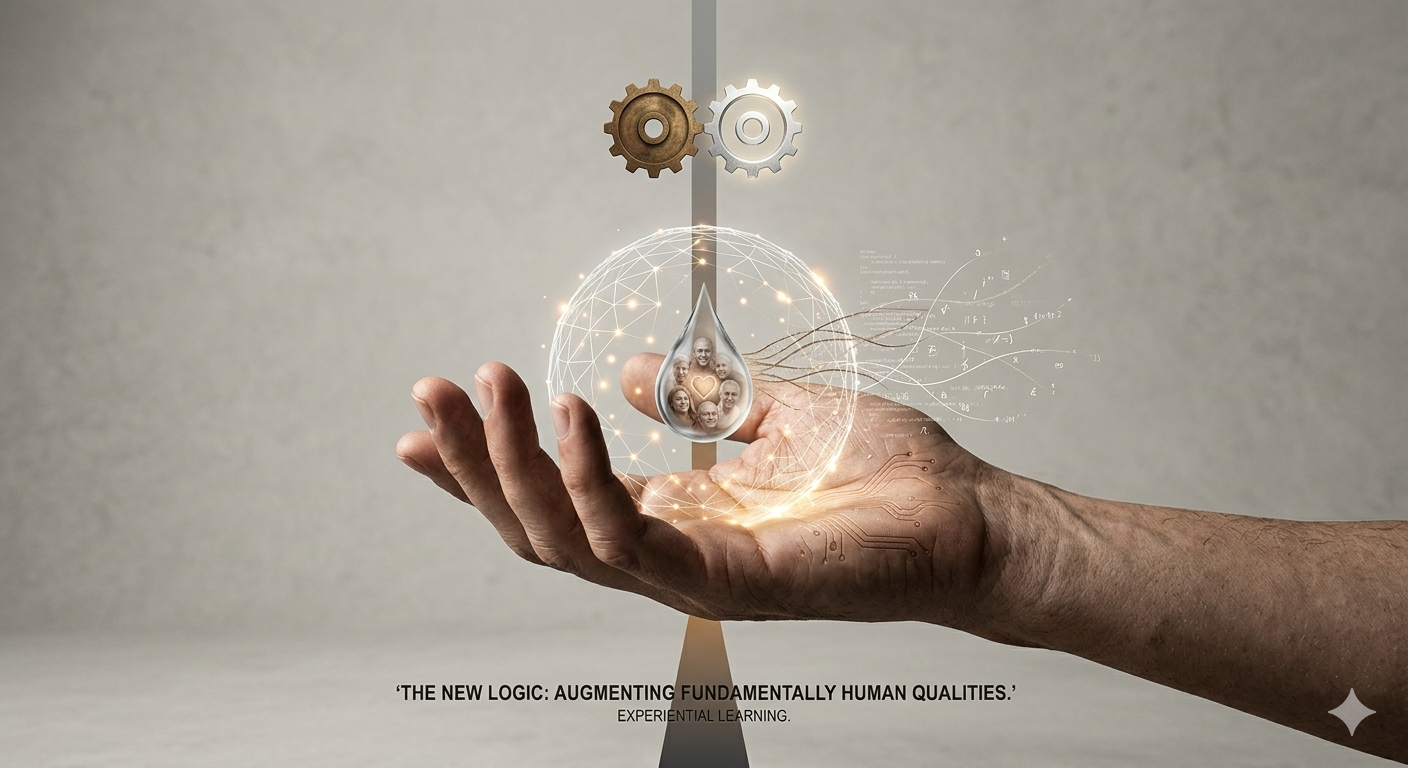
For generations, the foundation of global education rested on a single belief: knowledge is power. Schools, universities, and professional systems were built around the idea that those who possessed information, memorized facts, and mastered predictable cognitive tasks held the greatest advantage.
Today, that foundation is rapidly evolving. Artificial Intelligence has transformed the global knowledge ecosystem by making tasks such as summarizing, drafting, coding, analyzing, and explaining information instantly accessible and widely available.
As information becomes abundant, the central question for educators, parents, and leaders is no longer “Who has the answers?” but rather “Who can apply those answers meaningfully?”
The Migration of Power
Artificial Intelligence does not eliminate human expertise; instead, it raises the standard for uniquely human capabilities. As automated systems generate information at scale, value increasingly shifts toward qualities that machines cannot fully replicate.
This transformation can be understood through three critical human strengths:
1. Judgment Under Uncertainty
AI systems can produce enormous amounts of data and multiple possible solutions, but they cannot fully understand human context, emotions, ethics, or situational realities. Human judgment remains essential in deciding what matters, what is appropriate, and what actions should be taken.
2. Responsibility, Ethics, and Trust
Automated systems can produce inaccurate outputs, misleading information, or unintended consequences. Machines cannot accept moral or legal accountability. Human oversight, ethical reasoning, and responsible leadership are becoming more important than ever.
3. Originality and Human Connection
While AI can imitate patterns and styles, authentic creativity, emotional intelligence, empathy, and original perspective remain deeply human qualities. Genuine human connection continues to hold unique value in a technology-driven world.
As Tom Gruber once stated:
“The real question isn’t whether a tool is powerful — it’s whether you’re using it to augment what you do, or to replace the thinking entirely.”
Redefining Modern Education
To prepare students for the future, education systems must move beyond rote memorization and passive learning models. The focus should shift toward experiential, interdisciplinary, and problem-solving-based learning environments.
Future-ready education cannot rely solely on isolated coding or robotics labs where students mechanically follow instructions. Instead, technologies such as Artificial Intelligence, Robotics, and the Internet of Things (IoT) should be integrated meaningfully into everyday classroom learning.
From Theory to Real-World Application
Experiential learning allows students to apply concepts directly to real-life challenges. Rather than only studying theories, learners actively experiment, solve problems, and evaluate outcomes.
Students learn to:
- Analyze machine-generated outputs critically
- Identify limitations in automated systems
- Develop practical problem-solving skills
- Understand ethical implications of technology
- Collaborate across disciplines
Building Critical Thinking and Accountability
Hands-on, project-based learning encourages students to make decisions under uncertainty, take responsibility for outcomes, and improve systems through continuous learning and adaptation.
Such learning environments also help students develop leadership, communication, resilience, and ethical awareness — qualities increasingly necessary in an AI-driven economy.
Role of Educational Stakeholders
School Leaders and Administrators
Educational institutions must prioritize critical thinking, adaptability, and innovation rather than focusing exclusively on standardized memorization-based performance metrics.
Teachers and Educators
Teachers are evolving from being primary sources of information to facilitators of learning, helping students ask meaningful questions, evaluate information critically, and apply knowledge responsibly.
Parents
Parents must recognize that future success depends not only on academic scores but also on creativity, emotional intelligence, adaptability, and lifelong learning.
Students
Students should view technology as a tool that enhances human capability rather than replacing independent thinking. Developing originality, ethical judgment, and resilience will remain essential for long-term success.
Technology and Human Evolution
History shows that technological advancements do not eliminate human creativity; they reshape it. When photography emerged, painting evolved toward deeper artistic expression and abstraction rather than disappearing altogether.
Similarly, Artificial Intelligence is pushing humanity toward higher-order thinking, innovation, ethical leadership, and meaningful human contribution.
Conclusion
The future will belong to individuals who successfully combine technological capability with human creativity, judgment, empathy, and accountability. By transforming classrooms into spaces of active experimentation and experiential learning today, society can prepare students not only to adapt to technological change but also to lead it responsibly and thoughtfully.