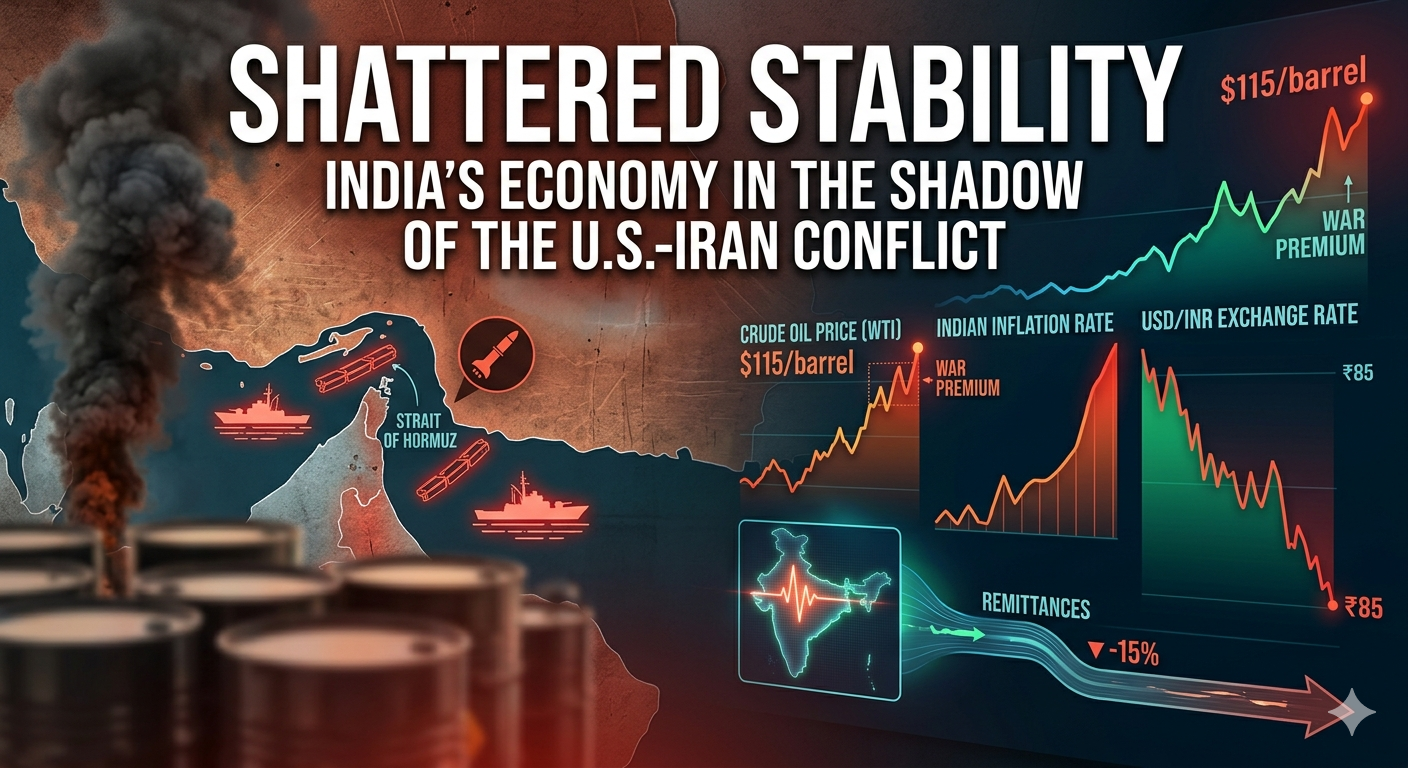
Gulf in Crisis: Navigating the Economic Aftershocks of the U.S.-Iran Conflict on India
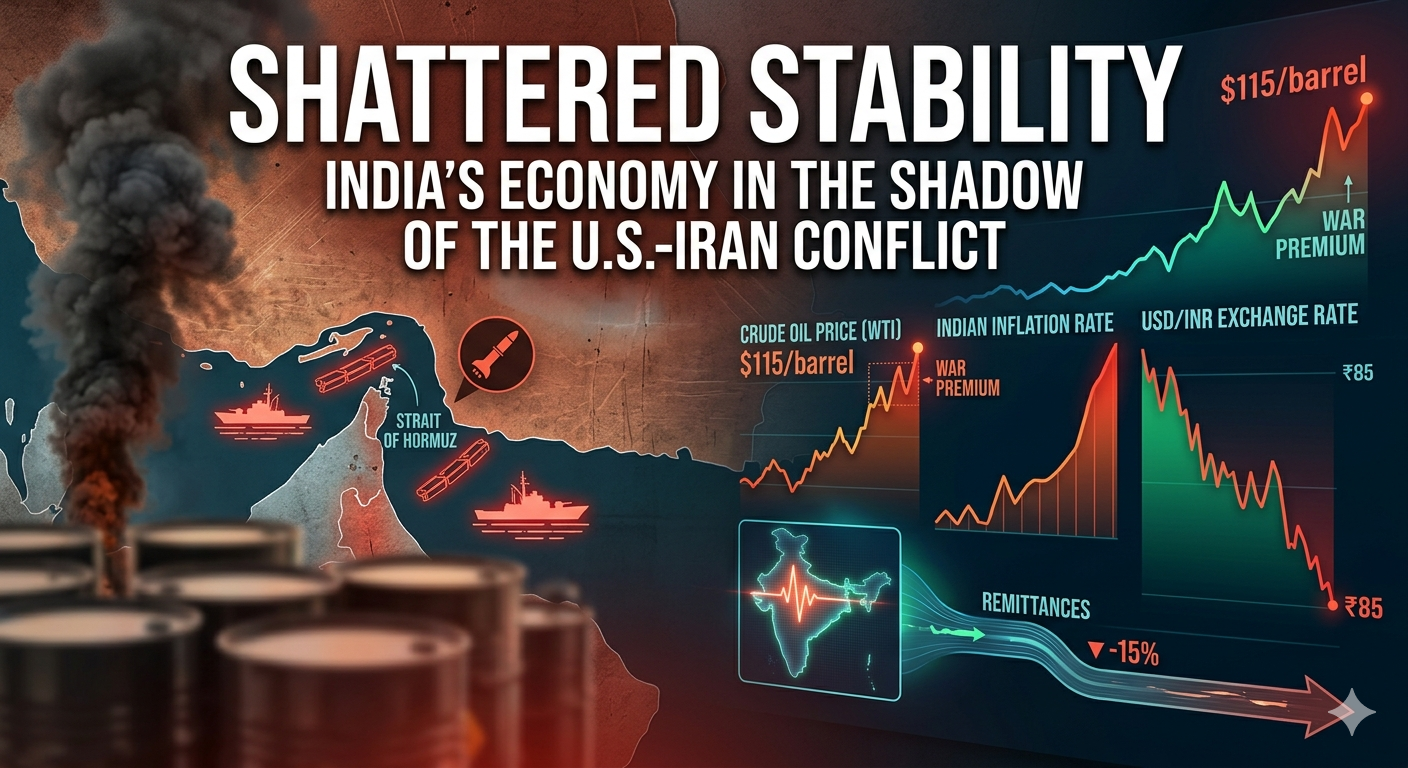
The eruption of the U.S.-Israel-Iran war on February 28, 2026, has significantly strained the Indian economy, primarily through energy and trade disruptions.
Energy Security and Inflation
Oil Price Spikes: Brent crude surged above $100–$120 per barrel following the war’s onset, directly inflating India’s import bill.
LPG/LNG Shortages: With 91% of LPG sourced from the Gulf, the closure of the Strait of Hormuz on March 1, 2026, triggered severe domestic shortages.
Imported Inflation: Rising fuel costs have increased transportation and manufacturing expenses, pushing consumer price inflation upward.
Trade and Macroeconomic Stability
Trade Deficit: Every $10 increase in oil prices adds approximately $12–$15 billion to India’s annual import expenses, widening the Current Account Deficit.
Currency Pressure: High dollar demand for oil imports has weakened the Rupee, which hit approximately ₹92.40 per dollar in March 2026.
Export Logistics: Closure of key maritime routes has forced shipments to reroute around the Cape of Good Hope, increasing freight costs and insurance premiums by over 400%.
Remittances: The conflict jeopardizes over $50 billion in annual remittances from the nearly 10 million Indians working in the Gulf.