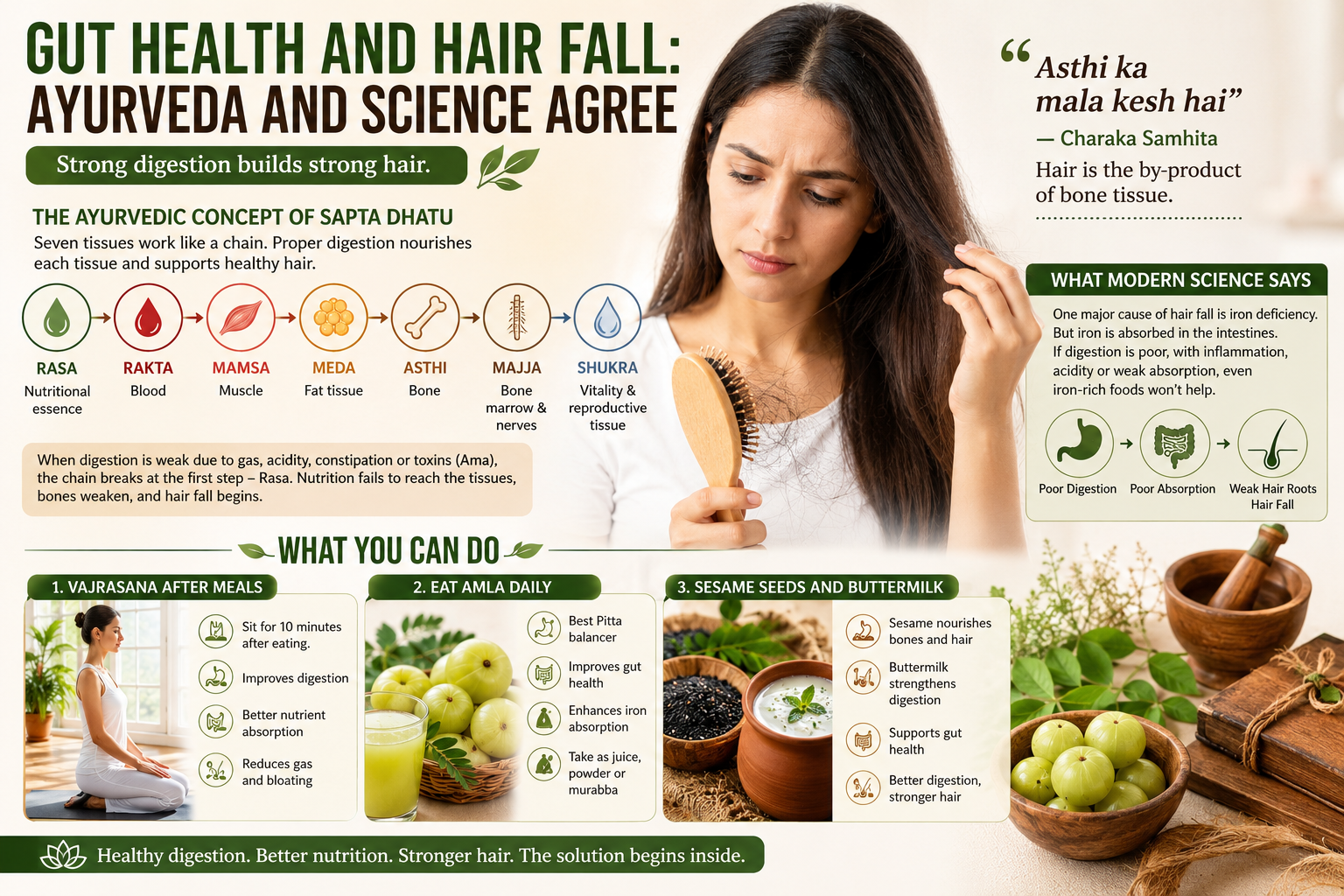
In today’s fast-paced world, hair fall has become one of the most common concerns among people of all ages. Many individuals spend heavily on shampoos, oils, serums, and cosmetic treatments, yet the issue often continues. According to Ayurveda, hair health may be connected not only to the scalp but also to overall internal health, including digestion and nutrition.
Ancient Ayurvedic texts such as the Charaka Samhita describe a connection between digestion, nourishment, body tissues, and hair health. Some modern scientific studies on nutrition and gut health have also explored links between digestion, nutrient absorption, and hair-related conditions.
The Ayurvedic Concept of Sapta Dhatu
Ayurveda explains that the human body is nourished through seven tissues known as Sapta Dhatu. These tissues are traditionally believed to support and nourish one another.
The seven dhatus are:
- Rasa – nutritional essence formed after digestion
- Rakta – blood
- Mamsa – muscles
- Meda – fat tissue
- Asthi – bones
- Majja – bone marrow and nerves
- Shukra – reproductive tissue and vitality
According to Ayurvedic philosophy, proper digestion plays an important role in maintaining balance among these tissues.
Hair and Bone Health Connection
One statement often referenced in Ayurveda is:
“Asthi ka mala kesh hai”
This phrase is traditionally interpreted to suggest a relationship between bone tissue and hair health.
Ayurveda believes that proper nourishment and balanced digestion help support all body tissues, including the scalp and hair roots.
How Poor Digestion May Affect Hair Health
Modern lifestyles often include irregular meals, stress, poor sleep, processed foods, and digestive discomfort such as:
- Gas
- Acidity
- Constipation
- Bloating
- Indigestion
Ayurveda describes improperly digested metabolic residue as “Ama.” According to Ayurvedic belief, excessive Ama may interfere with proper nourishment of body tissues.
Modern medicine also recognizes that nutritional deficiencies and poor nutrient absorption can contribute to certain forms of hair fall.
What Modern Science Says
Medical experts note that deficiencies in nutrients such as iron, protein, vitamin D, vitamin B12, and zinc may contribute to hair-related problems in some individuals.
Conditions affecting digestion or nutrient absorption may sometimes reduce the body’s ability to absorb essential nutrients properly.
Factors linked with poor hair health may include:
- Nutritional deficiencies
- Chronic stress
- Hormonal imbalance
- Poor sleep
- Digestive disorders
This highlights the broader connection between overall health and hair condition.
Ayurvedic Practices Traditionally Associated With Better Hair Health
1. Sitting in Vajrasana After Meals
Ayurveda and yoga traditions recommend sitting in the Vajrasana posture for a few minutes after meals.
Traditionally associated benefits include:
- Supporting digestion
- Reducing bloating
- Promoting relaxation
2. Consuming Amla
Amla is widely used in Ayurveda and is rich in vitamin C and antioxidants.
Traditionally associated benefits include:
- Supporting digestion
- Assisting iron absorption
- Supporting immunity
It may be consumed as:
- Amla juice
- Amla powder
- Amla murabba
- Fresh fruit
3. Sesame Seeds and Buttermilk
Sesame seeds are traditionally valued in Ayurveda for their mineral content, while buttermilk is commonly associated with digestive support.
Together, they are traditionally believed to support overall nutrition and digestion.
Internal Health and Hair Care
Ayurveda emphasizes that hair health is connected with broader lifestyle factors such as:
- Balanced nutrition
- Proper digestion
- Adequate sleep
- Stress management
- Daily routine
Experts also advise consulting qualified medical professionals in cases of persistent or severe hair fall, as underlying medical conditions may require diagnosis and treatment.
Conclusion
Ancient Ayurvedic traditions and modern nutritional science both highlight the importance of overall health in maintaining healthy hair. While external hair products may help cosmetically, factors such as digestion, nutrition, sleep, and stress management also play an important role in long-term wellness.