Introduction
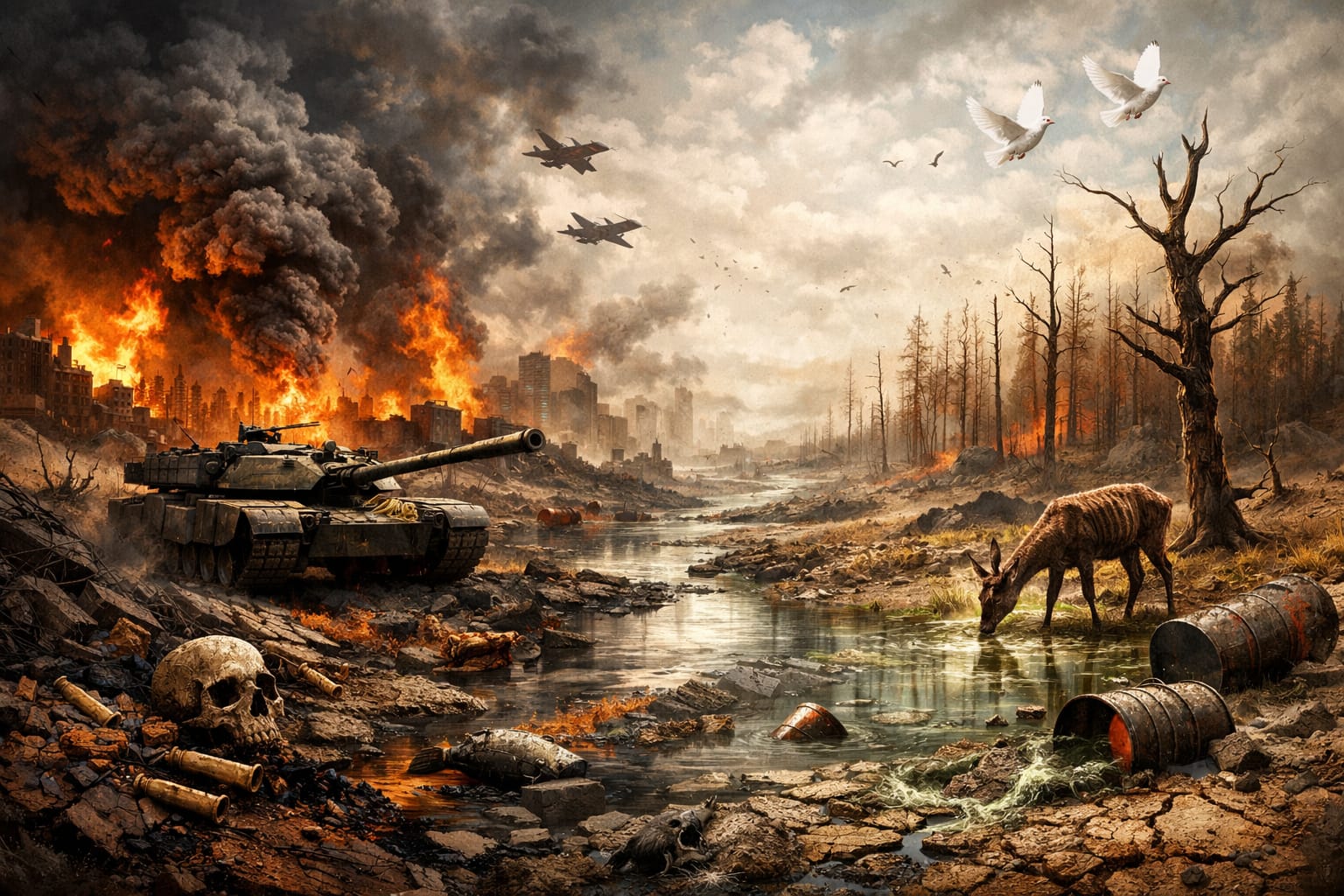
War is often discussed in terms of human loss, political change, and economic damage, but its silent and long-lasting impact on nature is equally alarming. The impact of wars on environment is profound, affecting air, water, soil, and biodiversity in ways that can last for decades. From burning oil fields to destroyed forests and polluted rivers, modern warfare leaves behind environmental damage that continues to harm life long after the fighting stops.
As conflicts grow more technologically advanced and widespread, their ecological footprint also expands. The planet pays a heavy price for human conflicts, and if global efforts fail to control wars, the environmental consequences could become irreversible. Understanding this connection between war and nature is essential for protecting the Earth for future generations.
Background: War and the Environment Through History
Throughout history, wars have caused environmental destruction, but the scale has intensified in modern times. Earlier conflicts mainly affected local landscapes, but today’s wars involve advanced weapons, heavy machinery, and chemical substances that damage ecosystems on a much larger scale.
Major global conflicts like World War I and World War II marked a turning point, where industrial-scale warfare led to deforestation, soil degradation, and air pollution. The use of chemical weapons, bombings, and large-scale destruction permanently altered natural environments in many regions.
In recent decades, regional conflicts have continued this trend, with oil spills, burning infrastructure, and toxic waste contributing to severe environmental degradation. These events highlight how closely human conflict is tied to ecological damage.
Major Wars and Their Impact on Atmosphere and Environment
Some of the world’s most significant wars have left deep environmental scars. During the Gulf War, massive oil wells were set on fire, releasing huge amounts of toxic smoke into the atmosphere. This led to air pollution on a global scale and long-term damage to local ecosystems.
Similarly, the Vietnam War witnessed the extensive use of chemical defoliants, which destroyed forests, contaminated soil, and affected wildlife for generations. Even today, some regions continue to suffer from the ecological consequences of these actions.
Modern conflicts have also increased greenhouse gas emissions due to explosions, fires, and military operations. This contributes to climate change and war, creating a cycle where environmental stress can further fuel conflicts over resources like water and land.
Environmental Damage: Air, Water, and Land
The environmental impact of war extends across multiple natural systems. Air pollution increases due to explosions, fires, and the release of harmful chemicals. These pollutants not only affect local populations but can travel across borders, impacting global air quality.
Water sources are often contaminated during wars due to damaged infrastructure, oil leaks, and chemical waste. Rivers and groundwater become unsafe for drinking and agriculture, leading to long-term health risks for communities.
Land degradation is another major issue. Explosions and heavy military vehicles destroy soil structure, making it difficult for vegetation to grow again. Forests are cleared, wildlife habitats are lost, and biodiversity declines sharply. This type of ecological damage from conflict can take decades to recover, if at all.
Role of the United Nations in Preventing Environmental Damage
The United Nations plays a crucial role in addressing the environmental consequences of war. Through peacekeeping missions, environmental agreements, and humanitarian efforts, it works to reduce the impact of conflicts on both people and nature.
Organizations under the UN framework focus on monitoring environmental damage, promoting sustainable recovery, and encouraging countries to follow international laws that protect ecosystems during conflicts. Efforts such as environmental assessments and restoration programs aim to rebuild affected regions after wars end.
However, the effectiveness of these initiatives often depends on cooperation between nations. Without strong global commitment, preventing environmental damage during conflicts remains a significant challenge.
How to Save Our Environment from the Effects of War
Protecting the environment in times of conflict requires both prevention and restoration. The most effective solution is reducing the occurrence of wars through diplomacy and international cooperation. Peace is not only essential for human survival but also for environmental protection.
At the same time, stricter international laws can limit the use of environmentally harmful weapons and practices. Countries can adopt sustainable military strategies that minimize ecological damage. After conflicts, large-scale restoration projects, reforestation, and cleanup operations are necessary to rebuild damaged ecosystems.
Public awareness also plays a key role. When people understand the connection between war and environmental destruction, there is greater pressure on governments to adopt peaceful and sustainable approaches.
What Happens If Wars Are Not Stopped
If global conflicts continue unchecked, the environmental consequences could become catastrophic. Continuous destruction of ecosystems will accelerate climate change, reduce biodiversity, and make natural resources scarcer. This could lead to a dangerous cycle where environmental stress increases the likelihood of further conflicts.
Rising pollution levels, loss of fertile land, and contaminated water sources may threaten food security and human health worldwide. Future generations could inherit a planet that is significantly less capable of supporting life.
The longer wars persist, the harder it becomes to restore damaged environments. Some ecological losses may become permanent, making it essential to act before irreversible damage occurs.
Conclusion
The impact of wars on environment is a critical issue that often remains overshadowed by immediate human and political concerns. Yet, the damage inflicted on air, water, land, and biodiversity has long-lasting consequences that affect the entire planet. From historic conflicts like World War I and World War II to more recent wars, the pattern is clear: environmental destruction is an unavoidable outcome of warfare.
Addressing this issue requires global cooperation, stronger international laws, and a collective commitment to peace. The role of organizations like the United Nations is vital, but lasting change depends on the willingness of nations to prioritize sustainability over conflict. If wars are not controlled, the environmental damage could reach a point where recovery is no longer possible. Protecting the Earth means reducing conflicts and ensuring that future generations inherit a planet that is still capable of sustaining life in all its forms.