India Secures Energy Sovereignty: Kalpakkam’s Fast Breeder Reactor Hits Historic Criticality
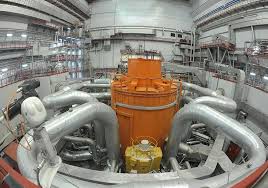
The landscape of global nuclear energy shifted significantly this week as India’s indigenously developed 500 MWe Prototype Fast Breeder Reactor (PFBR) at Kalpakkam successfully achieved its first criticality. On April 6, 2026, engineers and scientists at the Indira Gandhi Centre for Atomic Research (IGCAR) initiated a controlled, self-sustaining nuclear fission chain reaction, marking the operational birth of a machine decades in the making. This milestone represents a definitive leap in India’s three-stage nuclear power program, moving the nation from a dependence on imported uranium toward a self-sustaining cycle fueled by its own vast domestic resources.
Located on the shores of Tamil Nadu, the Kalpakkam PFBR is not merely a power plant but a sophisticated fuel factory. By reaching this stage, India has demonstrated the technical prowess to master the closed fuel cycle, a feat that places it in an elite bracket of nuclear-capable nations. The success of the reactor is a testament to the collaborative efforts of the Bharatiya Nabhikiya Vidyut Nigam Limited (BHAVINI) and over two hundred Indian private and public sector partners who manufactured the complex components required for this advanced breeder technology.
Mastering the Science of the Second Stage
To understand the magnitude of this achievement, one must look at the unique architecture of a fast breeder reactor. Unlike conventional pressurized heavy water reactors that dominate the global energy sector, the PFBR utilizes “fast” neutrons to sustain the fission process. It is uniquely designed to produce more fissile material than it consumes. By using a core of Uranium-Plutonium Mixed Oxide (MOX) fuel surrounded by a blanket of fertile Uranium-238, the reactor converts the non-fissile blanket into high-grade Plutonium-239.
The engineering challenge of cooling such a high-intensity core was met through the use of liquid sodium. Acting as a coolant, liquid sodium is far more efficient at transferring heat than water, though it requires extreme precision to handle due to its high reactivity with air and moisture. The successful management of this coolant system at Kalpakkam proves that Indian scientists have overcome the steep learning curve associated with sodium-cooled fast reactors, a technology that many other nations abandoned due to its complexity.
A Strategic Bridge to Thorium Energy
The most compelling long-term impact of the PFBR lies in its role as a bridge to India’s ultimate energy goal: the thorium-based fuel cycle. While India possesses modest uranium reserves, it holds nearly a quarter of the world’s thorium. However, thorium cannot be used directly in a reactor; it must first be converted into Uranium-233. The fast breeder reactor at Kalpakkam is the essential engine required to facilitate this transmutation on a commercial scale.
By integrating thorium into the blankets of future breeder reactors, India can begin stockpiling the fuel needed for its “Stage 3” reactors. This transition is the holy grail of Indian energy policy, as it promises centuries of carbon-free electricity without the need for external fuel supplies. The criticality achieved this week ensures that the pathway to utilizing these massive thorium deposits is now physically and technically open, securing the nation’s energy security for generations to contemplate.
Safety Innovation and Global Leadership
In an era where nuclear safety is scrutinized more than ever, the Kalpakkam reactor introduces several “passive” safety features that set a new benchmark. These systems rely on the laws of physics—such as gravity and natural convection—rather than mechanical pumps or human intervention. For instance, the reactor is designed with a negative void coefficient, meaning that if the temperature rises beyond a certain point, the physics of the core naturally slows down the reaction.
Furthermore, this project reinforces India’s position as a global leader in advanced nuclear technology. With the PFBR now entering its operational phase, India joins Russia as one of the only two countries in the world currently operating a commercial-scale fast breeder reactor. This achievement provides India with significant leverage in international nuclear commerce and positions the country as a potential exporter of advanced reactor components and expertise to other nations seeking sustainable energy solutions.
The Road Ahead for the Kalpakkam PFBR
While the achievement of criticality is the most significant hurdle cleared to date, the journey for the Kalpakkam facility is far from over. Over the coming months, the reactor will undergo a series of low-power physics experiments and rigorous safety audits conducted by the Atomic Energy Regulatory Board (AERB). These tests will ensure that every system, from the control rods to the heat exchangers, performs exactly as predicted under operational stress.
Once these validations are complete, the reactor will gradually increase its power output and begin synchronized testing with the southern regional grid. Experts anticipate that the facility will reach full commercial power production by the end of 2026. As it begins to contribute 500 megawatts to the grid, it will serve as the blueprint for subsequent fast breeder units already in the planning stages, marking the beginning of a new, self-reliant era for the Indian power sector.
The successful criticality of the Kalpakkam PFBR is a definitive triumph of indigenous engineering that secures India’s place at the forefront of nuclear innovation. By unlocking the potential of the breeder cycle, the nation has moved one step closer to an era of total energy independence powered by its own soil.