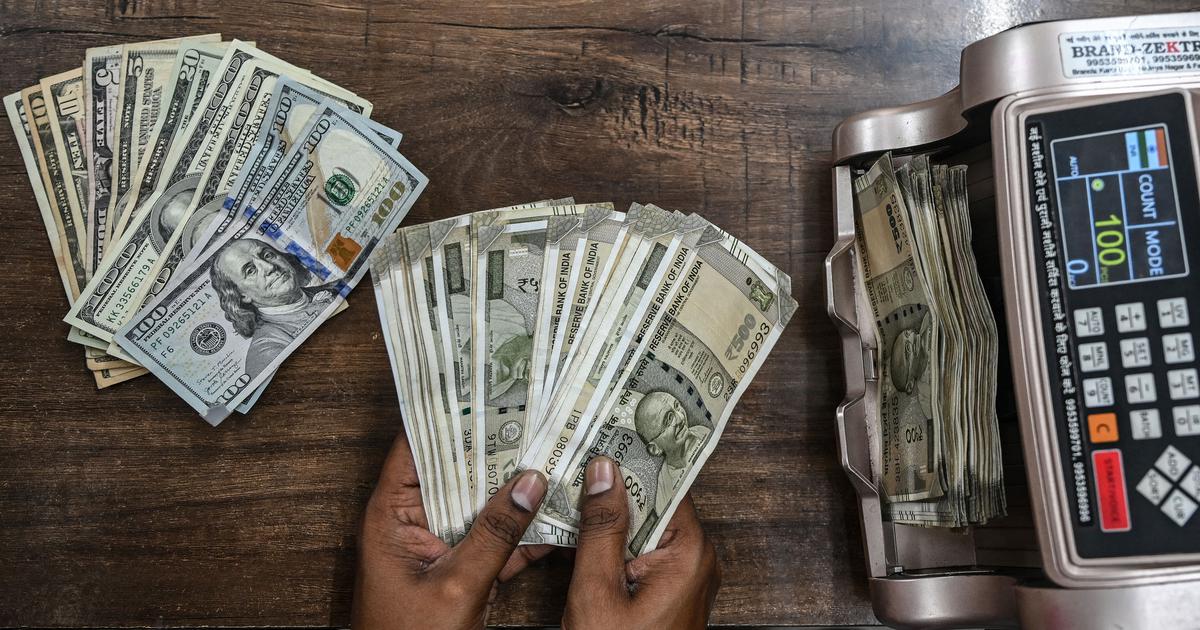
The Indian rupee has plummeted to an unprecedented low, crossing the 94-mark against the US dollar, reflecting growing concerns over foreign fund outflows amidst ongoing geopolitical tensions in West Asia. The rupee fell by 29 paise, closing at a record low of 94.05, as investors reacted to the escalating conflict in the region, which has led to uncertainties in global markets.
Despite a drop in global crude oil prices and an upswing in domestic equities, the rupee remained under pressure. The benchmark BSE Sensex surged by 1.63%, while the Nifty climbed 1.72%, indicating a bullish sentiment among investors. However, these positive trends were not enough to support the rupee, which is heavily influenced by external factors. As per the latest updates, Brent crude oil was trading 4.33% lower at $99.97 per barrel, yet it seems the relief in oil prices has not translated into a stronger currency.
In a related development, the Indian government has introduced a significant piece of legislation—the 2026 Foreign Contribution Regulation Amendment Bill—in the Lok Sabha. This proposed law seeks to tighten regulations on non-governmental organizations (NGOs) receiving foreign funds, enabling the government to take action against entities suspected of using such funding for activities deemed harmful to the nation’s interests. Union Minister Nityanand Rai emphasized that the measures are aimed at preventing forced religious conversions and ensuring compliance with the Constitution and local laws.
The bill includes provisions that would allow the government to seize an NGO’s foreign funds and assets should their registration under the Foreign Contribution Regulation Act (FCRA) expire. This has raised eyebrows among opposition parties, who have labeled the bill as “dangerous” and “draconian.” Critics argue that such legislation could stifle the operational freedom of civil society organizations and undermine their ability to advocate for various social causes.
As the debates around this bill unfold in Parliament, the implications for civil society and foreign funding in India are likely to be significant. The rupee’s fall and the introduction of this controversial bill underline the complex interplay of economic factors and political decisions in the country. Stakeholders across sectors are closely monitoring these developments, as they could shape the financial landscape and the operational environment for NGOs in India.