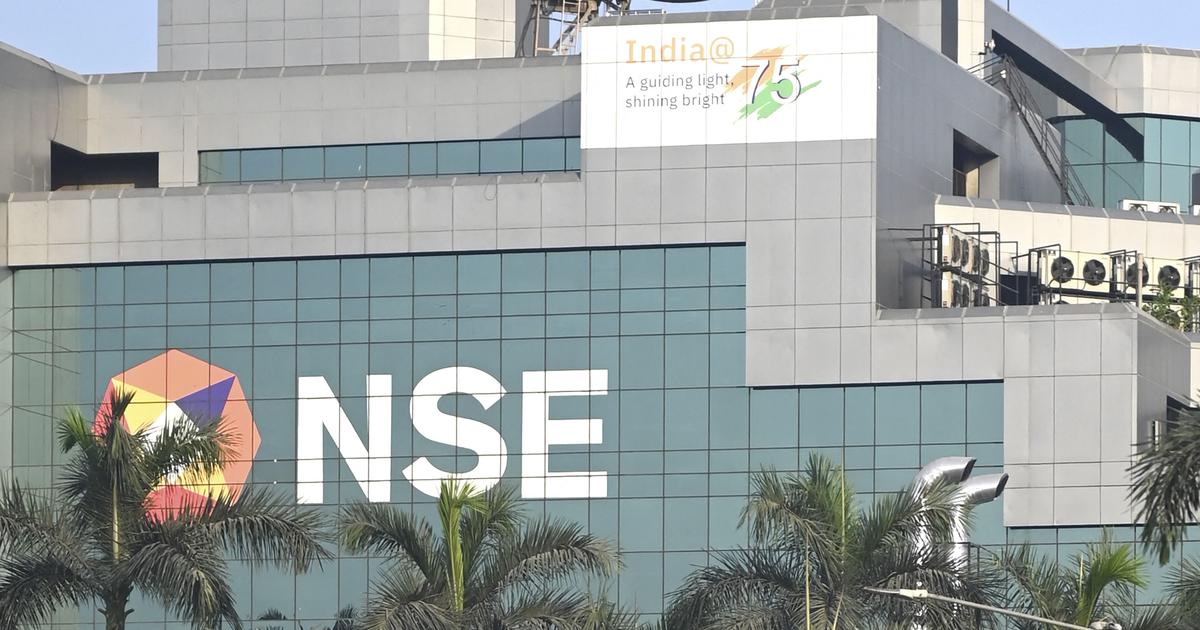
The Indian stock market experienced another significant downturn on Thursday, driven by rising anxieties over the escalating conflict in West Asia. The benchmark Sensex index saw a drop of over 800 points, which translates to a decline of 1%. Meanwhile, the Nifty index fell by 0.9%, closing the day at 23,639 points. The downward trend began on March 2, coinciding with the onset of the conflict, creating a ripple effect in investor sentiment.
Interestingly, the India VIX index—which gauges market volatility—spiked more than 2% on the same day, indicating increased uncertainty among traders. This bearish trend wasn’t limited to India; major stock indices across Asia also faced declines, with Hong Kong’s Hang Seng index dropping by 0.7%, Japan’s Nikkei sinking 1%, and South Korea’s Kospi seeing a fall of 0.4%.
In addition to the stock market, the Indian rupee continued its decline against the US dollar, falling 0.3% to reach 92.35. This marked a new low, surpassing the previous record of 92.34 set earlier this week, according to Reuters. However, there was a slight recovery by the end of trading, with the rupee closing at 92.18, up from 92.04 the day before.
The fluctuating currency values are reflecting broader concerns in the market, especially with global crude oil prices nearing $100 per barrel. This surge can be attributed to Iran’s intensified attacks on oil and transport facilities in the region, which began shortly after military actions involving Israel and the United States against Iran on February 28. The price of Brent crude eventually settled at $96.4 per barrel as of 3:45 PM Indian time, highlighting the volatile relationship between geopolitical events and financial markets.
As investors grapple with this complex situation, the outlook remains uncertain. The ongoing tensions in West Asia are not just a regional issue; they have far-reaching implications for global markets and economies, prompting traders to remain vigilant in these turbulent times.