




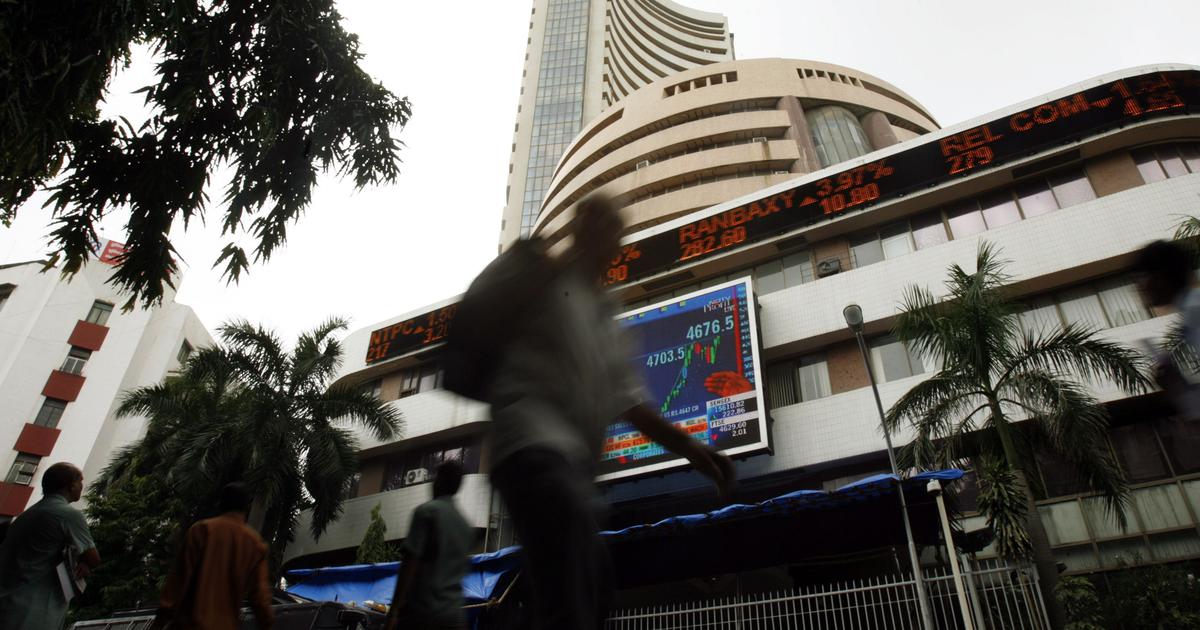
The Indian stock market witnessed a dramatic decline on Thursday, as escalating tensions in West Asia raised alarm bells for investors. With oil prices surging amidst the ongoing conflict, the benchmark Sensex index plummeted over 1,700 points—equivalent to a 2.2% drop—trading just below the crucial 75,000 mark at around noon. Similarly, the Nifty index mirrored this trend, dipping 2.2% or more than 520 points, settling at approximately 23,250 points.
This downturn follows a period of volatility that began on March 2, coinciding with the initial outbreak of conflict in West Asia. While the markets showed a brief resurgence between Monday and Wednesday, the current geopolitical climate has prompted sharp sell-offs. The India VIX, which gauges market volatility, surged by 14% on Thursday, indicating growing uncertainty among traders and investors.
The repercussions of this market turmoil were felt across major Asian indices as well. By noon Indian time, Hong Kong’s Hang Seng index had dropped by 2%, while Shanghai’s composite index fell by 1.6%. Japan’s Nikkei recorded a steep decline of 3.3%, and South Korea’s Kospi also faced a downturn of 2.5%, reflecting a broader regional impact.
Adding to the economic strain, the Indian rupee has fallen to a record low against the US dollar, closing at 92.6 on Wednesday. This decline is largely attributed to the rising global fuel prices, a concern that has only intensified with the ongoing conflicts. On Thursday, the rupee showed further signs of weakness, projected to reach 93 in the non-deliverable forwards market. Notably, the domestic forex market was closed for trading on Thursday due to the Gudi Padwa festival, a public holiday that temporarily halted currency transactions.
As global oil prices continue to rise in the wake of conflict in West Asia, the outlook for the Indian economy remains uncertain. Oil is a critical component for India’s energy needs, and any sustained increase in prices could exert further pressure on inflation and the balance of payments. Investors are now bracing for potential policy interventions from the government and the Reserve Bank of India, as they navigate through this turbulent economic landscape.

