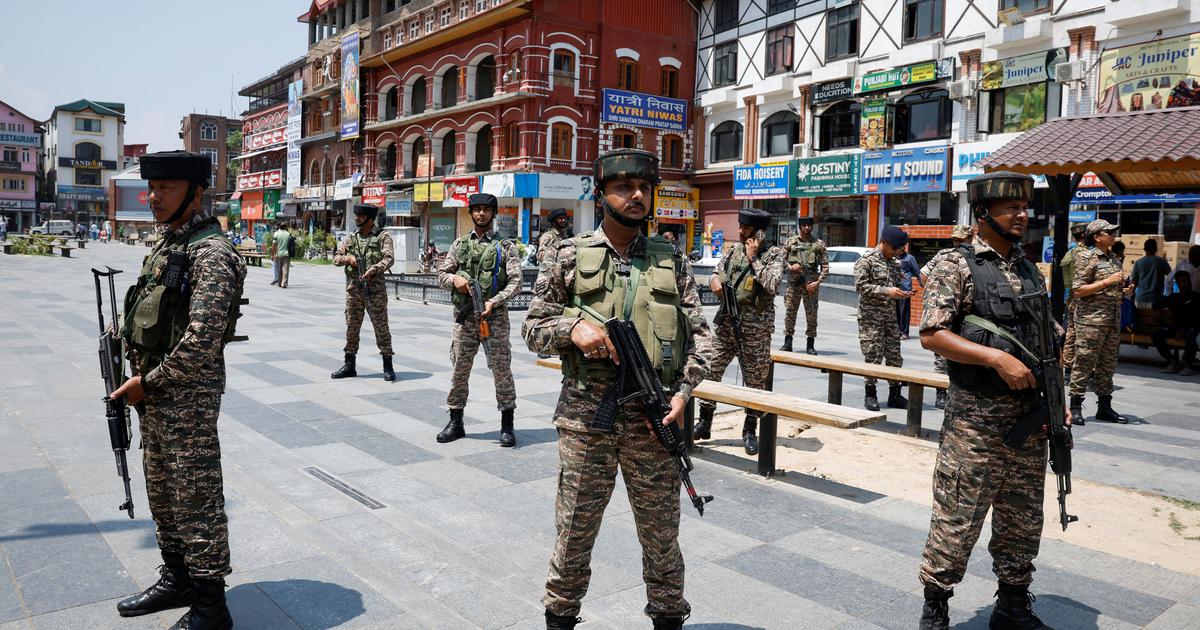
The Lieutenant Governor of Jammu and Kashmir, Manoj Sinha, has ordered a comprehensive magisterial inquiry into the controversial killing of Rashid Ahmad Mughal, a local man, in what is alleged to be a fake encounter by security forces in Ganderbal. This decision follows mounting pressure from Mughal’s family and political leaders who have called for accountability and transparency surrounding the incident, which has ignited widespread concern in the region.
Mughal was reportedly shot and killed by security personnel during an operation on Tuesday night. His family has vehemently denied any links to terrorism, asserting that he was an innocent civilian. Their demand for a thorough investigation was echoed by prominent political figures, including former Chief Minister Omar Abdullah and Peoples Democratic Party leader Mehbooba Mufti. They have raised serious questions about the authenticity of the encounter, stressing the need for a clear and time-sensitive inquiry.
Omar Abdullah took to social media to express his view that dismissing the family’s claims would be inappropriate. He emphasized that the incident warrants a transparent investigation and that any attempts to obscure the facts would only serve to undermine the credibility of the authorities involved. He urged that the findings of the inquiry should be made public to ensure justice is not only done but seen to be done.
Mehbooba Mufti has also weighed in on the matter, noting the conflicting narratives provided by the Army regarding Mughal’s identity and alleged associations with militancy. Initially, the forces claimed he was a foreign militant, which was later changed to a local individual linked to terrorist activities. This inconsistency has heightened suspicions and calls for an impartial review of the encounter to clarify the facts. Senior Superintendent of Police, Khalil Ahmad Poswal, confirmed that the police are prepared to cooperate fully with the magisterial inquiry to ascertain the truth behind the incident.
The implications of this inquiry extend beyond just the immediate case; it reflects the ongoing concerns about human rights and the use of force in Jammu and Kashmir, a region that has witnessed significant turmoil and unrest over the years. The call for justice in this case resonates deeply within the local communities that have long suffered from violence and conflict. As the inquiry unfolds, many are hopeful that it will pave the way for greater accountability among security forces and restore public trust in law enforcement.