Iran–US War: How the Conflict Is Quietly Hitting the Common Man Across the World
Introduction
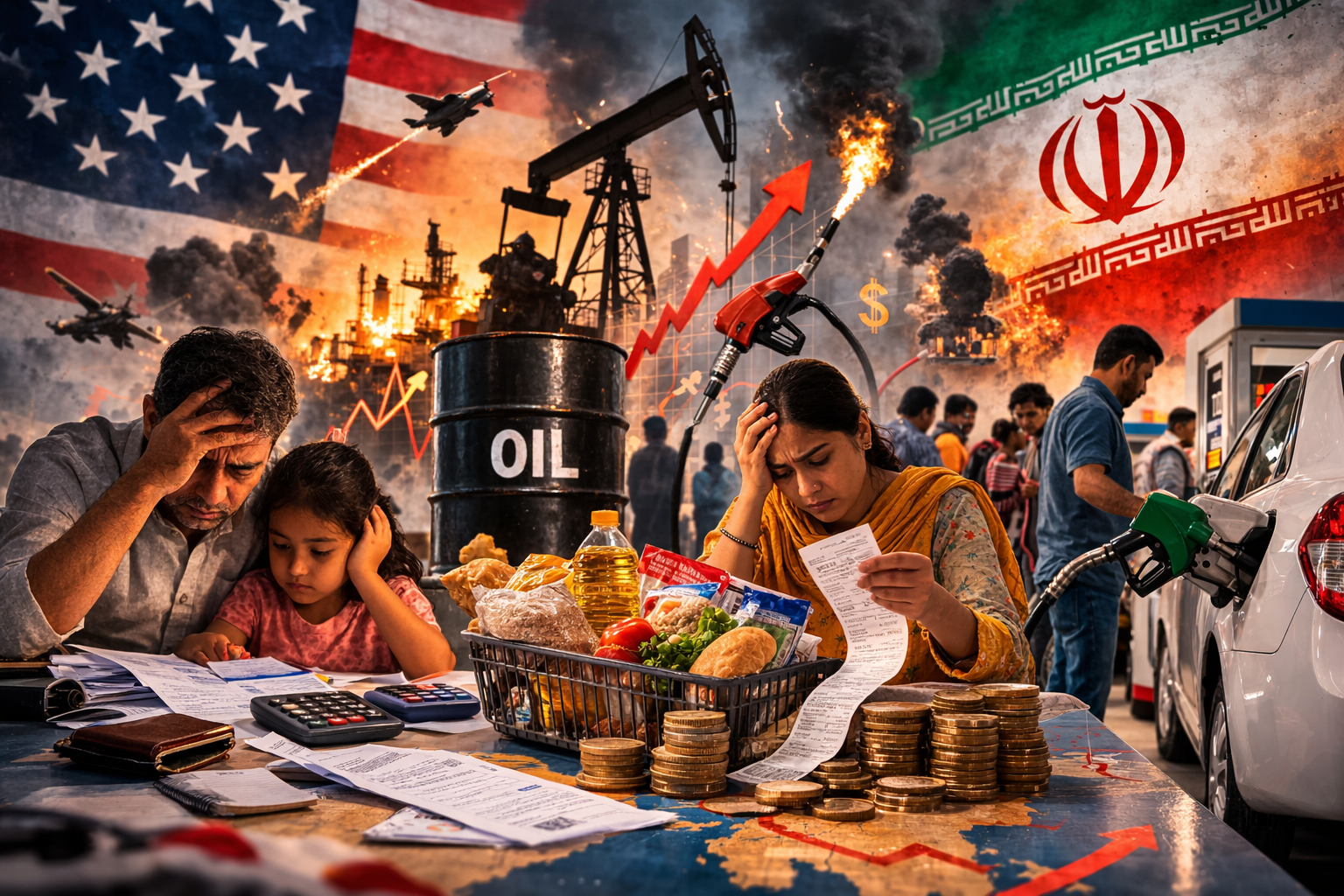
The escalating conflict between Iran and the United States has rapidly evolved into one of the most consequential geopolitical crises of 2026. The confrontation began in late February after U.S. and allied forces launched strikes targeting Iranian military infrastructure, triggering retaliatory missile and drone attacks from Iran across the Middle East. While the battles are fought far from most people’s homes, the consequences are already being felt globally. From rising fuel prices and inflation to disrupted supply chains and economic uncertainty, the Iran-US war impact on common people is becoming increasingly visible in daily life. As energy markets shake and global trade routes face disruptions, the conflict is quietly affecting households, businesses, and economies worldwide.
Background: Why the Iran–US Conflict Escalated
The latest phase of tensions began on February 28, 2026, when joint U.S. and allied strikes targeted Iranian leadership and military infrastructure. Iran responded with missile and drone attacks against U.S. and allied interests in the region, escalating the confrontation into a wider regional conflict. (Wikipedia)
For decades, relations between Washington and Tehran have been strained due to disputes over nuclear programs, sanctions, and regional influence. The current escalation, however, is far more intense because it involves direct military action and the potential involvement of other Middle Eastern actors. Analysts warn that such confrontations can quickly destabilize global markets, particularly energy markets that depend heavily on Middle Eastern oil.
Oil Prices Surge and Fuel Costs Rise
One of the most immediate consequences of the Iran–US conflict has been a sharp increase in oil prices. Iran’s actions around the Strait of Hormuz, a narrow waterway through which roughly 20 percent of global oil supply flows, have disrupted tanker traffic and triggered fears of shortages. (Wikipedia)
In response to the crisis, global energy prices surged and Brent crude climbed dramatically, prompting emergency interventions such as the International Energy Agency’s release of 400 million barrels of oil from strategic reserves to stabilize markets. (The Guardian)
For ordinary people, this translates directly into higher fuel costs. Petrol, diesel, and cooking gas prices tend to rise whenever global crude prices climb. Transportation becomes more expensive, delivery costs increase, and businesses pass those higher costs to consumers.
Rising Inflation and Cost of Living
The ripple effects of rising oil prices do not stop at fuel pumps. Higher energy costs influence nearly every sector of the economy, from manufacturing and agriculture to logistics and food production. Economists warn that prolonged conflict could push global inflation significantly higher. (Reuters)
For the common man, inflation means everyday essentials, food, groceries, electricity, and transportation, becoming more expensive. Countries that rely heavily on imported oil, particularly in Asia, face the greatest risk because their energy bills rise quickly when global prices surge. (ORF Online)
Households with limited incomes feel this pressure the most, as a larger share of their earnings goes toward basic necessities.
Travel, Jobs, and Business Uncertainty
The conflict is also creating uncertainty across global industries. Airlines, for example, face soaring fuel costs due to the spike in jet fuel prices, which could lead to higher ticket prices for passengers. Some airlines may even reduce routes or delay expansion plans to manage rising expenses. (Financial Times)
Businesses that depend on global supply chains are also vulnerable. Shipping routes in the Middle East are critical for international trade, and disruptions can delay goods and increase transportation costs. This affects everything from electronics and automobiles to fertilizers and food supplies.
For workers and small businesses, the consequences can include slower economic growth, fewer job opportunities, and reduced consumer spending.
Financial Markets and Economic Anxiety
Another major impact of the Iran–US conflict is financial market volatility. Stock markets often react sharply to geopolitical tensions, and investors typically move money into safer assets during periods of uncertainty.
When markets fluctuate, the effects eventually reach ordinary citizens through pension funds, savings accounts, and investment portfolios. Economic instability can also make governments more cautious about spending, which may slow infrastructure projects or social programs.
What Happens Next
The future of the conflict remains uncertain. If diplomatic negotiations reduce tensions, oil markets may stabilize and economic pressures could ease. However, if the conflict widens or shipping through the Strait of Hormuz remains disrupted, energy prices and inflation could continue rising.
Experts warn that even limited conflicts in the Middle East can have long-lasting effects on the global economy because of the region’s central role in energy supply.
Conclusion
The Iran–US conflict may appear to be a distant geopolitical struggle, but its consequences are reaching ordinary people worldwide. Rising fuel prices, inflation, and economic uncertainty are already affecting households and businesses. Ultimately, the real cost of war is not only measured on battlefields but also in the daily lives of millions who bear its economic consequences.