Israel Outlines Plans for Extended Campaign in Iran as Conflict Enters Third Week
Israel Outlines Plans for Extended Campaign in Iran as Conflict Enters Third Week
TEL AVIV / DUBAI — As the joint U.S.-Israeli military campaign against Iran enters its third week, Israeli defense officials have confirmed that the air offensive is set to continue for at least three more weeks. Despite reports that the operation is moving “ahead of schedule,” the Israel Defense Forces (IDF) maintain that thousands of strategic targets remain on their hit list.
The conflict, which began on February 28, 2026, has seen the most intense aerial bombardment in the region’s history, aimed at dismantling Iran’s nuclear infrastructure, ballistic missile capabilities, and internal security apparatus.
Key Developments in the Campaign
• Targeting Strategy: IDF spokesperson Brig. Gen. Effie Defrin stated that the military has operational plans through the holiday of Passover. Current strikes are focusing on missile production lines, air defense networks, and IRGC command centers.
• Degraded Capabilities: Military sources claim that roughly 70% of Iran’s ballistic missile launchers and 85% of its air defense systems have been neutralized.
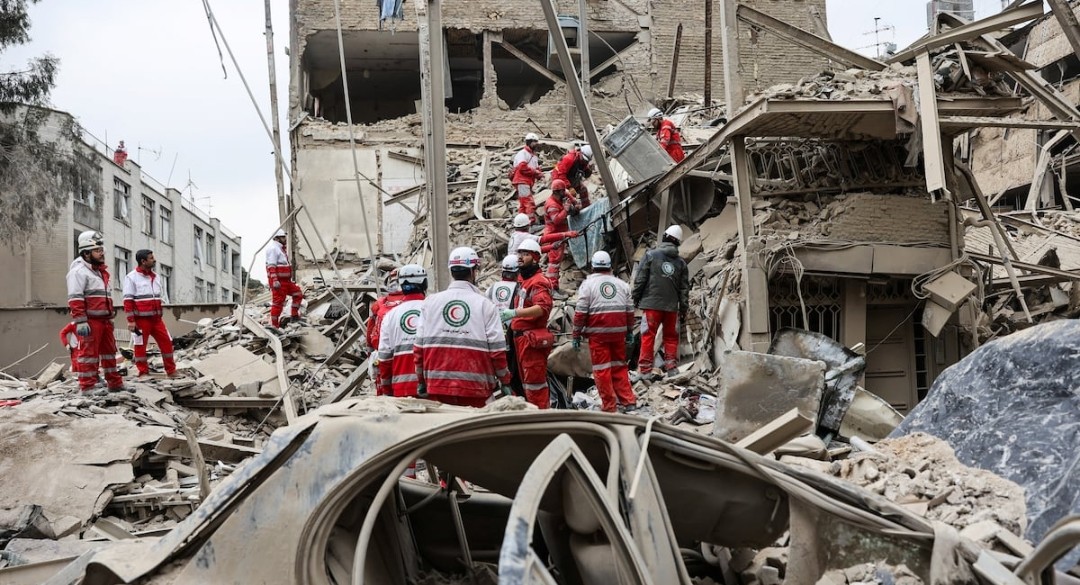
• Casualty Reports: Estimates suggest over 6,000 Iranian military personnel have been killed. Overnight strikes in central Iran’s Markazi province reportedly resulted in five deaths and damage to infrastructure in Arak and Khomein.
Economic and Regional Fallout
The conflict has effectively shut down the Strait of Hormuz, a vital artery for 20% of the world’s oil and liquefied natural gas. The closure has:
• Pushed Brent crude prices above $104.50 per barrel.
• Prompted President Trump to call for an international coalition to reopen the waterway.
• Triggered Iranian retaliatory drone and missile strikes against U.S. bases and oil facilities in the UAE and Kuwait.
Status of the “Regime Change” Objective
While the initial surprise strikes killed Supreme Leader Ali Khamenei and several top generals, the IRGC continues to coordinate resistance. Israeli Ambassador to India, Reuven Azar, reiterated that the mission has three firm goals:
• Neutralizing the nuclear threat.
• Eliminating ballistic missile capabilities.
• Degrading the internal security forces to allow for domestic political shifts.
”We are not working according to a stopwatch, but rather to achieve our goals,” said Brig. Gen. Defrin. “We have deeper plans for even three weeks beyond Passover if necessary.”
The effective closure of the Strait of Hormuz has evolved from a regional security threat into a “transmission belt” for global economic instability. As the conflict enters its third week, the impact on energy, shipping, and global inflation has reached levels not seen in decades.
1. The Energy Shock: Oil and LNG
The Strait is the world’s most important energy artery, carrying roughly 20% of global oil and 19% of liquefied natural gas (LNG). With traffic dropping by an estimated 97% since February 28, the markets have reacted violently:
• Brent Crude: Prices surged from approximately $70 to over $106 per barrel as of March 16. Analysts from the IEA and Goldman Sachs warn that a sustained closure beyond four weeks could push prices past $120.
• Gasoline Prices: In the U.S., the national average has jumped by 65 cents per gallon to roughly $3.70, while parts of Asia (Thailand, Pakistan, and Bangladesh) are already reporting fuel shortages and long lines.
• LNG Volatility: North-east Asian LNG prices have more than doubled to $22.5/MMBtu, threatening the power security of Japan and South Korea, which rely on Qatari gas transiting the Strait.
2. Global Logistics and Shipping
The maritime “silent zone” has forced a massive rerouting of global trade, causing a ripple effect across the supply chain:
• Alternative Routes: Vessels are avoiding the Persian Gulf and the Suez Canal, opting for the Cape of Good Hope. This adds roughly 10–14 days to transit times and significantly increases bunker fuel costs and insurance premiums.
• Refinery Paralysis: Export-oriented refineries in the Gulf are being forced to shut down as storage tanks reach capacity, putting over 4 million barrels per day of refining capacity at risk.
• Aviation Impact: Frequent missile exchanges have disrupted major air corridors over the Gulf, a primary bridge linking Europe and Asia, driving up air freight and travel costs.
3. The “Stagflation” Threat
Economists warn that the longer the Strait remains closed, the higher the risk of a global recession.
• Inflationary Pressure: The IMF estimates that the current 30% spike in oil prices could add up to 1.2 percentage points to global inflation. This is exacerbated by rising costs for fertilizers—often a byproduct of natural gas—which are expected to drive up global food prices.
• Market Instability: Global stock markets have seen sharp declines, with the Nikkei 225 falling 8% and the S&P 500 dropping as investors flee to safe-haven assets like gold.
Economic Impact at a Glance
Conflict Summary (As of March 16, 2026)
Metric
Estimated Impact
Duration
17 Days (Entering Week 3)
IDF Reservists Mobilized
110,000+
Aerial Sorties
~5,000
Munitions Dropped
10,000+
Global Oil Impact
Strait of Hormuz Closed; Prices > $100……
Feature Iran Israel
Governance Supreme Leader Mojtaba Khamenei (Succession contested) Netanyahu Coalition (Focus on “Regime Change”)
Military Morale High IRGC defiance; regular army (Artesh) bases under heavy fire High IDF resolve; public fatigue over missile sirens
Strategic Goal Survival and closure of the Strait of Hormuz Dismantling nuclear/missile infrastructure
Internal Threat Potential resurgence of anti-regime protests Political fallout if the conflict enters a multi-month “war of attrition”…/
Aranyak Chakraborty