Kunal Kamra Faces Legislative Committee Over Controversial Remarks: A Deep Dive into Privilege Breach
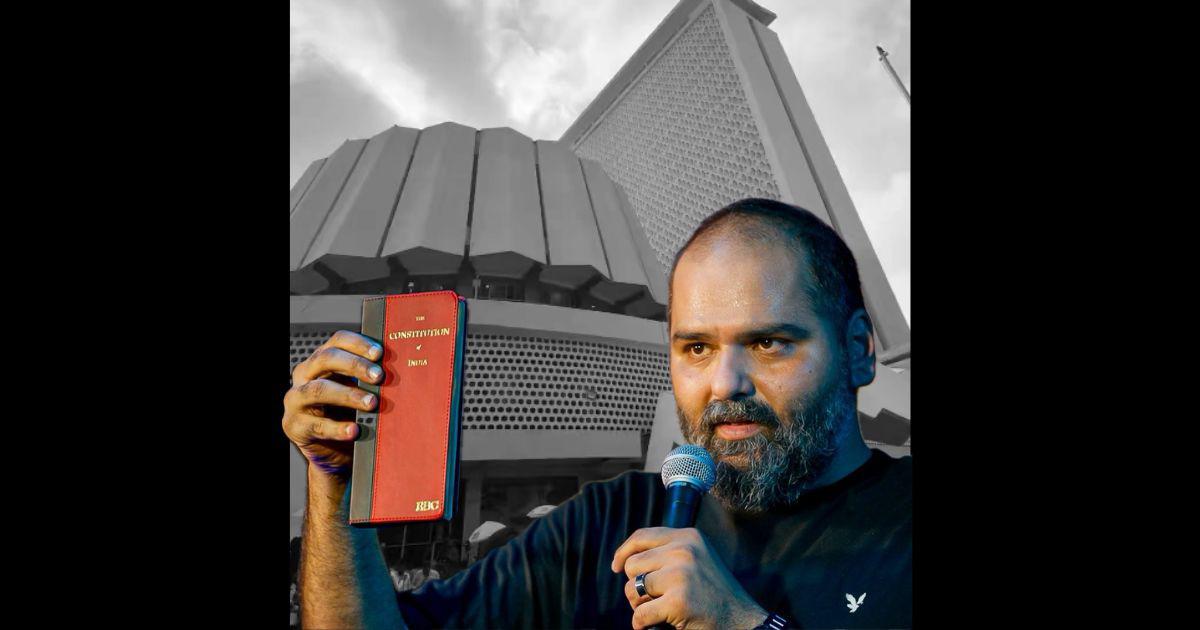
In a notable clash between art and political authority, comedian Kunal Kamra is currently at the center of a contentious debate regarding freedom of expression and legislative privilege in India. On April 9, Kamra appeared before the privilege committee of the Maharashtra Legislative Council after being summoned for his provocative comments directed at Deputy Chief Minister Eknath Shinde.
The controversy traces back to March 2025, when Kamra shared a video of his stand-up comedy routine on YouTube. Within this act, he performed a satirical song that labeled Shinde a ‘traitor’ for his defection from the original Shiv Sena party in July 2022 to join forces with the Bharatiya Janata Party (BJP). This political maneuvering helped topple the Maha Vikas Aghadi-led government, which had held power in the state.
Following the video’s release, BJP legislator Pravin Darekar initiated a breach of privilege motion against Kamra. Darekar accused the comedian of diminishing the esteem of the legislative assembly with his jokes, sparking a significant uproar in political circles. The motion highlights the sensitivities surrounding public discourse, especially when it touches on the actions of public officials.
Interestingly, this incident has also ensnared Sushma Andhare, a spokesperson for the Shiv Sena’s UBT faction, who was summoned for allegedly supporting Kamra. The breach of privilege motion, a formal legislative procedure, can lead to various consequences, including punitive measures against individuals—members of the legislature or not—who are believed to have disrespected the House.
During his recent appearance before the committee, Kamra stood firm against the demand for an ‘unconditional apology.’ He articulated his stance by stating that conceding to such an expectation would compromise his sincerity and set a detrimental precedent for artistic freedom. His remarks resonate with a growing sentiment among artists and commentators who feel that their ability to critique political figures is increasingly under siege.
The concept of legislative privilege itself has roots in the colonial era, often viewed as a tool that can be manipulated to suppress political satire and dissent. Critics argue that invoking such a privilege in response to satirical commentary stifles the very essence of democracy—robust debate and critique of those in power.
This clash between Kamra and the Maharashtra Legislative Council is not an isolated incident but reflects a broader trend in Indian politics where artists and comedians are often scrutinized for their critical perspectives. The case has raised questions about the boundaries of artistic expression in a democracy and how far political figures can go in curbing discourse that challenges their authority.
As the situation develops, it remains to be seen how this will influence the landscape of political satire in India. Will it lead to a chilling effect on comedic expression, or will it empower artists to push back against political pressures? In any case, the implications of Kamra’s confrontation with the legislative committee will likely resonate beyond the immediate fallout, shaping how comedians and public figures navigate the intricate dance of humor and politics in the years to come.