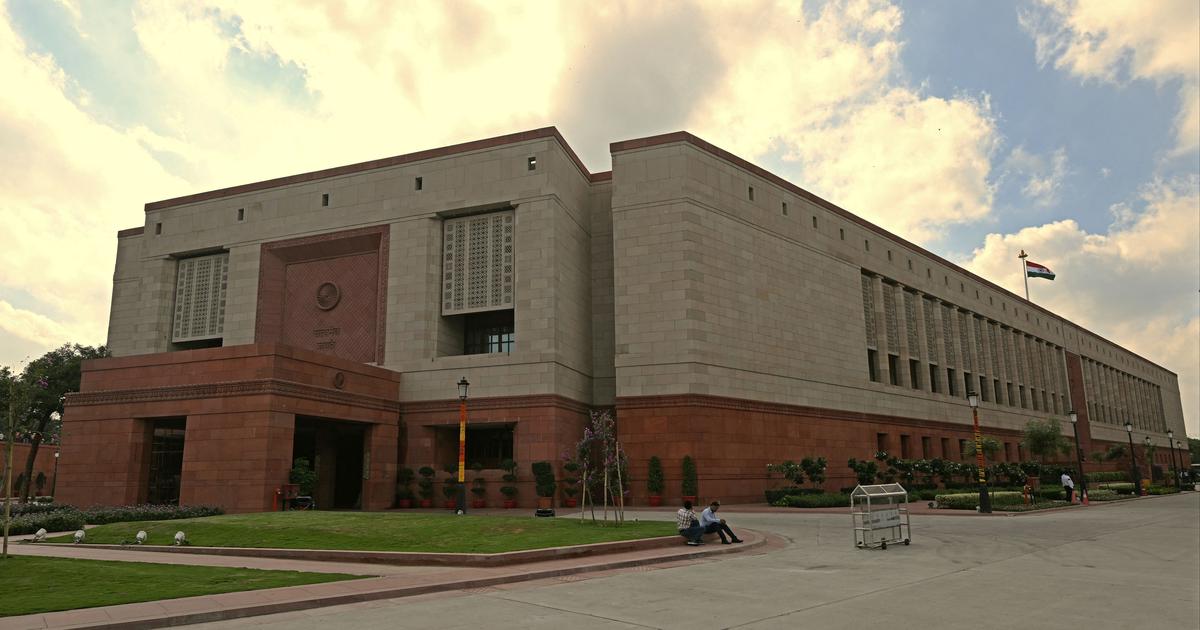
In a significant legislative move, the Lok Sabha on Wednesday officially recognized Amaravati as the sole and permanent capital of Andhra Pradesh. This decision came after the passage of the Andhra Pradesh Reorganisation Amendment Bill, which saw support from major political players including the Telugu Desam Party (TDP) and the Bharatiya Janata Party (BJP), both key allies in the state’s ruling coalition.
The Congress party also lent its backing to the bill, albeit with a caveat, advocating for special status for the state. Meanwhile, the Yuvajana Sramika Rythu Congress (YSR Congress), the principal opposition party in Andhra Pradesh, voiced strong opposition to the bill, arguing that it would fall short unless farmers’ rights were safeguarded and a definitive timeline for land compensation was established.
Congress MP Manickam Tagore initiated the debate on the bill, emphasizing the need for Amaravati to develop into a city comparable to Bangalore, Chennai, and Hyderabad. He also called for the growth of other cities like Visakhapatnam, Tirupati, and Kurnool, highlighting the importance of a balanced development approach across the state. “Let Amaravati thrive, but let’s ensure that all regions share in the progress,” Tagore stated, reaffirming his party’s support for Amaravati as the permanent capital.
Echoing this sentiment, TDP MP and Union Minister Chandra Sekhar Pemmasani urged members of the House to rally around the bill for a unanimous endorsement, stressing that establishing a permanent capital would be a pivotal step for the state’s future. He asserted that a stable capital is crucial for effective governance and long-term planning in Andhra Pradesh.
On the other hand, BJP MP CM Ramesh criticized a previous proposal from the YSR Congress to designate three cities as potential capitals for Andhra Pradesh, describing the idea as “illogical and irrational.” This sentiment reflects a broader consensus among the ruling coalition regarding the necessity of a singular, well-defined capital to ensure unity and coherence in administrative functions.
The debate surrounding the capital has been a contentious issue since the bifurcation of Andhra Pradesh in 2014, when the state was split into Telangana and residual Andhra Pradesh. Amaravati was envisioned as a greenfield capital, but the journey has not been without challenges, particularly concerning land acquisition and compensation for displaced farmers.
As the Lok Sabha moves forward with this decision, the focus now shifts to the implementation of necessary measures to ensure that the aspirations of all stakeholders, particularly farmers, are met. The government’s commitment to fostering a sustainable and inclusive development model for Amaravati will be critical in shaping the city’s future as a vibrant capital.