Meghalaya Cave Study Reveals Diverse Mammalian Presence Across 80 Cave Systems.
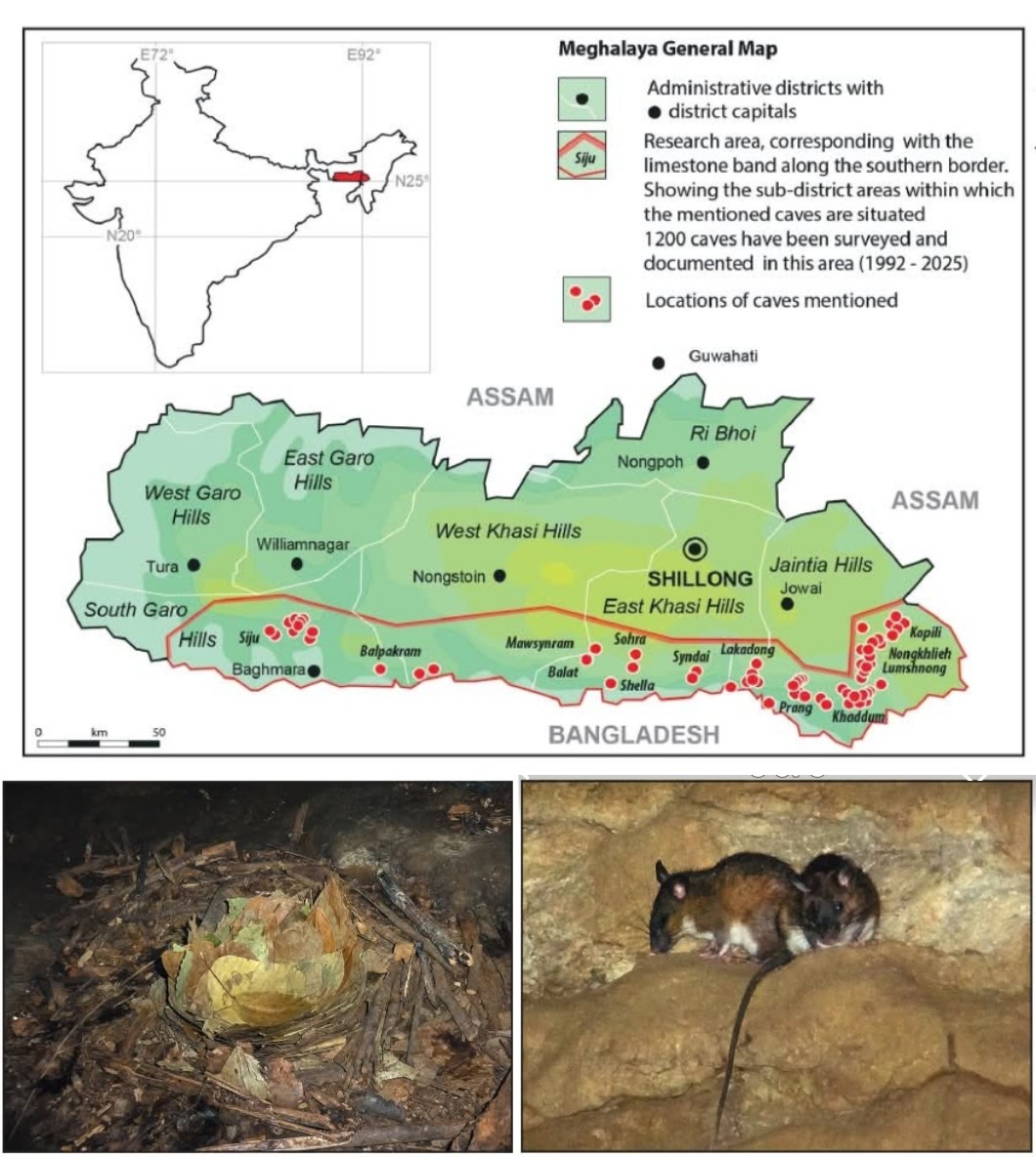
In a study based on records logged over a period of three decades of cave explorations in Meghalaya, scientists have found evidence for associations of a number of terrestrial mammalian species to the cave systems of Meghalaya. The landmark study, a one of its kind in India in its scope has been published in the recent issue of British cave journal Cave and Karst Science. The study dealt with over 120 mammalian records (live animals, nests, prints, skeletal material etc) obtained from 80 separate caves of Meghalaya and collected over a period from 1992 to 2025. The study was conducted by Uttam Saikia from Zoological Survey of India, Shillong; Dan Harries from Grampian Speleological Group, Edinburgh; Manuel Ruedi from the Natural History Museum of Geneva; Thomas Arbenz from Swiss Institute of Speleology and Karst Studies; Oana Chachula from the Speleology Foundation “Club Speo Bucovina, Romania; Khlur Mukhim of Lady Keane College, Shillong and Brian K Daly of Meghalaya Adventurers’ Association. The study reported the Edward’s Giant Rat as the most common mammalian inhabitants of Meghalaya caves followed by two species of porcupines. Evidence for a number of small carnivores like fishing cats, civets and possibly crab-eating mongooses were also recorded from a significant number of caves indicating that these animals might hunt for bats, insects or aquatic preys in the pools or streams of the caves. Interestingly, skeletal material and paw marks of Asiatic Black Bear has been reported from six of the caves. Evidence in the form of skeletal materials of macaques and langur has also been frequently noted from many of these caves. However, no evidence of the primates utilizing cave habitat for roosting was obtained. The study noted that primates using cave entrances for shelter and predator avoidance which increase the chance of monkey bones being deposited in caves following accidental falls or sudden floods entrapping them. Although a number of other mammalian remains ranging from small white toothed shrews, wild boar or large herbivores like serow were also recorded from the caves, they all might indicate accidental introduction rather than indicating any distinct cave associations, the study added. For a more holistic understanding of the mammalian faunal associations with cave environment, emerging technologies like environmental DNA analysis should be undertaken, the study recommends.