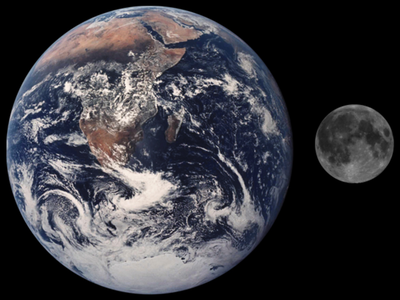
The Moon has long been Earth’s closest cosmic companion, influencing ocean tides and illuminating the night sky for billions of years. However, scientists say the distance between Earth and the Moon is slowly increasing over time.
Researchers have confirmed that the Moon is gradually moving away from Earth at a rate of nearly 1.5 inches per year. Although the movement is too small to notice in daily life, scientists believe it has significant long-term effects on Earth’s rotation, climate history, and tidal systems.
Why the Moon Is Moving Away
According to planetary scientists, the Moon’s movement is linked to gravitational interactions between Earth and the Moon. The Moon’s gravity pulls on Earth’s oceans, creating tides. Because Earth rotates faster than the Moon orbits the planet, tidal bulges shift slightly ahead of the Moon’s position.
This creates a small gravitational pull that transfers rotational energy from Earth to the Moon, gradually pushing the Moon farther away while slightly slowing Earth’s rotation.
Scientists say this process has continued for billions of years.
Ancient Fossils and Rocks Reveal Earth’s Past
Researchers have used geological records and fossil evidence to study how the Earth-Moon system evolved over time.
Studies examining ancient marine sediments and fossilized shells suggest that Earth once rotated faster than it does today. Some research indicates that around 70 million years ago, Earth experienced approximately 372 days in a year because days were shorter than the current 24-hour cycle.
Scientists say these findings support the theory that Earth’s rotation has gradually slowed as the Moon moved farther away.
The Moon’s Ongoing Influence on Earth
Despite the gradual separation, the Moon continues to play a major role in Earth’s natural systems. Its gravitational pull drives ocean tides and influences coastal ecosystems around the world.
Researchers also study the Earth-Moon relationship to better understand planetary motion, gravitational interactions, and long-term climate patterns.
What Scientists Expect in the Future
Experts say the Moon will continue moving away from Earth at a slow and steady pace for billions of years. Earth’s days are also expected to become slightly longer over extremely long periods of time.
Scientists describe the Earth-Moon relationship as one of the most important natural systems for understanding planetary evolution and the history of our solar system.
Conclusion
The gradual movement of the Moon away from Earth highlights the constantly changing nature of the universe. While the change is extremely small on a human timescale, researchers say it offers valuable insights into Earth’s geological history, tidal systems, and the evolution of planetary bodies over billions of years.