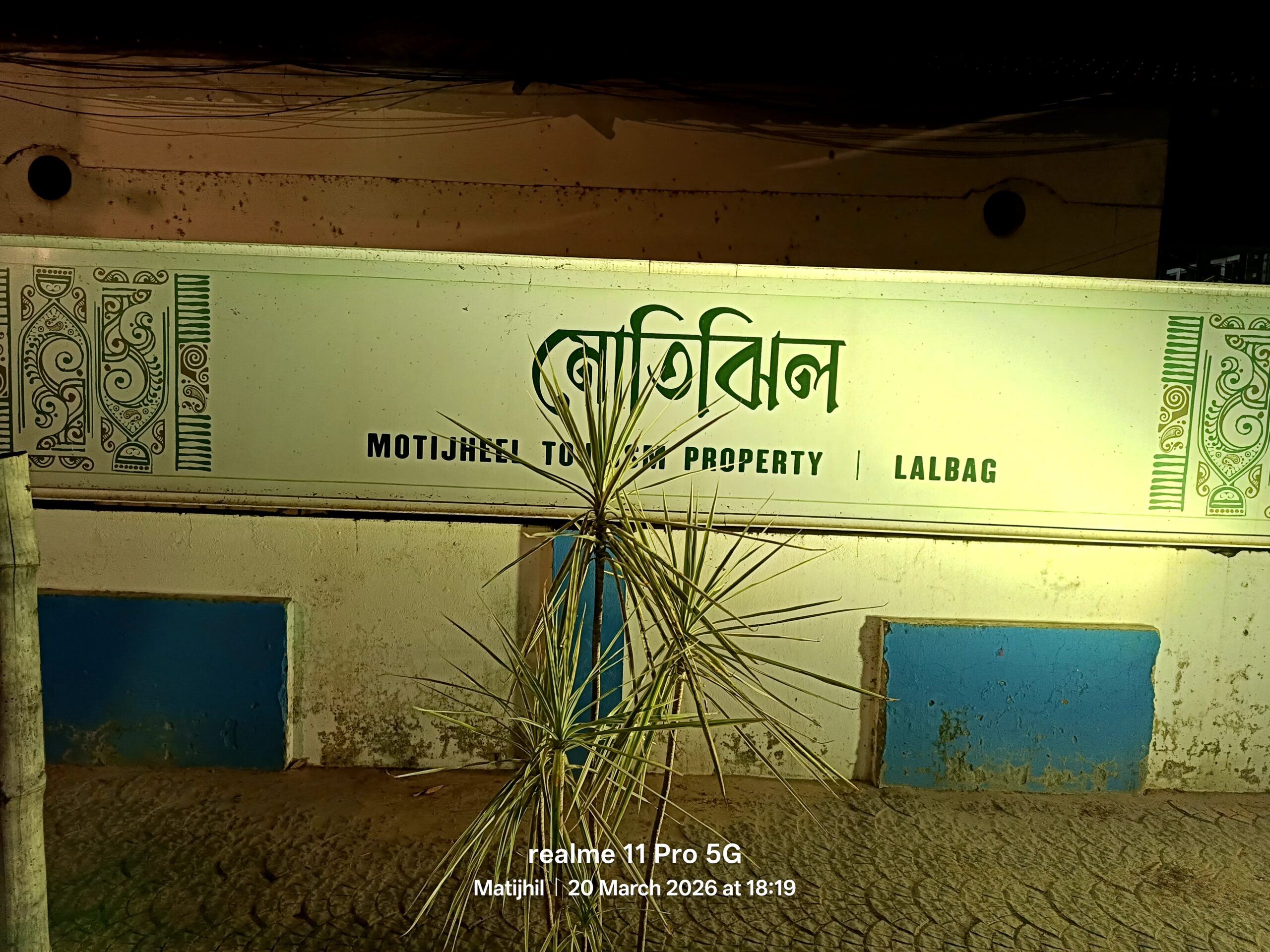
Motijheel in Murshidabad is one of the most atmospheric heritage zones in Bengal, a place where natural beauty and political history blend seamlessly. Created in the mid‑18th century by Nawazish Muhammad Khan, the lake’s distinctive horseshoe shape and its name — meaning Pearl Lake — reflect the Nawabi taste for elegance and luxury. Around this serene waterbody once stood landscaped gardens, pleasure houses, and the grand Sang‑i‑Dalan palace, making Motijheel a retreat for the Nawabs and their families. After Nawazish’s death, his widow Ghaseti Begum made it her residence, turning the area into a centre of wealth, influence, and eventually political intrigue.
Motijheel became a silent witness to the dramatic events that led to the fall of Bengal’s independence. The palace and its surroundings hosted secret meetings between Mir Jafar, Jagat Seth, British officials like Robert Clive, and other conspirators who plotted against Siraj ud‑Daulah. The enormous wealth stored here, combined with Ghaseti Begum’s opposition to Siraj, made Motijheel a focal point in the tensions that culminated in the Battle of Plassey in 1757. After the British victory, the site continued to hold importance — Warren Hastings and other Company officials used Motijheel as a retreat, adding another layer to its historical significance.
Architecturally, Motijheel still preserves fragments of its past glory. The Kala Masjid, built around 1749–50, stands beautifully intact with its three domes, lotus finials, and elegant minarets. Nearby lie the tombs of Nawazish Muhammad Khan and members of his family, while the ruins of the Sang‑i‑Dalan evoke the grandeur of a palace that once hosted Bengal’s most powerful figures. Though time has weathered many structures, the lake’s reflective waters and the surviving monuments create a hauntingly beautiful landscape.
Today, Motijheel has been revived as a heritage and eco‑tourism park, with walking paths, restored gateways, boating facilities, and interpretive signage that help visitors connect with its layered past. The calm lake, abundant greenery, and historical ruins make it a favourite spot for photographers, heritage enthusiasts, and travellers exploring Murshidabad’s Nawabi legacy. More than just a scenic destination, Motijheel remains a powerful reminder of the political shifts that reshaped Bengal and eventually the Indian subcontinent.