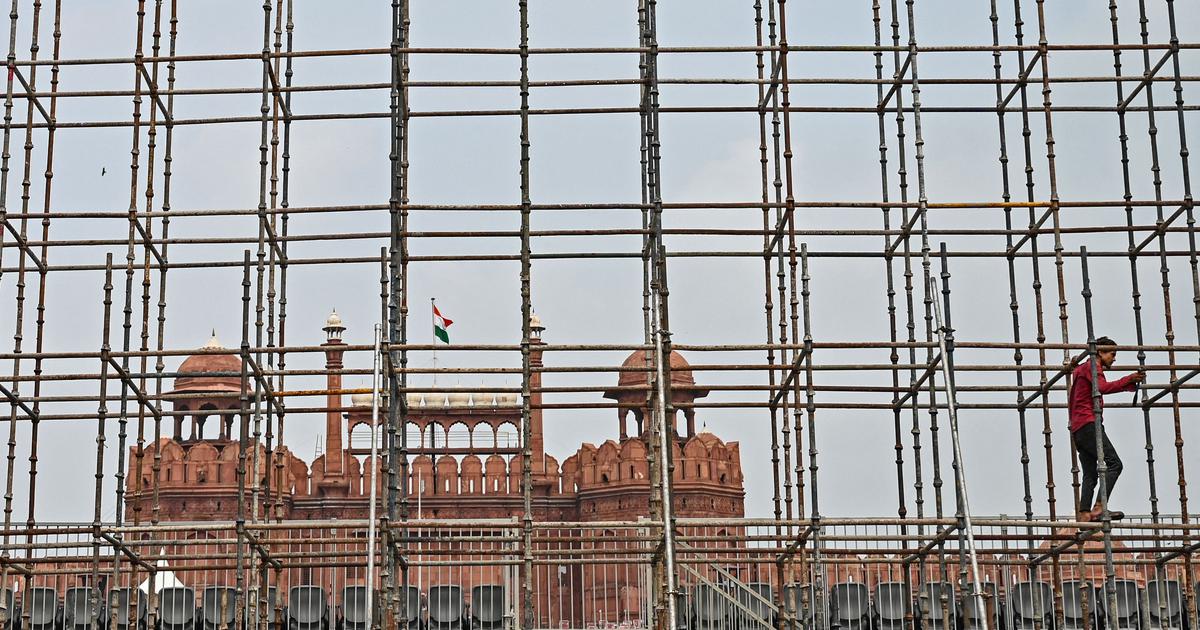
The recent directive from the Archaeological Survey of India (ASI), issued in December regarding tourist guides at the iconic Red Fort, has ignited a significant discussion about the authority to interpret India’s complex past. According to the ASI’s announcement, only those guides who are licensed by the Ministry of Tourism and endorsed by the ASI will be permitted to provide services within the historic site. This move is framed as a way to ensure that visitors receive accurate information and professional guidance during their explorations.
However, the significance of Delhi’s monuments extends beyond mere tourist attractions; they have emerged as vital educational spaces. For years, historians, educators, students, and enthusiastic citizens have used these sites for heritage walks aimed at delving into the multifaceted history of the city. These walks often transcend traditional storytelling, focusing instead on engaging audiences with the intricate tapestry of architecture, political history, collective memory, and cultural narratives.
The ASI’s latest initiative appears to be an attempt to regulate the discourse surrounding India’s historical interpretations. Critics argue that such measures align with a broader agenda that seeks to selectively reinterpret historical events to fit specific ideological narratives, often associated with the Hindutva movement. This approach not only risks homogenizing diverse historical accounts but also threatens to silence alternative voices that have historically contributed to India’s rich narrative fabric. These narratives are frequently amplified through social media, popular literature, and institutions supported by the state.
While proponents of the ASI’s regulations advocate for the importance of academic rigor in historical scholarship, they must recognize that public history is not solely the province of those with formal qualifications. Throughout history, many influential storytellers and interpreters of Indian heritage have emerged from diverse backgrounds, often possessing a rich understanding of their subjects despite lacking formal academic credentials. This accessibility has allowed for a broader engagement with history, enabling a multitude of perspectives to flourish.
As we navigate this evolving landscape, the question remains: who truly has the right to tell India’s history? With the increasing politicization of historical narratives, it is essential to foster an inclusive dialogue that allows for various interpretations to coexist. Encouraging community engagement and scholarship from various strata of society can contribute to a more nuanced understanding of our heritage.