
Atmanirbhar Nausena- Much More with Much Less
Much More with Much Less: Atmanirbhar Nausena
India has a maritime and shipbuilding tradition that goes back centuries. Even during the age of sail, Indian shipyards—particularly the famous Bombay Dockyard under the Wadia shipbuilders—built formidable ships that served with the Royal Navy. One notable example is HMS Trincomalee, a Royal Navy Leda-class sailing frigate launched in 1817 and built by the Wadia Brothers in Mumbai. It remains afloat today and is preserved as part of the National Museum of the Royal Navy in Hartlepool, England.
At Independence, the Indian Navy naturally inherited much of the Royal Navy's traditions, platforms and operating philosophy. As the Navy began to expand, India initially looked largely towards the West for ships and technology. Strategic and political circumstances subsequently led India increasingly towards the Soviet Union, from which it acquired capable platforms on favourable terms.
In the 1950s, the Indian Navy embarked on a programme aimed at developing indigenous shipbuilding capabilities. During the tenure of Admiral Katari, serious thought was given to building ships domestically. Naval officers were sent for specialised programmes in Naval Architecture at institutions including IIT Kharagpur and IIT Delhi. This helped lay the foundation for India's indigenous naval design capabilities.
Shipyards such as GRSE, Cochin Shipyard and Mazagon Dock also played an important role in this development. The Navy's Naval Constructor community became a core part of the ship-design process, providing specialised expertise for the design and development of warships.
The real achievement, however, came thereafter. India absorbed different schools of naval technology and gradually developed the ability to build increasingly sophisticated warships domestically. The construction of the Leander-class frigates marked an important milestone in this journey. INS Nilgiri, the first Leander-class frigate built at Mazagon Dock and commissioned in 1972, was a major achievement for India's indigenous warship-building programme.
From there, indigenous design and construction capabilities steadily matured.
Perhaps the Indian Navy's greatest strength has been its ability to integrate equipment and technologies of diverse origins—Russian weapons, Western propulsion and sensors, Israeli systems and, increasingly, indigenous equipment—onto sophisticated fighting platforms.
Submarine construction followed a similar evolutionary path, with valuable technology and experience gained through German HDW submarines and subsequently through the French Scorpène programme.
Designing and building a modern destroyer or frigate is an extraordinarily complex undertaking and can take several years from concept to commissioning. As India's design capabilities, shipyards, supply chains and indigenous content continue to mature, the time required for future projects should progressively reduce.
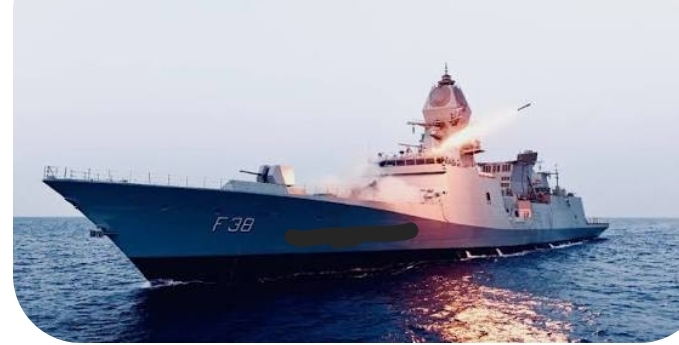
Today, India has developed the capability to design and build a wide range of naval platforms, including aircraft carriers, destroyers, frigates, anti-submarine vessels, survey ships, missile boats and new-generation stealth warships. India has also developed indigenous capabilities in the construction of nuclear-powered submarines.
That, to me, is the real story of the Indian Navy—not that we started with complete self-reliance, but that we learnt from multiple sources, absorbed technology, adapted it to our requirements and steadily developed the capability to design and build increasingly sophisticated warships ourselves.
Slug: much-more-with-much-less-atmanirbhar-nausena-indian-navy-shipbuilding