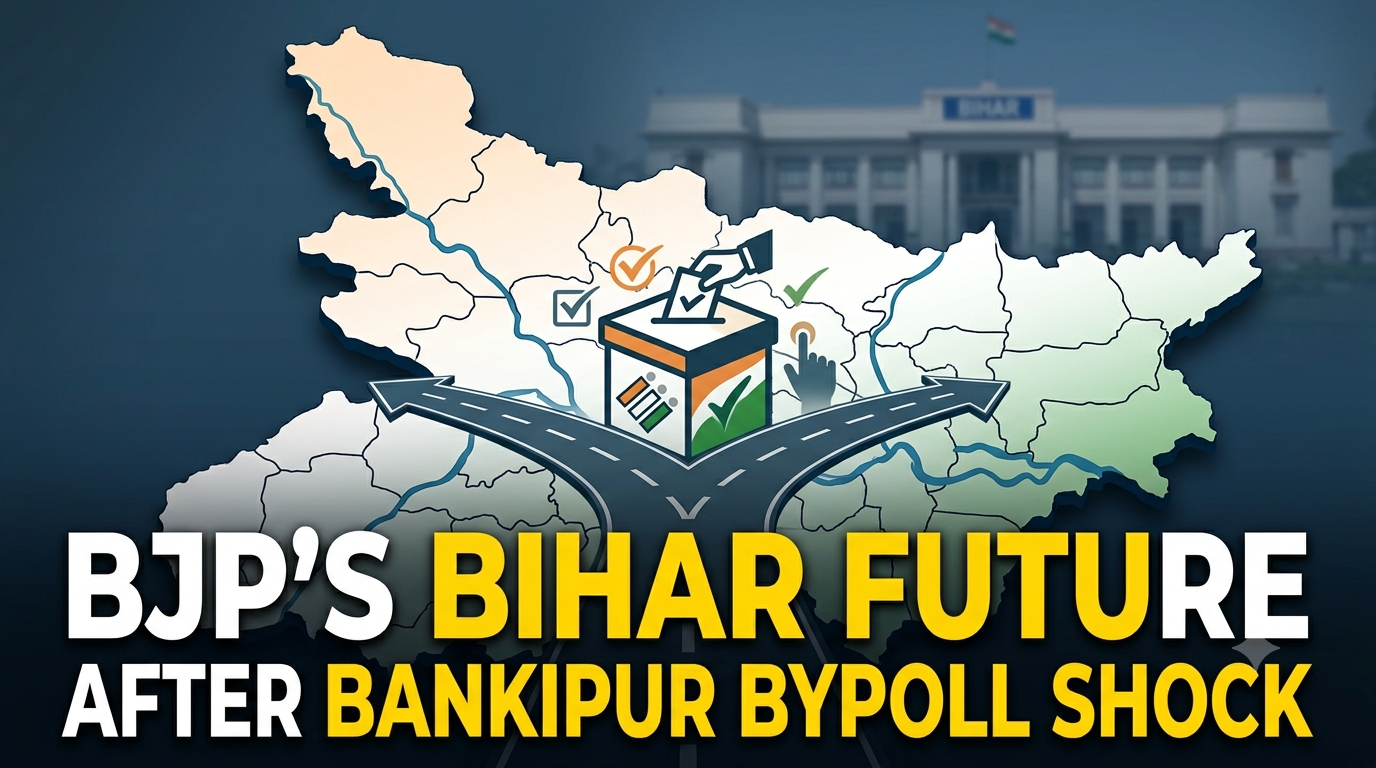
BJP’s Bihar Future Faces a Test After Bankipur Bypoll Shock
Bankipur Bypoll Defeat Opens Fresh Questions for BJP in Bihar
The Bharatiya Janata Party’s defeat in the Bankipur Assembly bypoll has triggered a fresh debate about its political strategy and electoral prospects in Bihar. Jan Suraaj Party founder Prashant Kishor defeated BJP candidate Neeraj Kumar Sinha in the high-profile contest, giving the relatively new party a significant electoral breakthrough.
The result is particularly significant because Bankipur has been considered one of the BJP’s traditional strongholds in Bihar. The seat fell vacant after former BJP MLA Nitin Nabin moved to the Rajya Sabha, making the bypoll an important test of the party’s local organisation and electoral appeal.
For the BJP, the outcome was more than a routine bypoll setback. The party had maintained a strong presence in the constituency for decades, and the defeat has raised questions about whether its traditional support base can continue to be relied upon without a strong local campaign and organisational effort.
Why the result matters
Prashant Kishor’s victory gives the Jan Suraaj Party its first major electoral breakthrough. Kishor entered the contest with a campaign focused on political change, development and an alternative to Bihar’s established political parties. His victory is likely to give the party greater visibility as it seeks to expand its political presence in the state.
The result may also indicate that voters dissatisfied with the BJP do not necessarily have to consolidate behind the RJD or other established Opposition parties. Jan Suraaj’s performance could create additional competition in constituencies where the BJP, RJD and other parties have traditionally dominated the contest.
A strong third political force can make electoral contests more unpredictable because even a relatively modest vote share can influence the final result in closely fought constituencies.
A warning, not a verdict
The Bankipur result is politically significant, but it should not by itself be treated as a complete measure of the BJP’s strength across Bihar. A bypoll is fought in a single constituency and can be influenced by local candidates, campaign issues, voter turnout and the circumstances surrounding the vacancy.
Bankipur’s electoral history nevertheless gives the result added importance. The BJP had won the seat repeatedly since 1995, making the defeat a notable development for the party.
The contrast between the BJP’s earlier strength in the constituency and the latest outcome has therefore prompted questions about its local-level mobilisation and ability to retain support among different sections of voters.
The organisational challenge
The BJP’s immediate priority is likely to be identifying why its established support did not translate into victory. Issues such as candidate selection, local organisation, voter mobilisation and the appeal of Jan Suraaj among younger and urban voters could come under scrutiny.
Other questions include whether local dissatisfaction affected turnout, whether Jan Suraaj attracted voters who had previously supported the BJP and how the presence of the RJD influenced the overall vote distribution.
The answers will matter beyond Bankipur. If the defeat was primarily the result of local factors, the BJP may be able to contain the political impact. If it reflects broader voter dissatisfaction, however, the party may need a more substantial organisational and political response.
What it means for Bihar’s electoral landscape
The bypoll may also influence how political parties approach future contests in Bihar. The emergence of Jan Suraaj adds another variable to an already competitive political environment and could make vote distribution more complicated in some constituencies.
At the same time, the RJD and other Opposition parties will have to assess whether Jan Suraaj is developing into a serious competitor for voters seeking an alternative to the established political structure.
The road ahead
The BJP’s future in Bihar will not be determined by one bypoll. However, the Bankipur defeat provides the party with a clear reason to review its assumptions, strengthen its local organisation and examine the issues that influenced voters.
For Prashant Kishor and the Jan Suraaj Party, the result represents an important political opening. For the BJP, it is a reminder that even long-standing strongholds can become competitive when voter preferences, candidates and political equations change.
Note: The broader implications of the Bankipur result are analytical assessments and should not be interpreted as a prediction of future election outcomes.