In Conversation with Colonel (Dr.) Ashwani Kumar, MiD, VSM (Retd.) Soldier | Military Intelligence Professional | Investigator | Writer | Defence Analyst
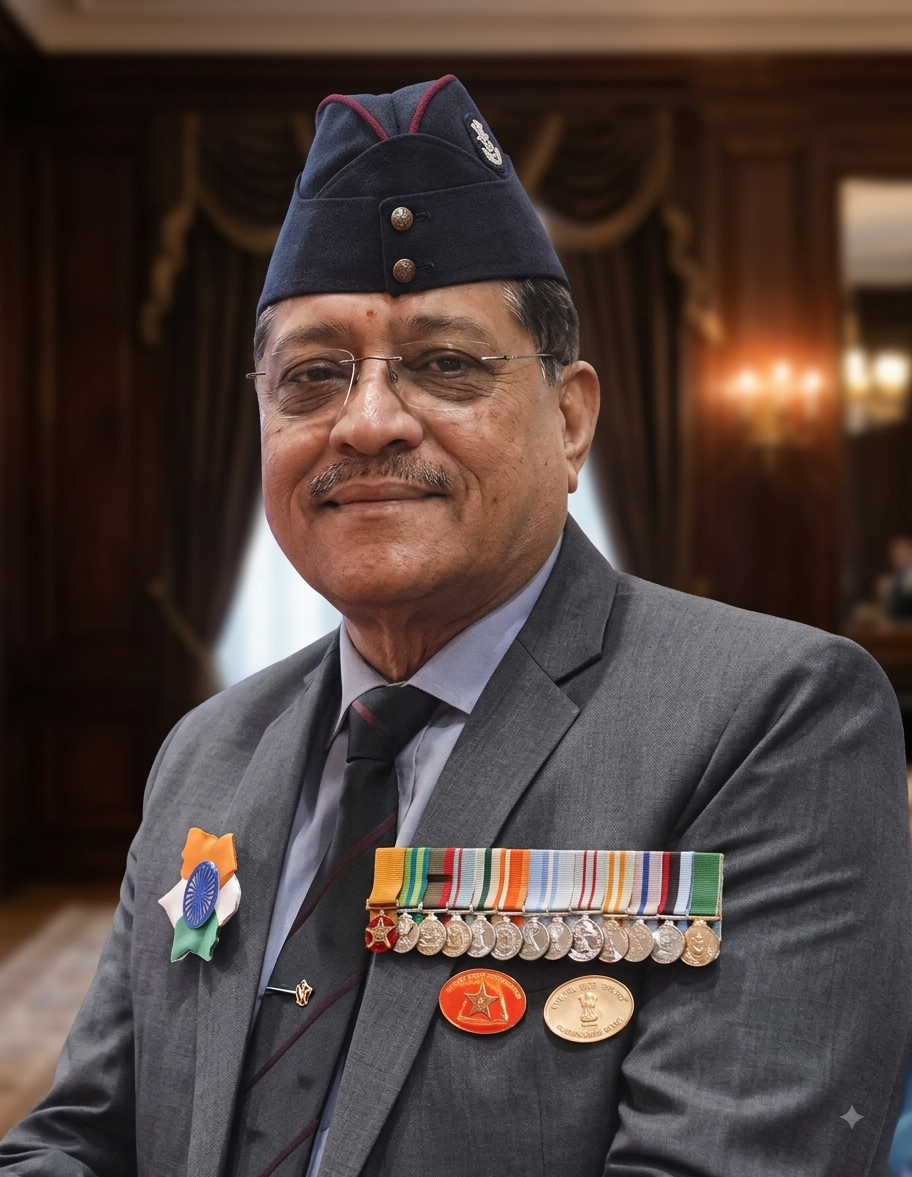
Colonel (Dr.) Ashwani Kumar: Lessons in Leadership, Discipline and a Meaningful Life
Colonel (Dr.) Ashwani Kumar, MiD, VSM (Retd.), is a former Indian Army officer whose distinguished career spans military operations, Military Intelligence, strategic assignments and government service. He served in challenging operational environments, including Jammu & Kashmir, the North-East and Sri Lanka, including Operation Pawan. After retiring from the Army, he served with the Cabinet Secretariat, PMO and Bureau of Police Research & Development (BPR&D), Ministry of Home Affairs. He also served as an instructor and Head of Department at the Military Intelligence Training School, Pune. His later corporate career focused on vigilance, investigations, fraud detection and risk management. He continues to write and remain engaged with history, strategic affairs and social and cultural initiatives.
Q1. You have experienced both the Indian Army and the corporate world. What is the biggest difference between the two, and what values remain common?
Colonel Kumar: The biggest difference is purpose and organisational culture. In the Army, the mission and the nation come first, while the corporate world generally focuses on performance, efficiency, profitability and stakeholder interests. Yet the fundamental values are remarkably similar: integrity, discipline, teamwork, leadership, accountability and communication. The Army taught me that a good leader does not merely give orders; he leads from the front and accepts responsibility when things go wrong. That principle remains equally relevant in corporate life.
Q2. What was Army life really like beyond what civilians usually see?
Colonel Kumar: Civilians see the uniform, parades, medals and ceremonies, but not always the life behind them—long separations from family, difficult terrain, uncertainty, physical and mental stress, and responsibility for the lives of your men. The greatest lesson is that you never operate as an individual. Discipline is not merely obeying orders; at its highest level, it means doing the right thing even when nobody is watching. Soldiers learn to put the mission and the safety of their comrades before personal comfort.
Q3. Which experience most changed your outlook on leadership?
Colonel Kumar: My participation in operations in Sri Lanka during Operation Pawan, including the raid on the Musalkutti militant camp on the night of 11/12 November 1988, was particularly defining. Such operations teach you that plans rarely survive contact with reality. Terrain, intelligence, weather and uncertainty can change everything within minutes. Leadership is tested when the plan breaks down. A commander must remain calm because his men look to him for confidence. Courage is not the absence of fear; it is performing your duty despite fear and uncertainty.
Q4. How have Army discipline and responsibility helped in your corporate career?
Colonel Kumar: They have been the foundation of my professional and personal life. Discipline taught me to be punctual, prepared and consistent, while responsibility taught me never to look for excuses. In vigilance and investigations, facts must be examined objectively, documents analysed carefully and conclusions based on evidence rather than assumptions or influence.
Q5. What leadership lessons did you carry into the corporate world?
Colonel Kumar: Five lessons stand out: lead from the front; trust your team; take responsibility; remain calm under pressure; and make decisions based on facts. These principles have remained relevant throughout my career in the Army, government and corporate sector.
Q6. What was the biggest challenge in moving from the Army to corporate life?
Colonel Kumar: The challenge was understanding a different language and set of priorities. The Army has a clear chain of command and usually an unambiguous mission, whereas corporations have multiple stakeholders and competing priorities. I learned to retain the Army's values while adapting my methods rather than trying to recreate the Army in the corporate world.
Q7. What lesson from your Army experience still guides you?
Colonel Kumar: You cannot always wait for perfect information before making a decision. Information may be incomplete and circumstances can change rapidly. A leader must assess what is available, evaluate the risks and decide. Even an honest, professional decision can sometimes be wrong. What matters is learning from it. I believe falling is not failure; refusing to rise is failure.
Q8. What message would you give today's youth?
Colonel Kumar: Do not confuse visibility with achievement. Social media can create an illusion that everyone else is successful and happy. Build competence before seeking recognition. Read, work hard when nobody is watching, respect your parents, teachers and colleagues, maintain your physical and mental fitness, and avoid shortcuts. A career can give you a position, but character gives you credibility.
Q9. How should young people deal with failure?
Colonel Kumar: A difficult phase is not necessarily a bad phase. Sometimes adversity teaches more than success. Instead of asking only, “Why did I fail?”, ask, “What did this failure teach me?” If you learn from failure, it becomes an investment in your future. Never allow temporary failure to become permanent self-doubt.
Q10. What three pieces of advice would you give your younger self or today's youth?
Colonel Kumar: First, build character before building a career. Positions change; character stays. Second, never stop learning. Remain curious throughout life. Third, have the courage to stand alone when necessary. You may lose a position or someone's approval, but you should never lose your integrity.
Final Question: After serving the nation in uniform and contributing to government and corporate life, what does a successful and meaningful life mean to you today?
Colonel Kumar: Today, I define success differently. Earlier, it meant rank, responsibility, recognition and professional accomplishment. Now, I believe success is looking back without feeling that you compromised your values. A meaningful life means contributing to others, supporting your family, standing by your principles and continuing to learn.
I have had the privilege of wearing the uniform and serving the nation, followed by opportunities to contribute to government and the corporate sector, including business development, vigilance and investigations. Today, I consider myself fortunate if my experience can guide the younger generation, preserve history, expose wrongdoing, promote integrity and contribute to society.
Ultimately, medals, designations and titles remain behind us. What remains is the impact we leave on people and the values by which we are remembered. For me, that is the real measure of a successful and meaningful life.