IS ZELENSKY BEING MADE A SCAPEGOAT FOR TRUMP'S FAILURES?
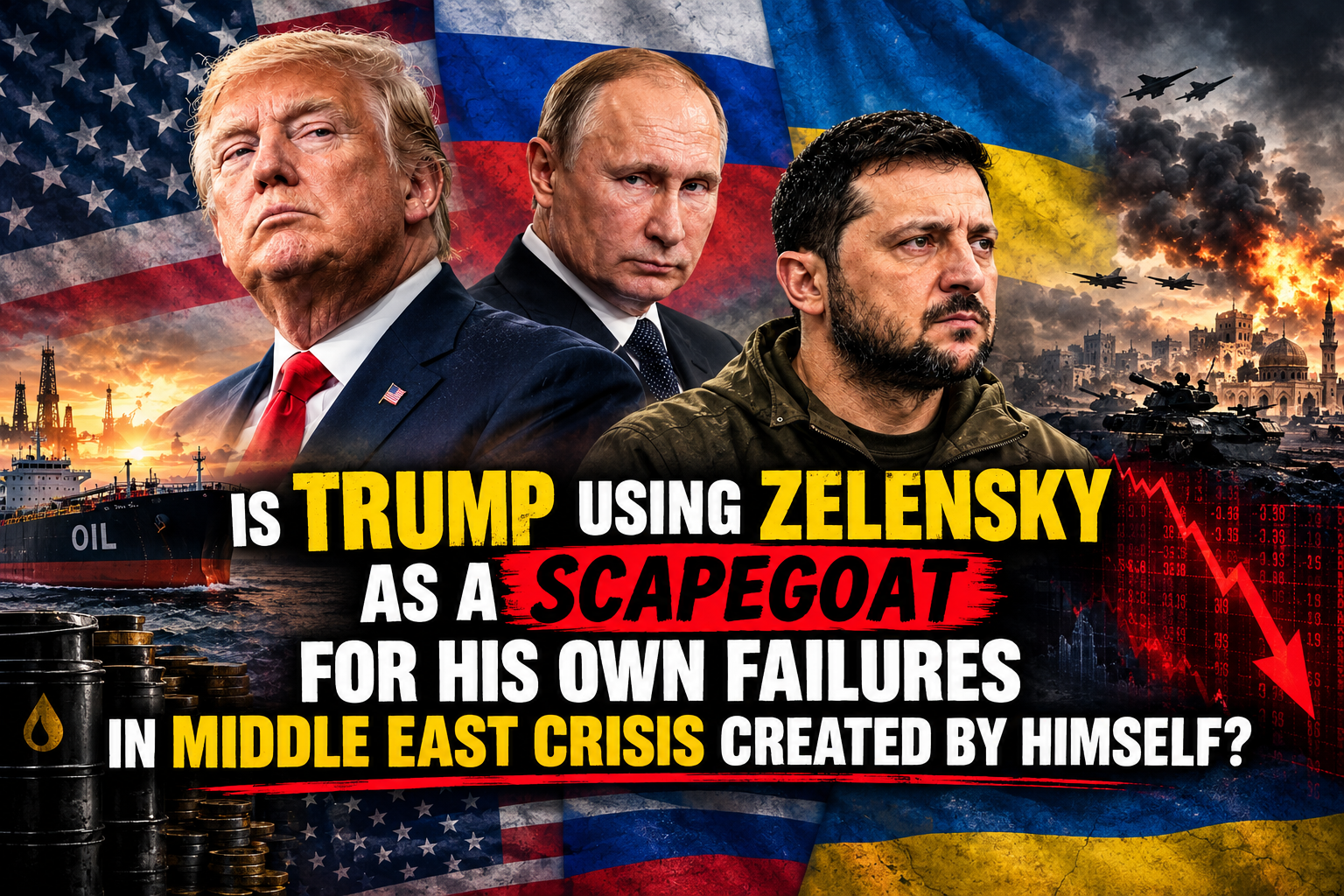
Donald Trump promised to end the Russia–Ukraine war quickly. Yet, more than four years after Russia's full-scale invasion began in February 2022, the war continues. Now, instead of focusing solely on pressuring Vladimir Putin to end the invasion, Trump is publicly attacking Ukrainian President Volodymyr Zelensky and suggesting that Ukraine needs a new leader.
1. THE FAILURE TO END THE RUSSIA–UKRAINE WAR
Trump repeatedly portrayed himself as the leader who could bring peace between Putin and Zelensky. But the war continues, and his administration has yet to secure a comprehensive peace agreement. On October 10, 2026, Trump called for Ukraine to replace Zelensky, accusing him of failing to make a deal. Meanwhile, Russia continues its attacks on Ukrainian cities and infrastructure.
2. THE MIDDLE EAST CRISIS AND RISING FUEL PRICES
The US-Israeli war with Iran, which began in February 2026, has severely disrupted global energy supplies. The effective closure of the Strait of Hormuz has contributed to rising fuel prices, putting additional pressure on American consumers and creating a political problem for Trump ahead of the November midterm elections.
Rather than acknowledging the wider consequences of the Middle East conflict, Trump has also blamed Ukrainian attacks on Russian oil refineries for rising diesel prices.
3. A CONTROVERSIAL DEAL WITH PUTIN
On October 9, Trump announced a deal to import Russian diesel and temporarily ease sanctions affecting Russian fuel exports. The move drew criticism from Ukraine and European allies, who warned that Russian energy revenues could help finance Moscow's war effort.
The contradiction is difficult to ignore: Washington is seeking fuel supplies from Russia while Ukraine continues to face Russian bombardment.
4. BLAMING ZELENSKY WHILE PRESSURING UKRAINE
Trump has suggested that Zelensky should be replaced and pressed Ukraine to accept a settlement. At the same time, uncertainty over American military assistance, intelligence sharing and satellite support has raised concerns about Ukraine's ability to defend itself.
A peace agreement requires difficult compromises, but pressuring the invaded country is not the same as persuading the aggressor to stop the invasion.
5. IS ZELENSKY A CONVENIENT POLITICAL DISTRACTION?
Trump faces mounting pressure over the war with Iran, high fuel prices and his failure to deliver the swift end to the Russia–Ukraine war that he promised.
Against this background, his repeated criticism of Zelensky raises an important question: Is blaming Ukraine becoming a convenient way to deflect attention from the consequences of American foreign policy decisions?
THE BOTTOM LINE
Trump cannot claim credit for peace before peace exists, nor can he hold Zelensky solely responsible for a war initiated by Russia's full-scale invasion.
If his administration wants to end the war, it must demonstrate that its strategy can deliver a sustainable peace—not merely pressure Kyiv, make controversial deals with Moscow, and shift the political blame when its promises remain unfulfilled.
Peace requires diplomacy, accountability and pressure on the aggressor. Blame alone will not end a war.