Life History of Syama Prasad Mookerjee Dr. Syama Prasad Mookerjee
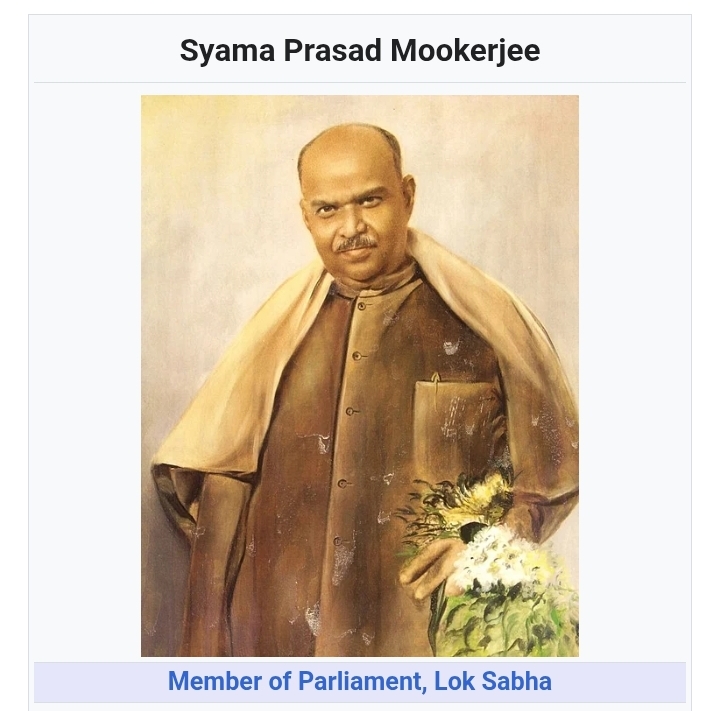
Life History of Dr. Syama Prasad Mookerjee
Dr. Syama Prasad Mookerjee (6 July 1901 – 23 June 1953) was an Indian academic, barrister and politician, and the founder of the Bharatiya Jana Sangh, which later became the ideological precursor to the Bharatiya Janata Party.
Early Life and Academic Career
Birth and Family: Dr. Mookerjee was born in Calcutta (now Kolkata) on July 6, 1901. He was the son of Sir Ashutosh Mukherjee, a renowned jurist and Vice-Chancellor of the University of Calcutta.
Education: He studied at Presidency College and completed his master's degree before enrolling as an advocate at the Calcutta High Court in 1924. He later studied law at Lincoln's Inn in London and was called to the English Bar in 1927.
Calcutta University: In 1934, at the age of 33, he became the youngest Vice-Chancellor of the University of Calcutta. He served two terms until 1938 and was associated with institutional development and the promotion of vernacular education.
Pre-Independence Political Career
Legislative Entry: Mookerjee entered the Bengal Legislative Council in 1929.
Hindu Mahasabha: He joined the Hindu Mahasabha and later served as its president from 1944 to 1948.
Bengal Cabinet: In 1941, he served as Finance Minister in the coalition government of undivided Bengal.
Partition of Bengal: During the political developments surrounding the partition of Bengal in 1946–1947, Mookerjee advocated the division of Bengal, arguing that Hindu-majority areas should remain within India rather than become part of Muslim-majority East Pakistan.
Post-Independence Career and Ministerial Role
Union Minister: Following India's independence in 1947, Mookerjee joined Prime Minister Jawaharlal Nehru's first Union Cabinet as Minister for Industry and Supply.
Resignation: He resigned from the Union Cabinet in 1950 following disagreements over the Liaquat–Nehru Pact and the government's approach to minority-related issues and relations with Pakistan.
Founding of Bharatiya Jana Sangh and Kashmir Campaign
Founding of Jana Sangh: In 1951, with the support of the Rashtriya Swayamsevak Sangh (RSS), Mookerjee founded the Bharatiya Jana Sangh as a political alternative in independent India.
Opposition to Article 370: Mookerjee strongly opposed Article 370, which provided special constitutional provisions for Jammu and Kashmir. He campaigned against the separate constitutional arrangements associated with the region, including the slogan, “Ek desh mein do vidhan, do pradhan, do nishaan.”
Arrest and Death: In May 1953, Mookerjee entered Jammu and Kashmir without the permit that was required at the time. He was arrested by the state authorities on May 11, 1953, and died in detention in Srinagar on June 23, 1953. His death led to questions and demands for an inquiry into the circumstances surrounding it.
Dr. Syama Prasad Mookerjee remains an important figure in the political history of modern India, particularly for his role in the country's early post-Independence politics and the formation of the Bharatiya Jana Sangh.