Narendra Damodardas Modi is the Prime Minister of India,
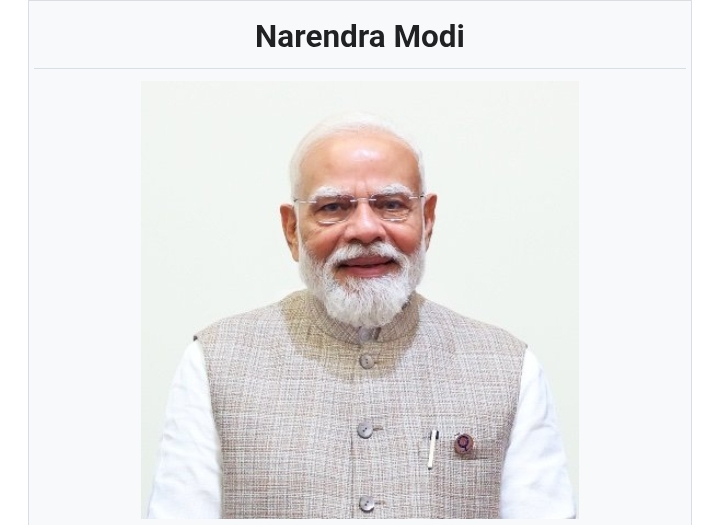
Narendra Modi: Early Life, Political Journey and Premiership
Narendra Damodardas Modi is an Indian politician who has served as the Prime Minister of India since May 26, 2014. He became the country's first prime minister born after India's independence in 1947 and began his third consecutive term on June 9, 2024.
Early Life and Background
Birth and Family
Narendra Modi was born on September 17, 1950, in Vadnagar, which was then part of Bombay State and is now in Gujarat. He was the third of six children born to Damodardas Modi and Hiraben Modi. His family had modest financial means, and his early years were shaped by the circumstances of a small-town household.
Early Work and Spiritual Interests
According to his official biography, Modi helped his family at their tea stall during his childhood. His life story also describes his interest in spirituality and the influence of Swami Vivekananda's teachings. Accounts of his travels during his youth have been widely discussed, although individual details should be attributed to reliable biographical sources.
Education
Modi completed his schooling in Vadnagar and later earned a Master of Arts degree in political science from Gujarat University, according to his official profile and parliamentary biography.
Association with the RSS and Early Political Career
Rashtriya Swayamsevak Sangh
Modi became associated with the Rashtriya Swayamsevak Sangh (RSS) during his early years. He subsequently worked as a full-time organiser, known as a pracharak, before entering a larger role in party politics.
The Emergency and Entry into the BJP
During the Emergency imposed by Prime Minister Indira Gandhi from 1975 to 1977, Modi was involved in political activities opposing the government, according to accounts of his political career. He later worked within the Bharatiya Janata Party (BJP), taking on organisational responsibilities in Gujarat and at the national level.
Chief Minister of Gujarat (2001–2014)
Assuming Office
Modi became Chief Minister of Gujarat in October 2001, succeeding Keshubhai Patel. He remained in the post until May 2014, when he moved to national politics following the BJP's victory in the general election.
The 2002 Gujarat Violence
The communal violence that erupted in Gujarat in 2002 resulted in extensive loss of life and displacement and drew widespread national and international criticism of the state government's handling of the situation. Allegations concerning the role of Modi and other officials were investigated by a Special Investigation Team appointed under Supreme Court supervision.
In 2022, the Supreme Court dismissed a petition challenging the SIT's closure report in the case concerning allegations of a larger conspiracy. The Court upheld the outcome of that investigation. This legal finding should be distinguished from the wider historical and political debate about the violence and the government's response.
Development and Elections
Modi led the BJP to victories in the Gujarat Assembly elections of 2002, 2007 and 2012. His administration promoted industrial investment, infrastructure development and improvements in electricity supply. These priorities became associated with what supporters described as the “Gujarat model” of development, while assessments of its outcomes have varied among political parties, researchers and commentators.
Prime Minister of India (2014–Present)
First Term: 2014–2019
In the 2014 general election, the BJP won 282 seats in the Lok Sabha, securing a single-party majority for the first time since 1984. Modi was sworn in as Prime Minister on May 26, 2014. His first term included initiatives related to sanitation, financial inclusion, digital services and changes to India's indirect tax system.
Second Term: 2019–2024
In the 2019 general election, the BJP won 303 Lok Sabha seats and returned to power with a larger majority. During this term, the government continued its infrastructure and digitalisation programmes and introduced or expanded initiatives across several policy areas.
Third Term: 2024–Present
Following the 2024 general election, Modi was sworn in for a third consecutive term on June 9, 2024. The BJP won 240 seats and formed a government with support from its National Democratic Alliance (NDA) partners. The result marked a return to coalition government at the Union level under Modi's leadership.
Major Policies and Initiatives
- Goods and Services Tax (GST): Introduced in 2017 to bring many indirect taxes under a unified national framework.
- Demonetisation: In November 2016, the government withdrew the legal-tender status of existing ₹500 and ₹1,000 banknotes.
- Swachh Bharat Mission: A national campaign focused on sanitation and cleanliness.
- Ayushman Bharat: A healthcare initiative that includes health coverage for eligible beneficiaries.
- Pradhan Mantri Jan Dhan Yojana: A financial-inclusion programme intended to expand access to banking services.
- Digital India: An initiative aimed at expanding digital infrastructure and access to government services.
Conclusion
Narendra Modi's political career spans organisational work with the RSS and BJP, more than twelve years as Chief Minister of Gujarat, and three consecutive terms as Prime Minister of India. His tenure has included major economic and administrative initiatives as well as continuing debates about governance, social policy and the outcomes of key decisions. His political legacy remains an important subject of public discussion and analysis.