NUR MANZILL AND JALPAIGURI HISTORY
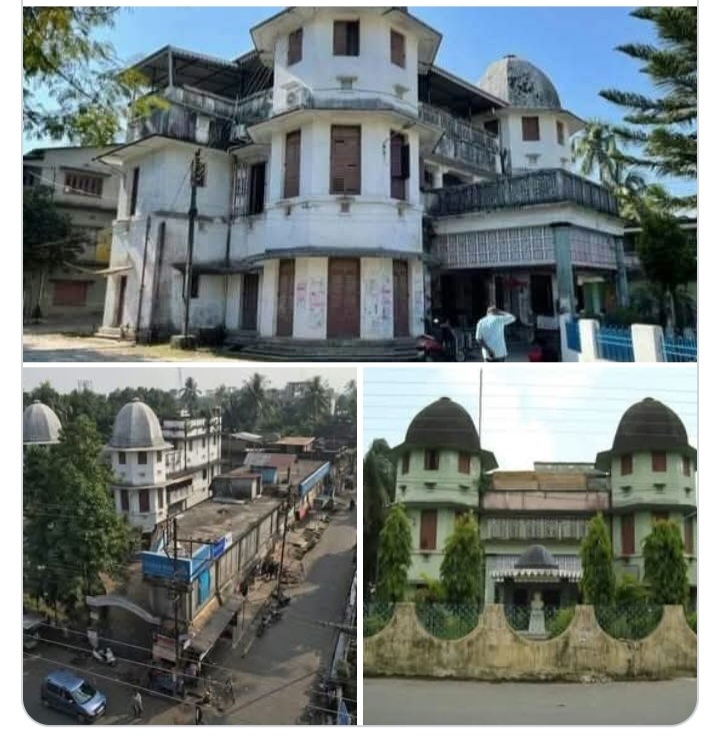
Nur Manzil and Jalpaiguri: The Heritage Story of Khan Bahadur Waliar Rahman
Jalpaiguri: Khan Bahadur Waliar Rahman (1861–1943) was a lawyer and tea industrialist who came from Noakhali in East Bengal and later settled in Jalpaiguri. Alongside his legal practice, he entered the tea business with Khan Bahadur Nawab Musharraf Hossain and established several tea estates in Assam while keeping his headquarters in Jalpaiguri.
In 1900, Waliar Rahman was among the entrepreneurs associated with the establishment of Atiabari Tea Estate, along with Tarini Prasad Roy and Gopal Chandra Ghosh. He was also the nephew of Khan Bahadur Munshi Rahim Bux.
Nur Manzil and the Waliar Rahman Family
After becoming a successful tea industrialist, Waliar Rahman built the mansion now known as Nur Manzil. He was also involved in public life and was associated with the Muslim League. His activities took him to different areas of the Dooars, Rajganj and Belakoba.
In 1943, he was associated with the establishment of Waliar Rahman H.E. School in Belakoba. His friend Akshay Kumar Basu served as the school's headmaster. Following the Partition of India, the institution came to be known as Belakoba High School.
Waliar Rahman was also a member of the Jalpaiguri Municipality. According to the historical account, the British government conferred the title of “Khan Bahadur” on him in 1941.
Family Connections
Waliar Rahman had seven children, including six sons who were graduates, with several of them becoming associated with the tea industry. His daughter married Khan Bahadur Mokhlesar Rahman, the younger brother of Jalpaiguri's Nawab Musharraf Hossain. The building now known as Mukherjee Bhavan in Kadamtala was reportedly their residence after marriage.
His fifth son, Nur Mohammad, went to England to study law. According to the account, Waliar Rahman had the Nur Manzil mansion constructed after his son's return. Nur Mohammad later died unexpectedly, after which Waliar Rahman also died in November 1943. He was buried in the family graveyard to the south of the old mosque.
Nur Manzil as an Educational Centre
After India's independence, classes of Rashtriya Uchcha Balika Vidyalaya, later known as the State Girls' High School, began in the Nur Manzil building in 1948. Although the school subsequently moved to its present location, its hostel continued to function at Nur Manzil for a period. Renu-di and later Moyna-di served as hostel superintendents before the hostel was shifted to the school's own premises.
Prasannadev Mahila Mahavidyalaya, one of Jalpaiguri's women's colleges, also began its operations from the Nur Manzil building. According to the account, the college functioned there from around 1950 to 1956 before moving to other locations and eventually settling in the Club Road area.
A Building With a Long Public History
The heritage building is currently known as the DPSC Office. The building is also associated with an anecdote involving Bengali actor Asit Baran, who reportedly stayed there during a visit to Jalpaiguri in the 1960s. According to the account, a tender coconut was picked from a tree on the premises and served to the actor after he expressed a desire to drink coconut water.
Nur Manzil thus remains associated with Jalpaiguri's legal, tea-industry, educational and social history. The building's changing use over the decades reflects its place in the heritage history of the town.