PM Modi Welcomes GST Council Reforms, Proposes Higher Prosecution Threshold and Lower Penalties
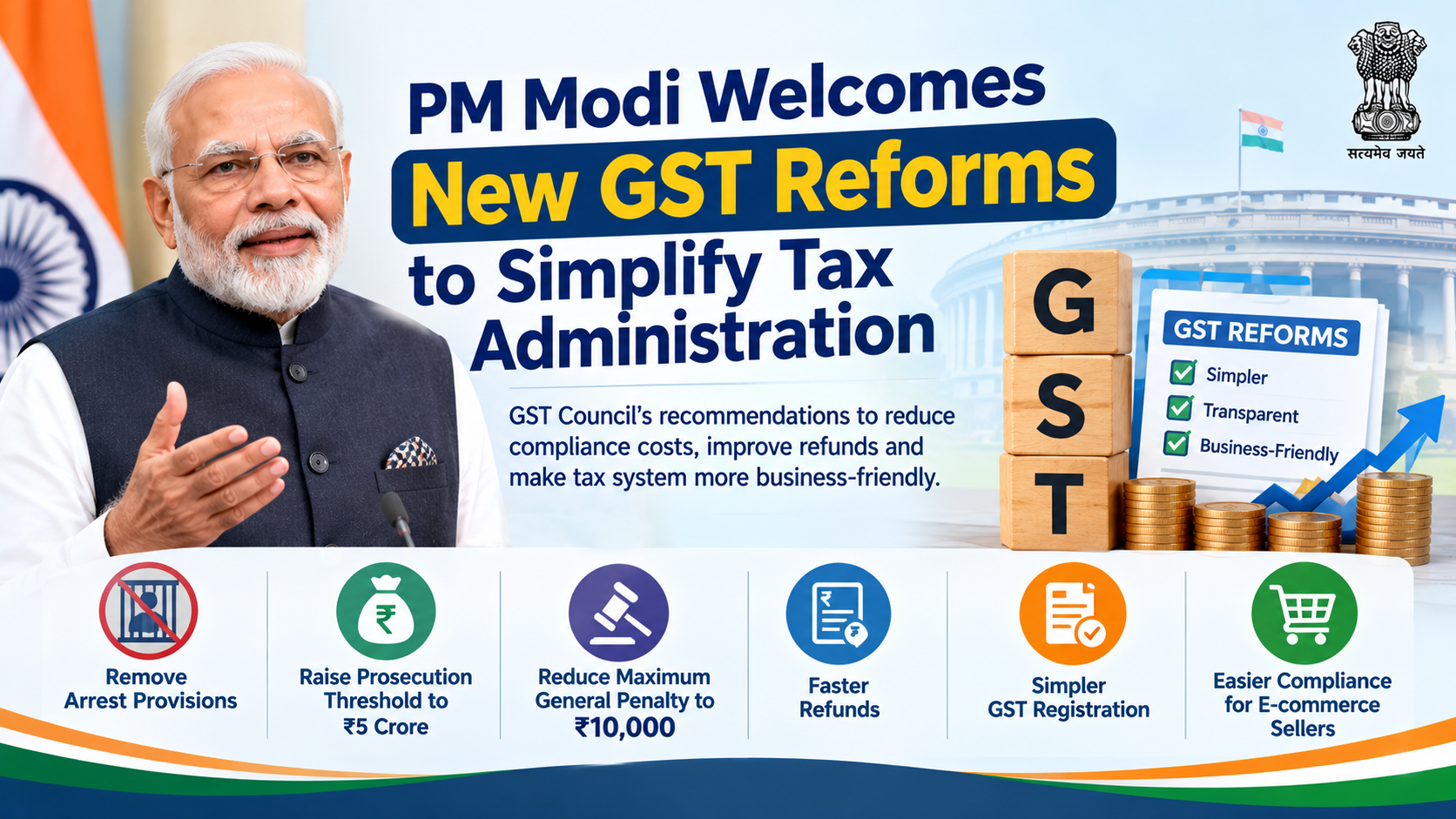
PM Modi Welcomes New GST Reforms to Simplify Tax Administration
New Delhi,
Prime Minister Narendra Modi has welcomed a new set of reform recommendations approved by the GST Council, aimed at making India's Goods and Services Tax (GST) system simpler, more transparent and taxpayer-friendly.
The recommendations announced after the Council's 57th meeting focus on simplifying tax procedures, reducing compliance costs, improving refunds and strengthening a trust-based approach to tax administration.
Key GST Reform Recommendations
The GST Council has recommended several changes intended to reduce procedural burdens on businesses and taxpayers. These include removing arrest provisions under the GST framework, raising the monetary threshold for prosecution from ₹1 crore to ₹5 crore and reducing the maximum general penalty under Section 125 of the CGST Act from ₹25,000 to ₹10,000.
The Council has also recommended improvements to input tax credit and refund processes, clearer procedures for registrations and tax notices, and measures to make compliance more straightforward.
Simpler Registration and E-commerce Compliance
The recommendations include simplifying GST registration procedures and easing compliance requirements for eligible small sellers operating through e-commerce platforms. The proposed changes are intended to make it easier for businesses to understand and meet their tax obligations.
Faster Refunds and Better Cash Flow
The Council has recommended measures to improve refund processing and facilitate input tax credit in specified cases. If implemented effectively, these changes could help eligible businesses manage working capital and reduce delays associated with tax-related procedures.
Small businesses, service providers and exporters may benefit from the proposed measures where they meet the relevant eligibility conditions.
What Happens Next?
The GST Council's announcements are recommendations and do not automatically mean that every proposed change has become law. Their implementation will depend on the required legislative amendments, notifications and administrative procedures.
Businesses and taxpayers should follow official announcements from the Ministry of Finance and the GST authorities for updates on implementation dates and applicable requirements.
Conclusion
Prime Minister Narendra Modi has welcomed the GST Council's latest recommendations, which aim to simplify tax administration, reduce compliance costs and improve the taxpayer experience. The proposed changes could support businesses by streamlining procedures and improving access to refunds. Their practical impact will depend on the final legal provisions and how the measures are implemented.