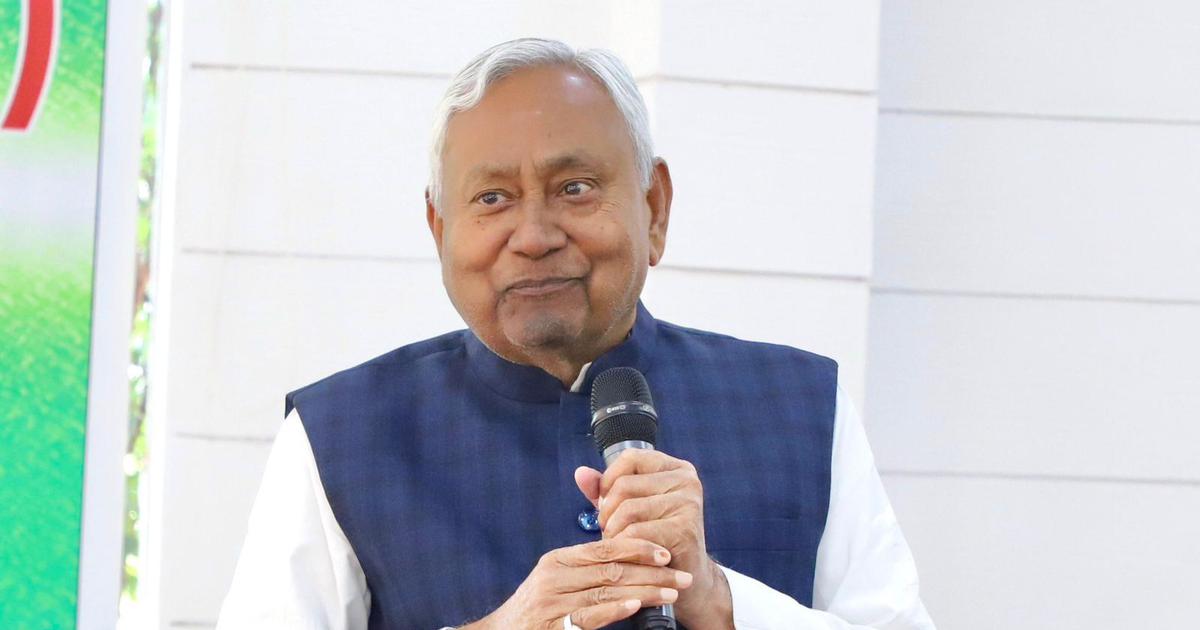
Bihar Chief Minister Nitish Kumar has officially resigned from his position as a member of the state’s Legislative Council, following his recent election to the Rajya Sabha. This marks Kumar’s first ascent to the Upper House of Parliament, where he was elected on March 16. His resignation was crucial as it adhered to the Prohibition of Simultaneous Membership Rules set forth in 1950, which necessitate that individuals elected to both Parliament and a state legislature must relinquish one of their roles within 14 days.
The timeline for Kumar’s resignation coincides with the final day allowed for such a transition, reflecting the urgency and procedural adherence typical of political maneuverings in India. His tenure in the Legislative Council, which was his fourth consecutive term, was scheduled to conclude in 2030. Nonetheless, his election to the Rajya Sabha signifies a pivotal step in his political career as he seeks to broaden his influence at the national level.
Despite stepping down from the Legislative Council, Kumar continues to serve as Bihar’s Chief Minister. Article 164(4) of the Indian Constitution enables individuals to maintain their position for a period of up to six months without being a member of the state legislature. This provision grants him a temporary safety net as he navigates his new responsibilities in Parliament.
Kumar, who has become Chief Minister for the tenth time following the recent Assembly elections, expressed his ambition to serve across all legislative domains — including the Legislative Assembly, Legislative Council, Lok Sabha, and now the Rajya Sabha. His vision underscores a desire for broader representation and influence, encapsulating a career marked by significant political tenacity.
The Chief Minister’s journey reflects not only his personal aspirations but also the dynamic nature of Indian politics, where shifts in membership and power can have far-reaching implications. His leadership within the Janata Dal (United) party continues to be a cornerstone of his political identity as he balances state governance with national responsibilities.