By Staff Writer
The recent incident involving violence against a person from Northeast India has once again sparked outrage and raised serious concerns about racism and discrimination within the country. The tragedy has left many questioning why such incidents continue to occur despite years of awareness and calls for unity.
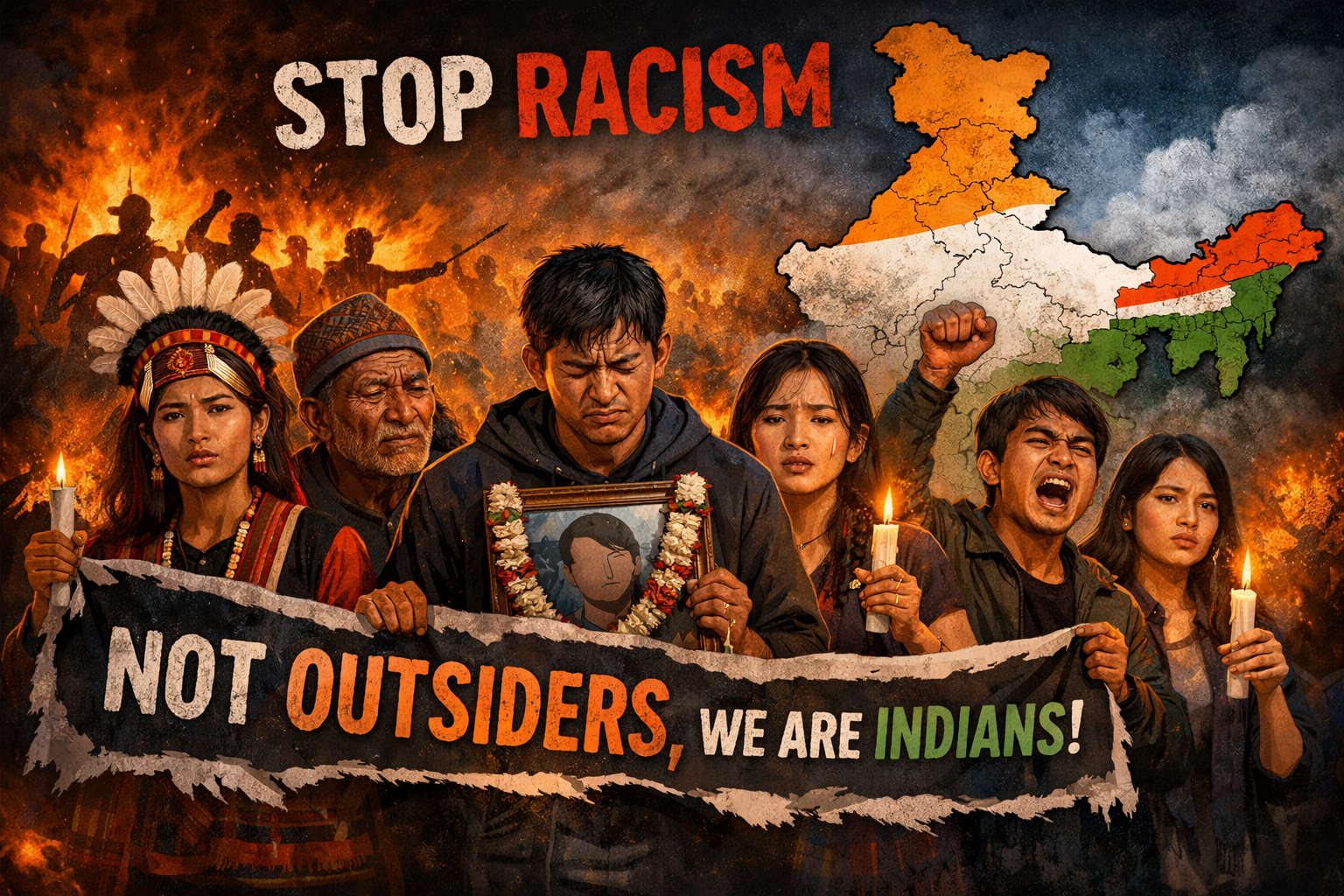
People from Northeast India are speaking out strongly, emphasizing a simple yet powerful truth—they are not outsiders. They are equal citizens of India, with rich cultures, diverse languages, and unique identities that form an integral part of the nation’s heritage. The Northeast is not separate; it is a proud and inseparable part of India.
For decades, the region has welcomed people from across the country. Thousands of non-tribal individuals live and work peacefully in states like Arunachal Pradesh, building their livelihoods without fear. This spirit of acceptance and coexistence has long been a hallmark of the Northeast.
However, many now ask: why is this respect not reciprocated?
Incidents of racial discrimination, harassment, and even violence against people from the Northeast continue to surface in different parts of the country. Victims are often targeted because of their appearance, language, or cultural background—an issue that activists and community members describe as deeply rooted ignorance.
“Treating someone differently because of how they look or where they come from is not just wrong—it is inhumane,” said a community member reacting to the latest tragedy. “Racism does not reflect superiority; it reflects a lack of understanding.”
The emotional toll of such incidents is immense. Each act of discrimination leaves lasting scars—not only on individuals but also on entire communities. Yet, these painful experiences are also fueling a stronger, united voice demanding change.
There is now a growing call for accountability, awareness, and stricter enforcement of laws to protect citizens from racial discrimination. Voices from the Northeast are clear: silence is no longer an option.
“We demand respect, safety, and dignity—everywhere, every time,” the message resonates across social platforms and communities.
The tragedy also highlights a deeper human story—a person who had left home to earn a livelihood for their family, never imagining such a heartbreaking end. It serves as a stark reminder of the urgent need for compassion, unity, and equality in a diverse nation like India.
As the country moves forward, the question remains: can India truly stand united if some of its own citizens continue to feel excluded?
The answer lies in collective responsibility—to respect differences, reject discrimination, and uphold the dignity of every individual, regardless of where they come from.