




Pakistan Republic Day Cancelled :: Pakistan’s Decision Amid Economic Crisis – Republic Day Celebrations Called Off
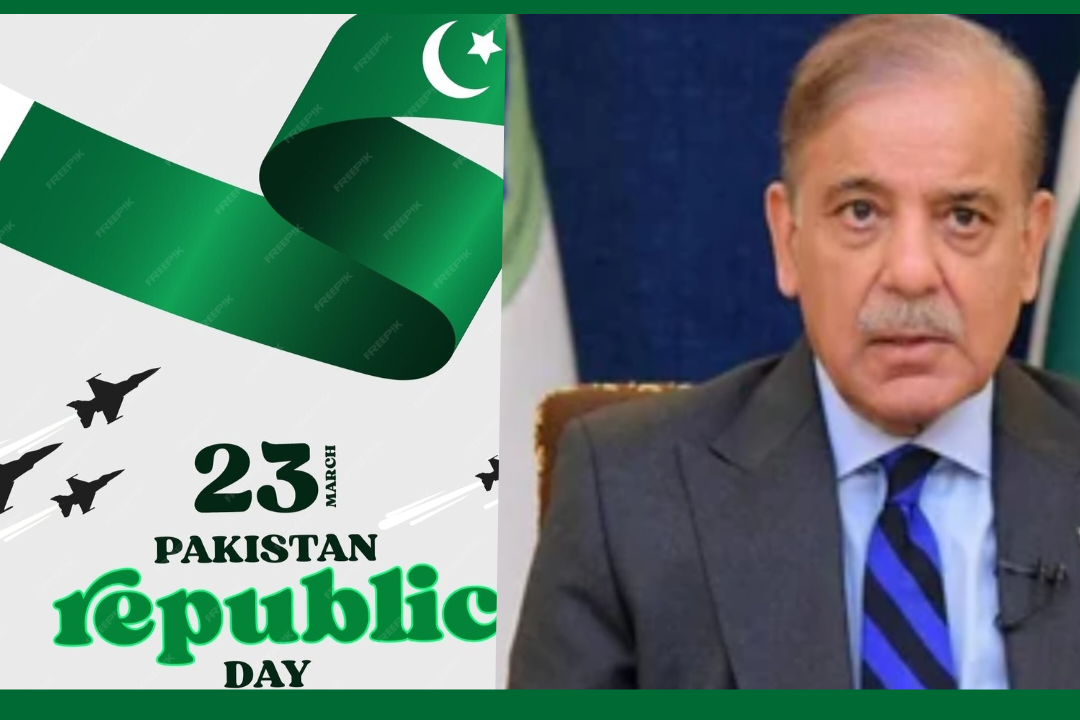
March 19, IPU Media International Update News : The unfolding conflict in West Asia has dealt a devastating blow to neighboring Pakistan. Already mired in a quagmire of debt, the nation is now grappling with severe fuel shortages and a deepening economic crisis. Against this backdrop, Prime Minister Shehbaz Sharif has taken a momentous decision to cancel the Republic Day parade—an event traditionally celebrated with great pomp and grandeur in Islamabad every year on March 23.
With the country’s economic situation having deteriorated to a dire state, the government has announced that it is unable to bear the exorbitant costs associated with organizing large-scale military maneuvers.
* On March 23, only a flag-hoisting ceremony will take place.
* The annual Military Parade will not be held.
* The 31-gun salute and the vibrant cultural programs have been completely cancelled.
** A Testament to Pakistan’s Dire Straits **
International analysts observe that the cancellation of Republic Day celebrations—events that typically serve as a testament to a nation’s honor and military prowess—reflects the precipitous decline of Pakistan. With fuel supplies disrupted and prices skyrocketing due to the conflict in West Asia, the common people are also reeling under immense hardship. Many critics argue that reaching a point where a nation cannot even celebrate its own national festivities marks the absolute nadir of its dire predicament.
** The Historical Significance of Pakistan Day **
The cancellation of Republic Day celebrations marks a rare departure from the tradition of organizing an event intertwined with several pivotal historical milestones—most notably the 1940 Lahore Resolution. This resolution articulated the formal demand for a separate nation for the Muslims of the subcontinent, a demand that ultimately paved the way for the Partition of India in 1947. Nine years after attaining independence, on March 23, 1956, Pakistan officially emerged as a republic following the adoption of its first constitution.
** A Crisis Triggered by Global Developments **
The situation escalated significantly following the outbreak of conflict in the Middle East. Consequently, Pakistan implemented stringent measures reminiscent of those enforced during the COVID-19 pandemic. These measures included the adoption of “work-from-home” policies and online educational programs, aimed at curtailing vehicular traffic and reducing fuel consumption. The closure of the Strait of Hormuz has severely disrupted Pakistan’s energy supply; the nation relies almost entirely—for approximately 85% to 99% of its crude oil and LNG imports—on this specific maritime route, sourcing these supplies primarily from Qatar and the UAE.
** The Economic Impact of the Energy Crisis **
Reports indicate that, due to this crisis, Pakistan’s monthly fuel import costs have surged from $1.7 billion to approximately $3.5–$4.5 billion. Rising fuel prices are being further exacerbated by an ongoing shortage of LNG. Consequently, the government is under pressure to explore alternative energy sources and implement immediate electricity rationing measures. This energy crisis has had a palpable impact on the country’s inflation rate, posing a risk to remittance inflows from Pakistanis residing abroad—particularly those in the Gulf region.
** Planning for Alternative Celebrations **
In light of the prevailing circumstances, the Prime Minister’s Office has announced that Pakistan Day celebrations will be limited to simple flag-hoisting ceremonies. Typically, Republic Day celebrations feature a 31-gun salute in the capital, Islamabad, a 21-gun salute in provincial cities, followed by military parades showcasing the armed forces. Although the scope of the celebrations has been scaled back this year, the objective remains to conduct the events in a manner that reflects dignity and respect, thereby upholding the significance of the occasion.
** Continuous Monitoring of Government Directives and Fuel Supplies **
Prime Minister Shehbaz Sharif has directed all government departments to organize celebrations with a focus on simplicity and dignity, ensuring that the true essence of Pakistan Day is upheld, even though the scale of the festivities has been curtailed. Furthermore, the government has initiated measures to boost petroleum imports and to closely monitor existing reserves. Currently, these reserves amount to a supply equivalent to just 11 days of crude oil and nine days of LPG. As part of broader austerity measures, salary cuts for ministers and restrictions on foreign travel have been implemented with the aim of conserving fuel resources.
— M Venkata T Reddy, News Editor and Investigative Journalist

