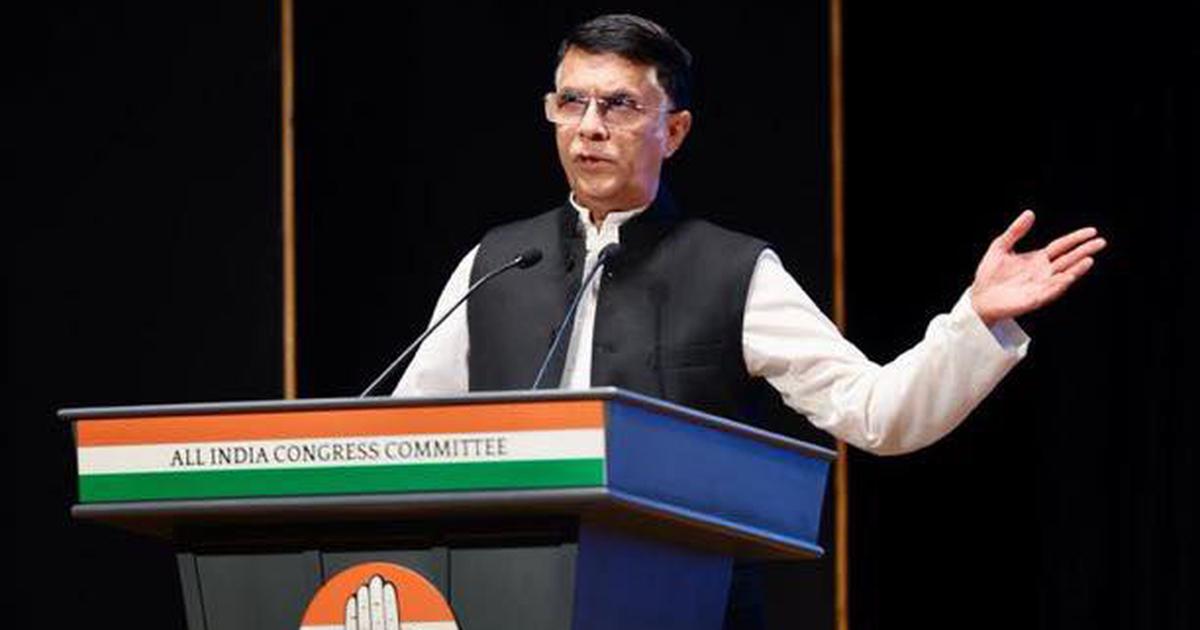
In a dramatic turn of events, Congress leader Pawan Khera has approached the Telangana High Court, arguing that the case filed against him by the Assam Police is driven by political motives. Khera’s plea for transit anticipatory bail comes in the wake of a first information report (FIR) lodged by Riniki Bhuyan Sarma, the wife of Assam Chief Minister Himanta Biswa Sarma. The FIR was triggered by Khera’s allegations that he possesses documents linking Bhuyan Sarma to passports from the United Arab Emirates, Egypt, and Antigua and Barbuda.
The case has stirred controversy within political circles, raising questions about the use of law for political rivalry. Khera asserts that the charges against him, which include serious allegations of forgery and criminal conspiracy, appear to be an exaggerated response to his political statements. During the court proceedings, his advocate, Abhishek Manu Singhvi, described the FIR as invoking “every possible offence one can dream of,” suggesting that it represents an unjustifiable misuse of legal power aimed at silencing dissent.
As the case unfolds, Khera’s claims have sparked a fierce debate about political accountability and the integrity of law enforcement. The Assam Advocate General, Devajit Saikia, countered Khera’s assertions, questioning why he chose the Telangana High Court for his plea when he resides in Delhi and the case originated in Assam. Saikia emphasized that there is no legal obstacle preventing Khera from appearing in Assam, challenging the notion that the FIR was politically motivated.
The backdrop of this legal tussle is a broader narrative of escalating tensions in Indian politics, where accusations of vendetta and misuse of power have become commonplace. Khera’s allegations against the Chief Minister’s family have added fuel to an already volatile political landscape, igniting discussions about transparency and accountability in governance.
As the Telangana High Court reserves its judgment, the implications of this case extend beyond Khera’s personal circumstances. It raises pressing questions regarding the intersection of politics and law in contemporary India, where the lines between political rivalry and legal retribution are often blurred. The outcome of this case may very well set an important precedent for how political figures navigate legal challenges and the extent to which they can be held accountable for their actions.