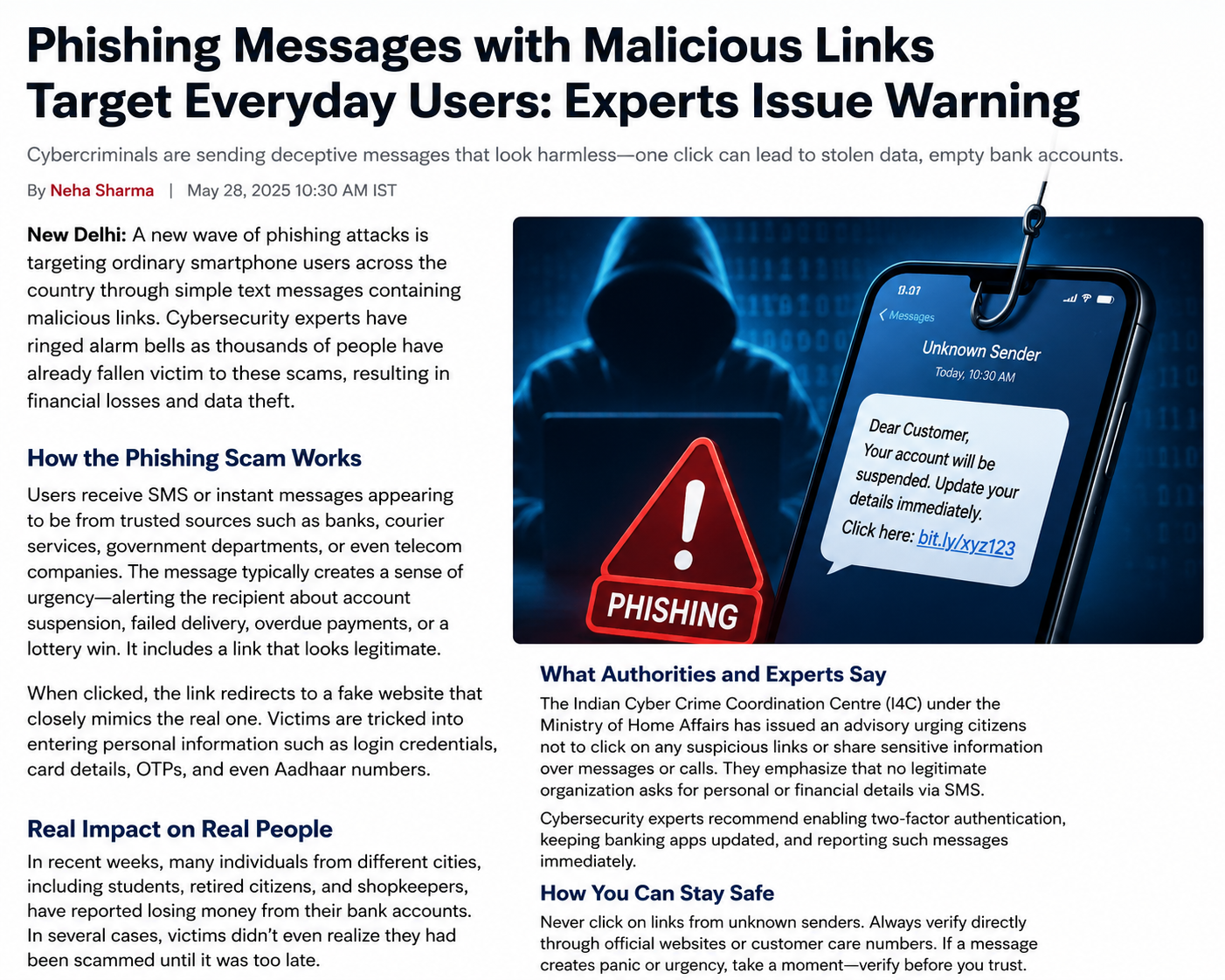
Cybersecurity experts are warning mobile users about a growing number of phishing scams involving fake messages and malicious links circulated through SMS, WhatsApp, email, and social media platforms. These scams are designed to steal banking credentials, personal information, and one-time passwords (OTPs) by tricking users into visiting fraudulent websites that appear legitimate.
Security analysts say scammers are increasingly impersonating banks, courier companies, telecom providers, and government agencies to gain the trust of unsuspecting users. Authorities have advised citizens to remain cautious while opening links received through unsolicited messages.
How the Phishing Scam Works
Most phishing scams begin with messages designed to create urgency or fear. Victims may receive alerts claiming their bank account will be blocked, a courier delivery has failed, or KYC verification is pending. These messages usually contain clickable links that redirect users to fake websites resembling official platforms.
Once users enter sensitive information such as debit card details, passwords, Aadhaar numbers, or OTPs, cybercriminals can misuse the information to gain unauthorized access to bank accounts or digital wallets.
Cybersecurity experts also warn that some malicious links may install harmful software on smartphones, potentially allowing attackers to monitor activity or access stored personal data.
Ordinary Users Becoming Major Targets
Experts note that phishing attacks are no longer limited to large corporations. Students, senior citizens, office workers, freelancers, and small business owners are increasingly being targeted because attackers believe everyday users may be less familiar with identifying digital fraud.
Scammers often exploit emotional reactions by creating panic or urgency. Fake reward notifications, account suspension warnings, and tax refund messages are among the common tactics used to pressure users into acting quickly without verification.
Financial Risks and Data Theft
Victims of phishing scams may face unauthorized financial transactions, identity theft, and loss of access to digital accounts. In several cases, users reportedly discovered suspicious activity only after receiving banking alerts or noticing unauthorized withdrawals.
Banks and digital payment platforms continue to advise customers never to share passwords, PINs, or OTPs through links received via text messages, calls, or social media platforms.
Safety Measures Recommended by Experts
Cybersecurity agencies have urged the public to verify website addresses carefully before entering sensitive information. Experts recommend avoiding unknown links, enabling two-factor authentication, and keeping mobile devices updated with the latest security protections.
Users are also advised to install trusted antivirus software and immediately report suspicious activity to banks or cybercrime authorities if fraud is suspected.
Growing Concern Over Digital Fraud
The increase in phishing scams highlights the broader challenge of cybersecurity in an increasingly digital world. Experts believe public awareness remains one of the strongest defenses against online fraud, as many phishing attacks rely on human error rather than technical vulnerabilities.
Authorities and cybersecurity professionals are expected to continue awareness campaigns to help users identify online scams and protect themselves from digital threats.