PM Modi Promises Uniform Civil Code in Bengal, Mamata Banerjee Calls It a Threat to Faith
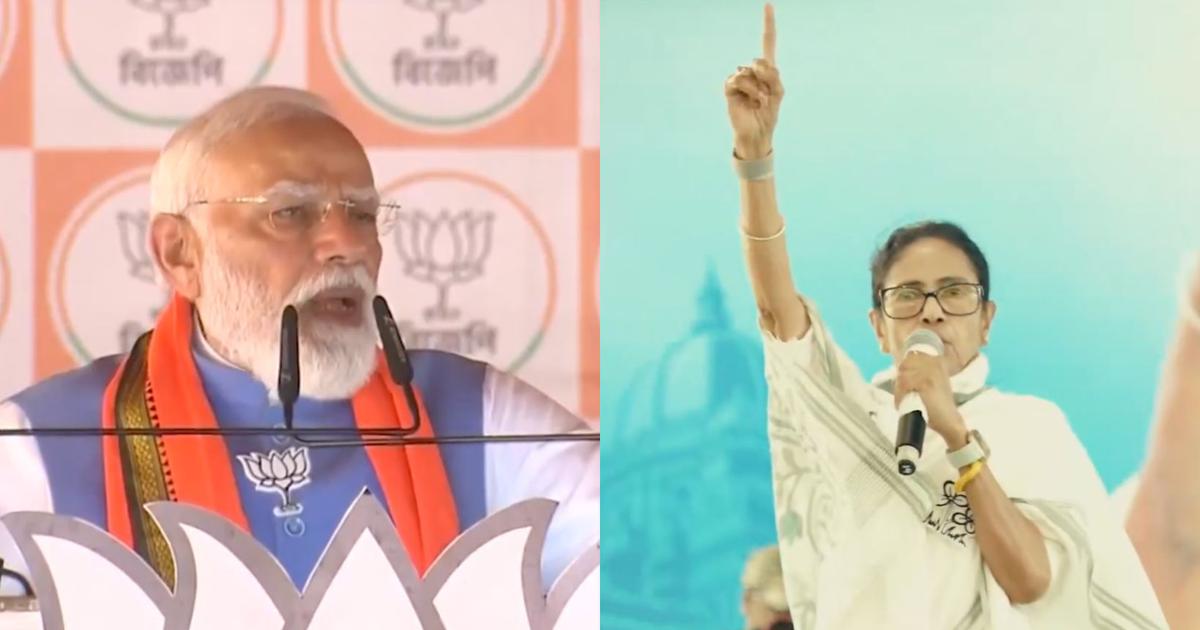
In a significant political move, Prime Minister Narendra Modi declared on Saturday that the Bharatiya Janata Party (BJP) would push for the implementation of a Uniform Civil Code (UCC) in West Bengal. Modi emphasized that this initiative is aimed at putting an end to what he described as the “politics of appeasement” prevalent in the state. His comments came just a day after Union Home Minister Amit Shah promised that the UCC would be established in West Bengal within six months, should the BJP secure victory in the upcoming elections.
The UCC is envisioned as a set of common laws governing marriage, divorce, inheritance, and adoption that would apply uniformly to all citizens, irrespective of their religious or tribal affiliations. Currently, personal laws vary significantly across different communities, often based on religious texts, which can lead to discrepancies in legal rights and protections.
Notably, the BJP has long advocated for the introduction of a UCC, positioning it as a means to ensure equality among citizens. In recent years, several BJP-led states have made strides towards this objective. Uttarakhand was the first Indian state to implement a UCC in January 2025 after independence, while Gujarat’s Assembly passed a similar legislation on March 24, despite facing strong opposition protests. Goa has had a common civil code since the Portuguese Civil Code was adopted in 1867, serving as a long-standing example of UCC in practice.
However, the announcement has drawn sharp criticism from West Bengal Chief Minister Mamata Banerjee. She labeled the BJP’s manifesto, which includes the proposal for a UCC, as “dangerous.” Banerjee warned that enforcing a uniform code could infringe upon the fundamental rights of individuals to practice their religions freely, thus sparking fears of communal tensions in a state known for its cultural diversity.
As the political landscape intensifies ahead of the elections, the debate around the UCC is likely to become a focal point in campaign rallies and discussions. Advocates argue that the UCC would promote gender equality and modernize outdated practices, while opponents caution against the potential erosion of religious freedoms. With both major parties firmly entrenched in their positions, the discourse surrounding the UCC in West Bengal is set to shape the future of communal harmony and legal uniformity in the state.