The term SIR in the context of West Bengal’s 2026 elections refers to the Special Intensive Revision of electoral rolls. Conducted by the Election Commission of India (ECI), this exercise has become one of the most significant and controversial administrative actions ahead of the 2026 Assembly polls.
The primary goal of the SIR was to “clean” the voter list of duplicates, deceased individuals, and “shifted” voters. However, the scale and speed of the deletions have created a political firestorm.
Key Data: The Scale of the Revision
According to data released by the Chief Electoral Officer (CEO) of West Bengal and updates from the Supreme Court hearings in early April 2026:
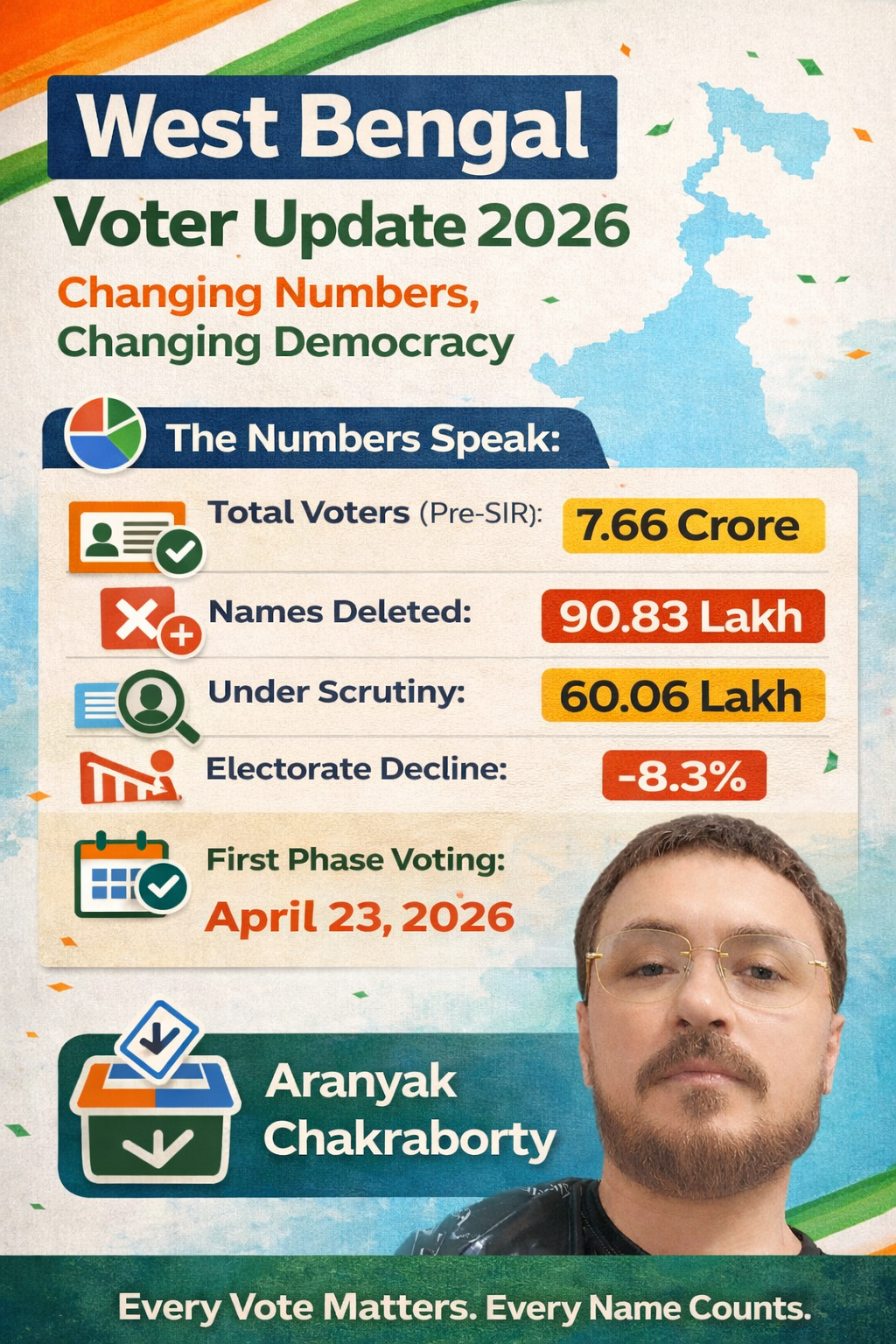
Total Deletions: Approximately 90.83 lakh (9.1 million) names have been removed from the electoral rolls since the process began in November 2025.
Voter Base Shrinkage: The electorate dropped from roughly 7.66 crore to approximately 7.04 crore—a decline of nearly 8%.
Adjudication Status: As of late February 2026, over 60.06 lakh voters were placed in the “under adjudication” category (meaning their eligibility was being questioned).
Final Scrutiny: After judicial review, roughly 27.16 lakh of those under adjudication were permanently deleted, while 32.68 lakh were restored to the final rolls.
Political and Electoral Effects
The SIR has fundamentally shifted the pre-election landscape in West Bengal. Its impact can be categorized into three major areas:
1. Disproportionate Impact on Key Demographics
Analysis of the draft rolls suggests that the deletions have been particularly high in border districts and areas with high minority populations. Reports indicate a significant number of exclusions in districts like Murshidabad, Malda, and North 24 Parganas.
Effect: This has led to allegations of “voter suppression” by the ruling Trinamool Congress (TMC), who argue that their primary vote bank is being targeted.
2. Legal and Administrative Deadlock
The 2026 revision was unique due to its opacity and digitization. For the first time, automated software tools were used to flag “voters of concern.”
Supreme Court Intervention: Chief Minister Mamata Banerjee challenged the SIR in the Supreme Court, citing that legitimate citizens (including war veterans) were being marked as “doubtful.”
Status of Rolls: The electoral rolls for the first phase of polling (scheduled for April 23, 2026) were officially frozen on April 9, meaning millions who were unable to resolve their “adjudication” status in time will be unable to vote.
3. Polarization and Campaign Narrative
The SIR has replaced traditional development issues as a central campaign theme:
The TMC Narrative: The party has framed the SIR as a precursor to the NRC (National Register of Citizens), using it to galvanize the minority and rural vote against the Central Government.
The BJP Narrative: The opposition BJP maintains that the SIR was a necessary step to remove “illegal immigrants” and “ghost voters” who they claim have long skewed West Bengal’s democratic process.
Note: The “List stands frozen” as of April 2026. Any further changes to these rolls now depend entirely on pending directions from the Supreme Court, which is scheduled for further hearings mid-April.
Aranyak Chakraborty