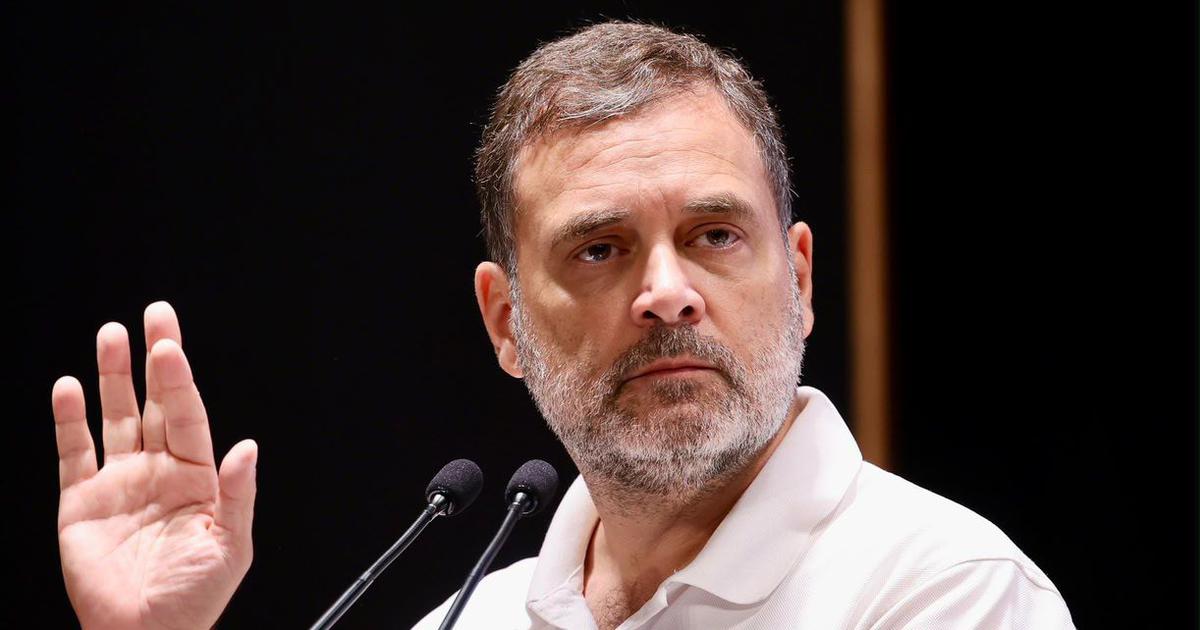
Congress leader Rahul Gandhi made a bold statement on Wednesday, asserting that Prime Minister Narendra Modi will no longer hold the position of prime minister within the next year. Speaking at an event organized by the Adivasi Congress in New Delhi, Gandhi claimed that the political structure once dominated by Modi is now experiencing significant internal turmoil and is on the verge of collapse.
Gandhi expressed concerns over what he termed an impending “economic tsunami,” which he believes will devastate the Indian economy. He attributed this impending crisis to the Bharatiya Janata Party (BJP) dismantling essential economic protections that had previously safeguarded the country from global uncertainties. “The safeguards that served as a shock absorber from the international economic fluctuations have been stripped away by the BJP,” he remarked. He further pointed out that rising prices are indicative of an economic downturn that could lead to unprecedented hardships for the citizens of India.
In addition to economic woes, Gandhi raised alarms about an “institutional revolt” brewing within the country. He claimed that key institutions such as the Election Commission have been tightly controlled by the current government for the past three years. Referring to communications he allegedly received from the Chief Election Commissioner, members of the intelligence community, and senior judiciary officials, Gandhi suggested that there is growing discontent among these entities regarding the BJP’s governance. “They are reaching out to us, indicating a revolt against the current regime,” he stated.
Gandhi emphasized that the erosion of the control system is becoming evident as officials recognize that the public’s growing dissatisfaction could pose a significant threat to their positions. He articulated a sense of urgency, stating, “If the public perceives that the electoral process is compromised, they will not stand idle. The consequences for us could be dire.” This statement resonates with a broader discourse around the integrity of India’s democratic processes, particularly as the country approaches crucial elections.
As the political landscape continues to evolve, Gandhi’s assertions raise critical questions about the future of Modi’s leadership and the BJP’s grip on power. With economic pressures mounting and institutional integrity under scrutiny, the coming months could prove pivotal for both the ruling party and the opposition. As India prepares for potential changes, the citizens will be keenly observing how these developments unfold.