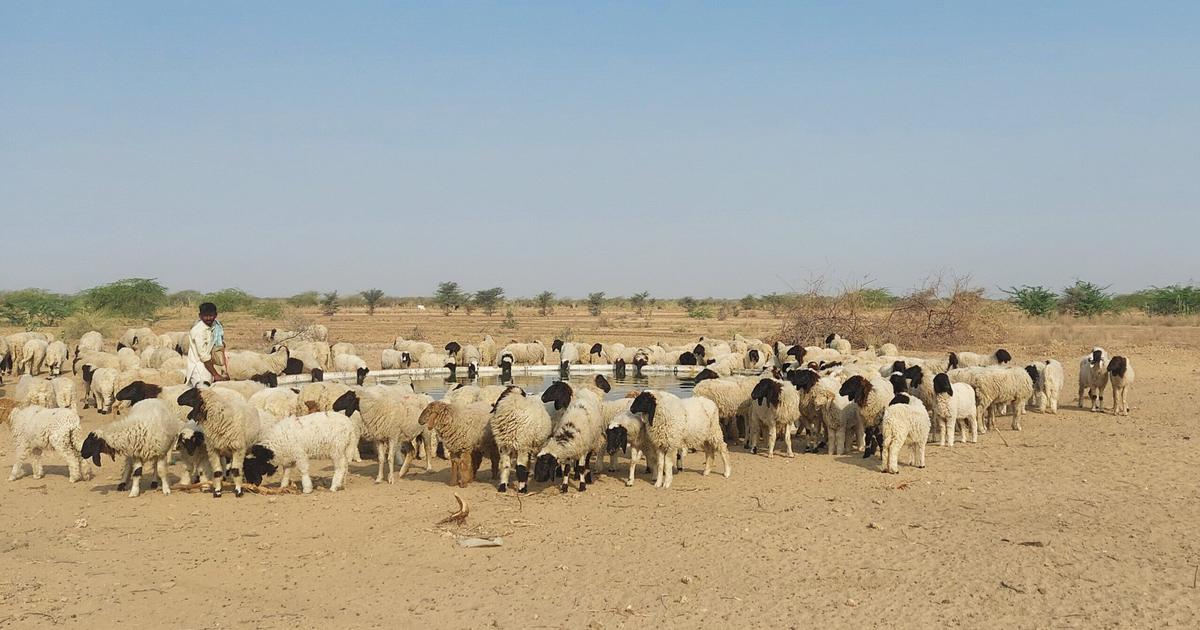
On February 27, a serene scene unfolded at the Biprasar pond in Jaisalmer district, Rajasthan, where a herd of cows sipped water while sheep grazed nearby and camels rested peacefully. This pond, a crucial lifeline for local wildlife and residents alike, holds water that has been accumulating for two years due to scant rainfall. Lal Singh, a local farmer, expressed his concerns about a proposed 400 MW solar energy project that threatens this vital catchment area. “Where will all these animals go? How will we survive without water?” he lamented, his voice reflecting the anxiety of his community.
The residents of Ramgarh village, nestled in one of India’s most arid regions, are deeply connected to their environment. With an annual rainfall average of merely 100 mm, spread over just a handful of days, water conservation is not just a practice but a way of life. Villagers employ traditional techniques to harvest this precious resource, relying on ponds, wells, and khadeens—an ancient method of storing water. Their knowledge of the desert ecosystem is not merely academic; it is interwoven with their cultural identity and survival.
As the demand for solar energy escalates in India’s push towards renewable sources, local communities find themselves in a precarious position. The installation of large solar parks threatens not only their water resources but also the sacred groves, known as orans, and grazing lands—gochars—that have supported their livestock for generations. These groves are integral to the desert ecology, providing habitat for diverse flora and fauna, and are revered by the villagers for their spiritual significance.
In response to the looming threat of solar energy projects encroaching upon their sacred lands, residents have taken to the streets in protest. Their march symbolizes a fight not just for their immediate needs but for the preservation of their cultural heritage. Activists and villagers alike are advocating for a balance between renewable energy development and environmental sustainability. They believe that while solar energy is essential for a more sustainable future, it should not come at the cost of their water sources and ecological sanctuaries.
This unique confrontation highlights a broader challenge faced across India: the need to harmonize development with environmental stewardship. As the country advances towards a greener future, it must also ensure that the rights and traditions of local communities are respected. The villagers of Ramgarh are a testament to the resilience of rural India, as they seek to protect their ancestral lands and the delicate ecosystems that sustain them.