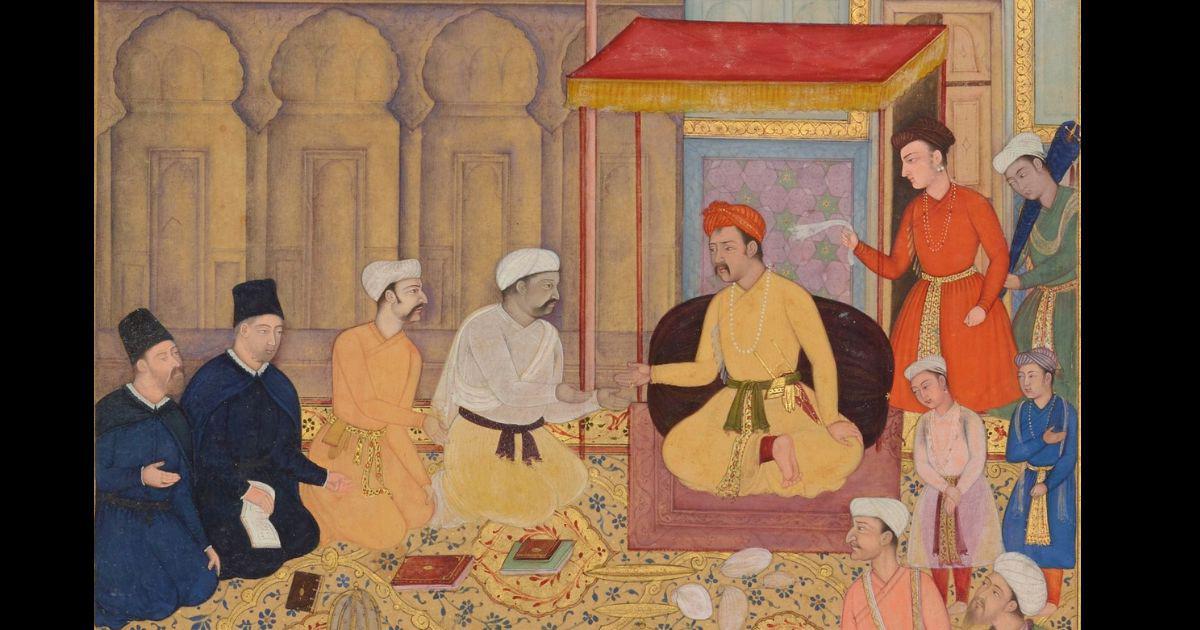
The legacy of Akbar, the illustrious Mughal emperor, has become a focal point in the ongoing discourse surrounding India’s historical narrative, particularly in the context of contemporary politics. In recent years, there has been an increasing tendency among certain groups, especially those aligned with Hindutva sentiments, to reinterpret the Mughal era as a time marked solely by religious oppression and cultural alienation. This perspective often frames Akbar in two contrasting lights: as a shrewd political strategist whose gestures of tolerance were merely a façade for his imperial ambitions, or as an anomaly among Muslim rulers, whose policies are used to illustrate the supposed intolerance of his contemporaries.
Among those contributing to this re-evaluation is Vikram Sampath, whose critiques have reignited debates regarding the authenticity of Akbar’s inclusivity. Drawing from a long-standing tradition of skeptical historical analysis, Sampath and similar commentators posit that Akbar’s policies were primarily aimed at consolidating power rather than stemming from a genuine vision for governance. This viewpoint has gained significant traction in public discussions, especially following Sampath’s appearances on popular media platforms.
Nevertheless, these interpretations often oversimplify a much richer historical narrative. While it is undeniable that Akbar was a formidable empire builder, it is equally important to recognize that many successful rulers throughout history have made politically motivated decisions. The crux of the debate lies not in whether Akbar’s governance was politically driven but in understanding the nature and impact of those policies.
Akbar’s reign from 1556 to 1605 was characterized by a remarkable blend of military prowess and diplomatic acumen, allowing him to not only expand the Mughal Empire but also to foster a climate of relative religious tolerance. He implemented a range of policies aimed at integrating diverse communities, including the introduction of the Din-i Ilahi, a syncretic religion intended to bridge the gap between Hinduism and Islam. Such initiatives illustrate his recognition of the pluralistic nature of his empire, which encompassed various faiths and cultures.
It is crucial to contextualize Akbar’s policies within the framework of his time. His approach to governance cannot be dismissed as merely self-serving; rather, it reflects a pragmatic acknowledgment of the necessity for social cohesion in a vast and diverse empire. While criticism of his policies can be valid, it is essential to engage with them in a manner that recognizes their historical significance and complexity. In doing so, we can cultivate a more nuanced understanding of Akbar not just as a ruler, but as a key figure in the tapestry of Indian history.