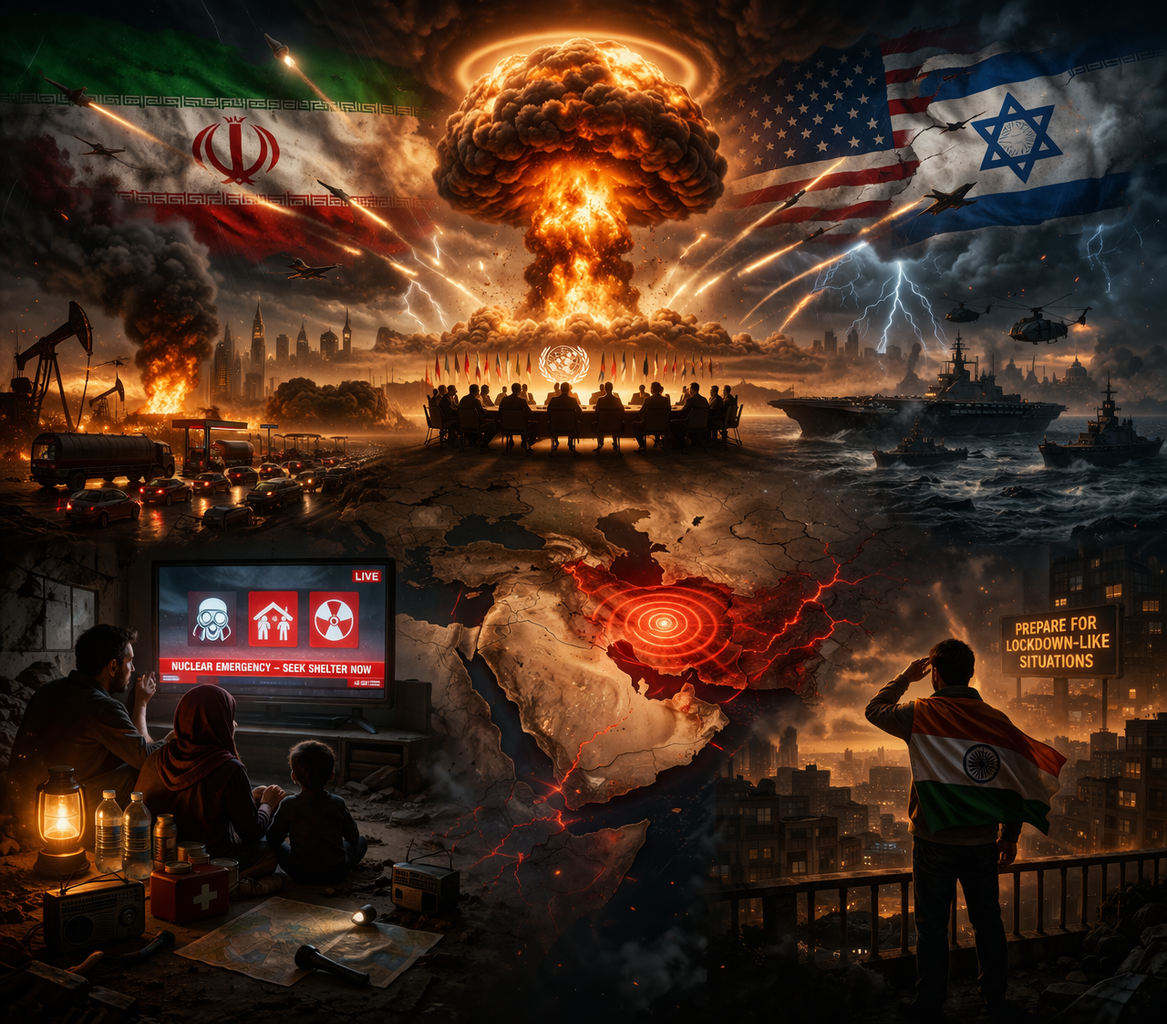
The rapidly escalating Iran–US–Israel conflict is once again dominating global headlines, raising serious concerns about a potential large-scale war. Over the past few days, international developments—from emergency broadcasts in the Middle East to urgent meetings among world leaders—have intensified speculation about what could come next. While no official declaration of war has been made, the situation is evolving quickly, and the world is watching closely.
Middle East Media Signals Heightened Alert
Television channels in several Middle Eastern countries have reportedly begun airing guidance on how civilians should respond in the event of a nuclear emergency. Such broadcasts, though precautionary in nature, have triggered widespread concern among the public. These advisories include basic survival instructions, signaling that governments may be preparing citizens for worst-case scenarios.
While authorities have not confirmed any imminent nuclear threat, the tone and urgency of these messages suggest a heightened level of alert. Analysts believe that even if these are preventive steps, they reflect the seriousness of the current geopolitical climate.
Global Leaders Step In with Urgent Diplomacy
Amid rising tensions, world leaders are actively scheduling high-level meetings to assess the situation and explore diplomatic solutions. Emergency discussions are reportedly taking place across multiple international platforms, with a clear focus on preventing further escalation.
India has also entered the conversation, with Prime Minister Narendra Modi making notable remarks about the situation. He emphasized preparedness and hinted at the possibility of disruptions similar to lockdown-like conditions if global instability increases. His statement underscores the far-reaching impact such a conflict could have—not just regionally, but worldwide.
Economic Strain Visible in Cuba’s Energy Crisis
Interestingly, the ripple effects of global instability are already being observed in regions far from the immediate conflict zone. Cuba is currently facing a severe energy crisis, with reports of prolonged power outages lasting up to 12 hours a day. Fuel shortages have worsened the situation, disrupting daily life and economic activity.
While Cuba’s challenges are influenced by longstanding internal issues, experts suggest that global supply chain disruptions and rising geopolitical tensions may be compounding the crisis. This serves as an early indicator of how interconnected the world economy is—and how quickly conflict can impact distant nations.
Is a Nuclear Strike on Iran Being Considered?
One of the most alarming questions emerging from this situation is whether a nuclear strike on Iran is being contemplated. As of now, there is no official confirmation from any government regarding such plans. However, the increased military readiness, strategic positioning, and media narratives have fueled speculation.
Defense experts caution against jumping to conclusions, noting that nuclear engagement would have catastrophic consequences not just for the region but for the entire world. The presence of nuclear capabilities among global powers makes any escalation particularly dangerous, but diplomatic channels remain open.
Background: A Long-Standing Conflict Reignited
The tensions between United States, Israel, and Iran are not new. Decades of political disagreements, military confrontations, and ideological differences have shaped a fragile and often volatile relationship.
Recent developments appear to have reignited these tensions, with both sides increasing their military and strategic readiness. The involvement of multiple global players has added complexity, turning a regional conflict into a matter of international concern.
What This Means for the World
The potential escalation of the Iran–US–Israel conflict carries significant implications. From disruptions in oil supply chains to global market instability and security threats, the impact could be widespread. Countries around the world are closely monitoring the situation, preparing contingency plans to safeguard their economies and citizens.
Public concern is also rising, fueled by media coverage and official statements. Governments are urging calm while simultaneously increasing their preparedness levels, reflecting a delicate balance between caution and control.
What’s Next?
As diplomatic efforts continue, the coming days will be critical in determining the direction of this crisis. Whether tensions de-escalate through negotiations or intensify further will depend largely on the decisions made behind closed doors in these high-level meetings.
For now, there is no confirmed nuclear action, but the global atmosphere remains tense. The focus remains on preventing escalation and maintaining stability in an increasingly uncertain world.
Conclusion
The Iran–US–Israel conflict has entered a sensitive phase, with global attention fixed on every development. While fears of nuclear war are growing, there is still room for diplomacy to prevail. The world now waits, hoping that dialogue will triumph over destruction.