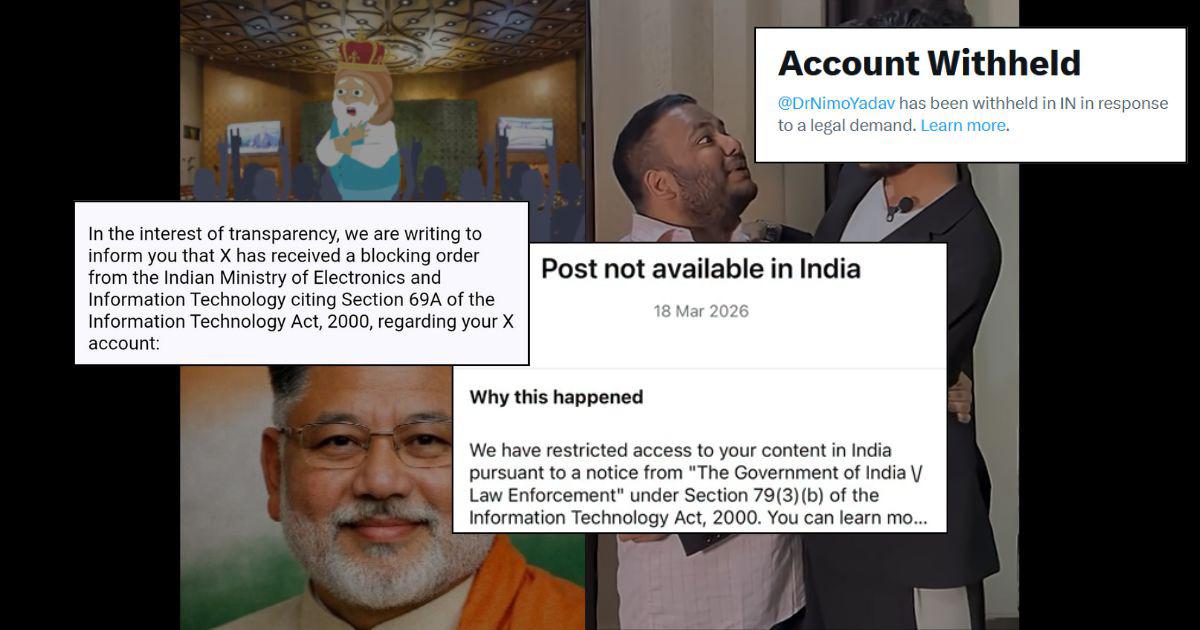
In an era where social media shapes public discourse, the influence of humor in politics has emerged as a potent tool, especially in India. A recent video by comedian Pulkit Mani ridiculing Prime Minister Narendra Modi’s interactions with global leaders amassed 16 million views on Instagram before being removed on government orders. This incident sparked a conversation about the freedom of expression and the government’s attempt to control public sentiment through digital censorship.
Following the removal of Mani’s video, popular YouTuber Dhruv Rathee swiftly reposted it on his channel. With a preamble that highlighted the disparity in treatment between praise and criticism of the Prime Minister, Rathee’s clip soon garnered over 36 million views. He remarked, “If you praise Modi, they will ensure your films get major screenings, but if you depict his reality, even in a comedic light, they will act swiftly to erase your voice.” This statement resonates with many netizens who feel stifled by the current political climate.
Over recent weeks, a notable increase in memes, videos, and cartoons has targeted Prime Minister Modi, particularly mocking his personal style of foreign policy. Critics argue that this approach, which often centers on Modi himself rather than collective diplomatic efforts, has left room for satire that resonates with the public. However, in response, the government has reportedly issued numerous takedown notices, silencing critics by invoking the Information Technology Act of 2000. These notices often lack clear justification and deny users the opportunity to contest the removal of their content, leading to accusations of arbitrary censorship.
Legal experts have raised alarms about the implications of such censorship, warning that it undermines democratic principles. The arbitrary nature of these takedown requests has sparked a debate about the balance between national security, public decorum, and freedom of speech. The growing anger among the populace is palpable as citizens increasingly turn to satire as a means of expressing dissent.
The trend of using humor to critique the Prime Minister is not confined to a few individuals. It has extended to a broader spectrum, including cartoonists, journalists, and content creators who feel empowered to speak truth to power through the medium of satire. In a country rich with diverse opinions and artistic expression, the struggle for humor as a form of political commentary continues to gain momentum.