Small in Number, Strong in Will: The Political Lesson from Tripura’s Manipuris/Meeteis
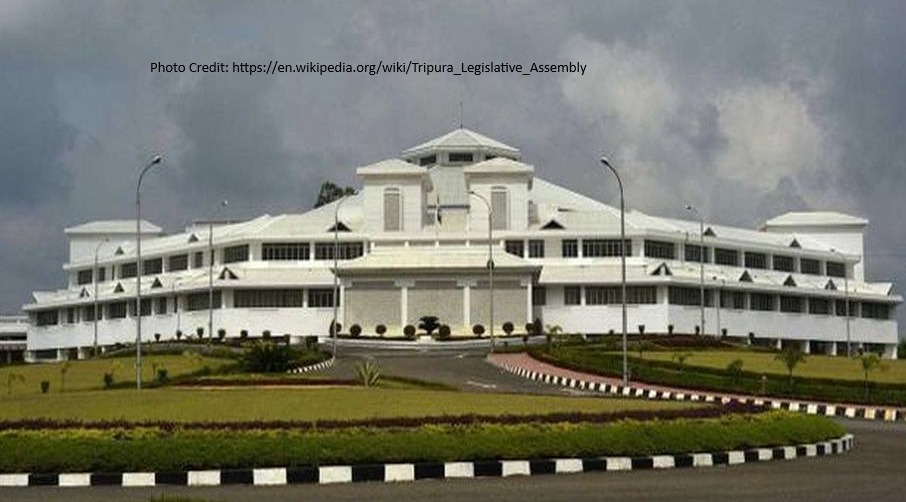
Small in Number, Strong in Will: The Political Lesson from Tripura’s Manipuris/Meeteis
By Meitram Bijen
The political experience of Manipuris/Meeteis in Tripura offers a powerful lesson in participation, resilience, and leadership for the Manipuris/Meeteis of Assam. For the Manipuri/Meetee community in Assam, it is time to move beyond limiting narratives and actively claim democratic space.
The political journey of Manipuris/Meeteis in Tripura offers an important lesson for the Manipuri/Meetee community in Assam. It is a story of participation, persistence, and strategic engagement with democratic institutions—something that deserves both recognition and reflection.
As highlighted by Rajkumar Tarunjit, Editor of Marup (a Manipuri newspaper) in Agartala, “several Manipuri/Meetei-origin leaders have played defining roles in shaping Tripura’s political landscape. Rajkumar Kamaljit Singh served as an MLA from 1963 to 1971, even before Tripura attained full statehood in 1972. His participation during the Union Territory phase shows that Manipuri/Meetei political engagement does not wait for perfect conditions—it begins with presence and commitment.Similarly, Soraijam Kamini Kumar Thakur represented the Khowai constituency during the transformative political phase of the late 1970s, particularly around the 1977 elections. This period demonstrated how Manipuris/Meeteis can assert their voice during times of change”.
The example of Yelam Birajit Sinha is even more instructive for Manipuris/Meeteis. First elected in 1988 from Kailashahar, he went on to become one of the longest-serving political figures in the region. Longevity in Manipuris/Meeteis political life is built on sustained public trust and consistent engagement.
Equally noteworthy is Dr. R.K Prafullajit Sinha, who became the first Mayor of the Agartala Municipal Corporation after serving as Chairperson of the Municipal Council. His journey reflects how Manipuris/Meeteis leadership evolves from grassroots governance to higher responsibilities.
These examples collectively underline a crucial point for Manipuris/Meeteis: political empowerment comes through participation, unity, and long-term vision.
However, a concerning narrative has recently emerged within sections of the Manipuri/Meetei community in Assam, particularly during election campaigns. It is often said that “Manipuris/Meeteis in Assam are too few in number to compete in elections, and therefore must remain submissive to prevailing political waves.”
Such messaging is deeply problematic.
This kind of defeatist and manipulative ideology risks damaging the confidence of young and capable Manipuris/Meeteis who have the potential to become strong leaders. It discourages political participation and creates a psychological barrier that prevents Manipuris/Meeteis from aspiring to representation in the Assam Legislative Assembly.
A Manipuri/Meetei community’s strength is not determined solely by numbers, but by its unity, clarity of vision, and willingness to engage. History has shown that even smaller communities can achieve significant political influence when they organize effectively and believe in their collective potential.
As Hijam Rajen, Socio-political activist, Delhi, sharply questioned:
“Is Dispur out of bounds for Meetei? Why are Meeteis of Assam not part of the ‘126’ political space? Who has barred Meeteis from the Dispur Assembly?”
He further explains that “quid pro quo,” a Latin phrase meaning “something for something” or a favor in return for a favor, often shapes political behaviour in subtle ways. Such a system, when misused, can manipulate the minds of Manipuris/Meetees and discourage independent political assertion. Falling into such a trap may gradually alienate Manipuris/Meeteis from meaningful participation in the Assam Legislative Assembly.
His observation on so-called “hyper democratic” practices further exposes how democracy, when misunderstood or selectively applied, can become restrictive rather than empowering.
Therefore, it is essential for Manipuris/Meeteis in Assam to consciously reject such limiting beliefs and manipulative narratives. Manipuris/Meetees must stay away from any mindset that weakens their confidence or discourages active participation in politics.
The experience of Manipuris/Meeteis in Tripura clearly demonstrates that political space is not handed over—it is earned through persistence, courage, and engagement.
The message is clear:
Manipuris/Meetees must not withdraw— Manipuris/Meeteis must participate.
Only through active involvement can Manipuris/Meeteis in Assam aspire to meaningful representation and contribute not only to the state but to the nation as a whole.
Meitram Bijen
Social Worker
Dargarband, Dullabcherra,
Sribhumi, Assam,