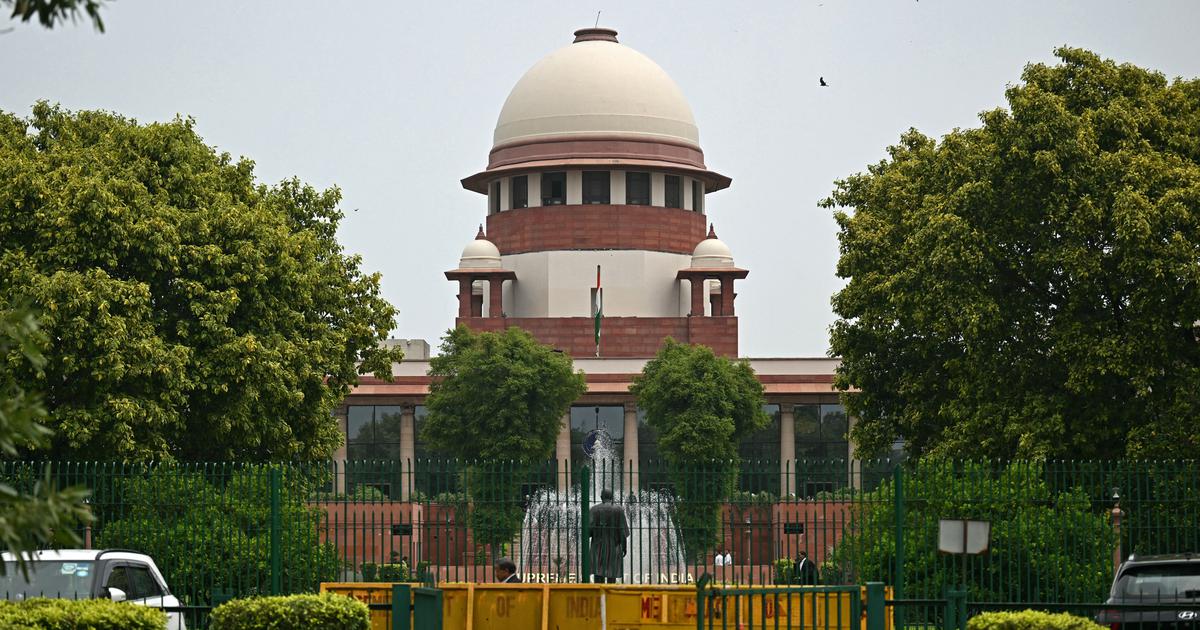
In a significant ruling on Friday, the Supreme Court of India clarified that the right to vote and the right to contest elections do not qualify as fundamental rights under the Constitution. This statement emerged from a bench consisting of Justices B.V. Nagarathna and R. Mahadevan while adjudicating a case concerning election regulations for the District Milk Producers’ Co-operative Unions in Rajasthan.
The court’s ruling came in response to a petition that challenged certain bye-laws established by the cooperative unions, which mandated specific qualifications for individuals aspiring to contest elections for the board of directors. Previously, the Rajasthan High Court had termed these provisions as ultra vires, which means beyond the legal powers, leading to the petitioners seeking justice from the Supreme Court.
Upon reviewing the matter, the Supreme Court overturned the High Court’s decision, emphasizing that both the right to vote and the right to contest are fundamentally distinct and governed by statutory provisions. The bench underscored that these rights are contingent on the laws enacted by the legislature, thus lacking the status of fundamental rights that are deeply ingrained in the Indian Constitution.
In its judgment, the Supreme Court referenced several earlier rulings that established the nature of these rights as purely statutory. The judges articulated that while the right to vote empowers individuals to exercise their electoral franchise, the right to contest an election is subject to strict qualifications, disqualifications, and institutional requirements set forth by the governing laws.
The implications of this ruling are significant, as it reaffirms the legal framework governing elections in India, particularly within cooperative institutions. It also underscores the importance of adhering to statutory regulations which dictate the eligibility and conditions under which individuals can run for election.
This decision may spark discussions on electoral rights in India, as it highlights the nuanced legal landscape surrounding voting and candidacy. As the democratic fabric of the nation continues to evolve, such clarifications from the Apex Court serve as vital reminders of the need to understand the boundaries of electoral rights within the framework of Indian law.