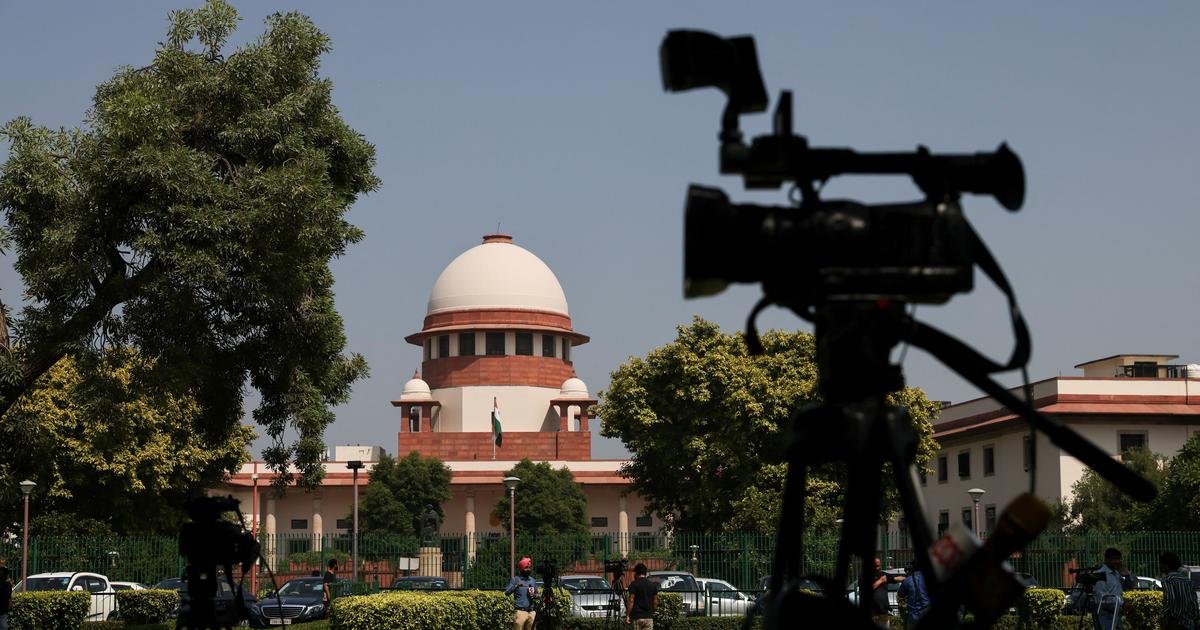
The Supreme Court of India has dismissed a petition that questioned a government directive mandating the playing and singing of all six stanzas of the patriotic song ‘Vande Mataram’ during official and public events. The ruling was delivered by a bench consisting of Chief Justice Surya Kant, Justice Joymalya Bagchi, and Justice Vipul Pancholi on Wednesday.
The legal dispute originated from a writ petition filed by Muhammed Sayeed Noori, who heads an academic institution. Noori challenged a circular issued by the Ministry of Home Affairs on January 28, which specified that all six stanzas of ‘Vande Mataram’ should precede the national anthem, ‘Jana Gana Mana,’ during public functions. Historically, only the first two stanzas of the song were performed at official events, with the remaining verses—invoking Hindu deities like Durga, Lakshmi, and Saraswati—often omitted.
Noori’s counsel argued that the government directive, while lacking formal penalties, could create societal pressure to conform, potentially leading to discrimination against those who do not participate. The lawyer suggested that this could result in individuals from various religious backgrounds, including atheists, feeling compelled to sing the song as a means of demonstrating loyalty to the nation. The assertion was made that patriotism should not be a matter of coercion.
In its judgment, the Supreme Court deemed the petition to be “premature” and based on “vague apprehensions.” The bench observed that the advisory itself did not impose any penalties or direct consequences, thus questioning the validity of the fears expressed by the petitioner. The court underscored that the advisory seeks to promote national spirit rather than enforce compliance through intimidation or societal ostracism.
This legal confrontation reflects ongoing debates in India regarding national identity, cultural expressions, and the balancing act between patriotic sentiment and individual freedoms. ‘Vande Mataram’, composed by Bankim Chandra Chatterjee in the late 19th century and later set to music by Rabindranath Tagore, is a symbol of India’s independence struggle and continues to evoke strong feelings across the nation. The song’s full rendition may resonate with many as a cultural heritage, but its mandatory performance raises questions about inclusivity in a diverse society.
As the nation grapples with these complex dynamics, the Supreme Court’s ruling reinforces the notion that while patriotism is celebrated, it cannot be legislated or coerced. This case serves as a significant touchpoint in the ongoing dialogue about how India navigates its rich tapestry of cultures and identities within the framework of nationalism.