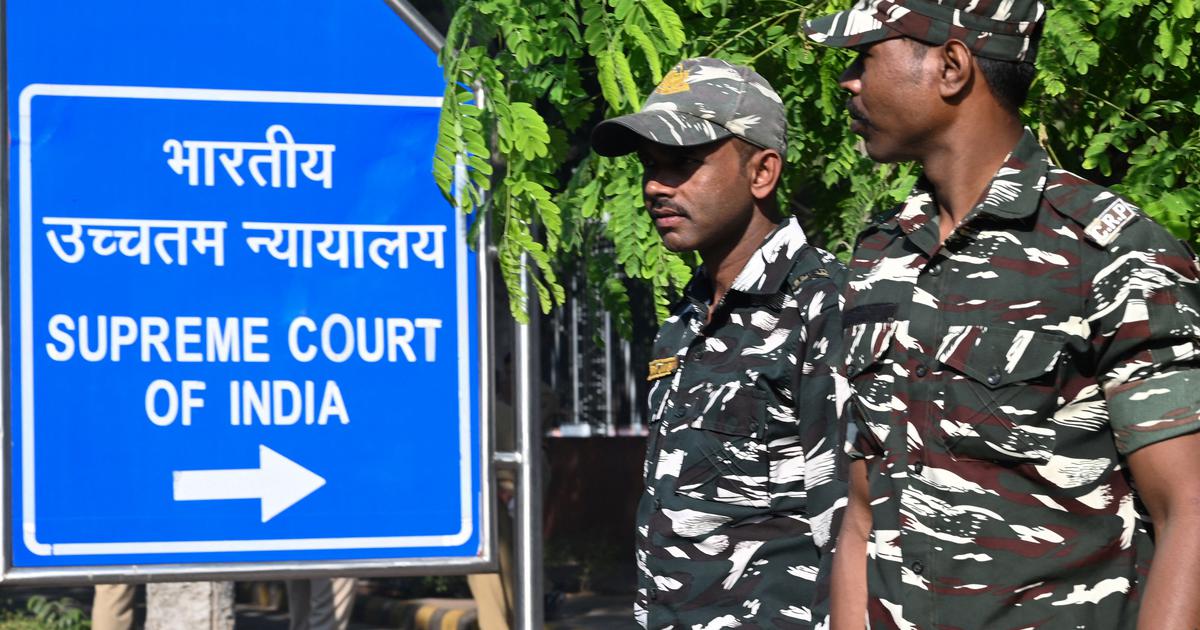
The Supreme Court of India has intervened to halt the deportation of four women who were recently labeled as foreigners by tribunals in Assam. This decision, made on Friday, has generated significant attention, particularly in light of the ongoing discussions surrounding citizenship and the legal framework governing such determinations in the northeastern state.
The apex court has issued notices to the Union government, the Assam state government, and the Election Commission, requiring them to respond to the petitions filed by the affected individuals within a month. Among those challenging their foreigner status is Saleha Khatun, who has been held at the Goalpara detention facility since March 2. The 50-year-old woman claims that a tribunal in Darrang had ruled her a foreigner, a decision that was subsequently upheld by the Gauhati High Court.
Foreigners tribunals in Assam serve a crucial role as quasi-judicial bodies that make determinations on citizenship based on various criteria, primarily lineage and a cut-off date of 1971. The tribunals rely heavily on the documentation provided by individuals in order to establish their family’s residency in Assam prior to this critical date. However, these tribunals have faced accusations of arbitrariness and bias, often declaring individuals foreigners for minor discrepancies in documentation or memory lapses.
In her plea, Khatun asserts that she had submitted substantial evidence to the tribunal, including documents demonstrating that she is the daughter of Indian citizens who were listed in the voter rolls of Nagabandha village prior to 1971. She has presented additional proof, such as linkage certificates, to substantiate her claim. The complexities of citizenship and the processes involved in proving residency status remain contentious issues in Assam, particularly given the state’s historical context regarding migration and demographic changes.
The Supreme Court’s decision to stay the deportation reflects a growing concern about the handling of citizenship cases in Assam, where many individuals face the prospect of being labeled as foreigners without fair recourse. The ongoing debates around the legality and fairness of the foreigners tribunals are expected to intensify as more cases come to light, prompting calls for reform in the system. The implications of this case are far-reaching, affecting not only the lives of the individuals involved but also the broader discourse on citizenship rights in India.