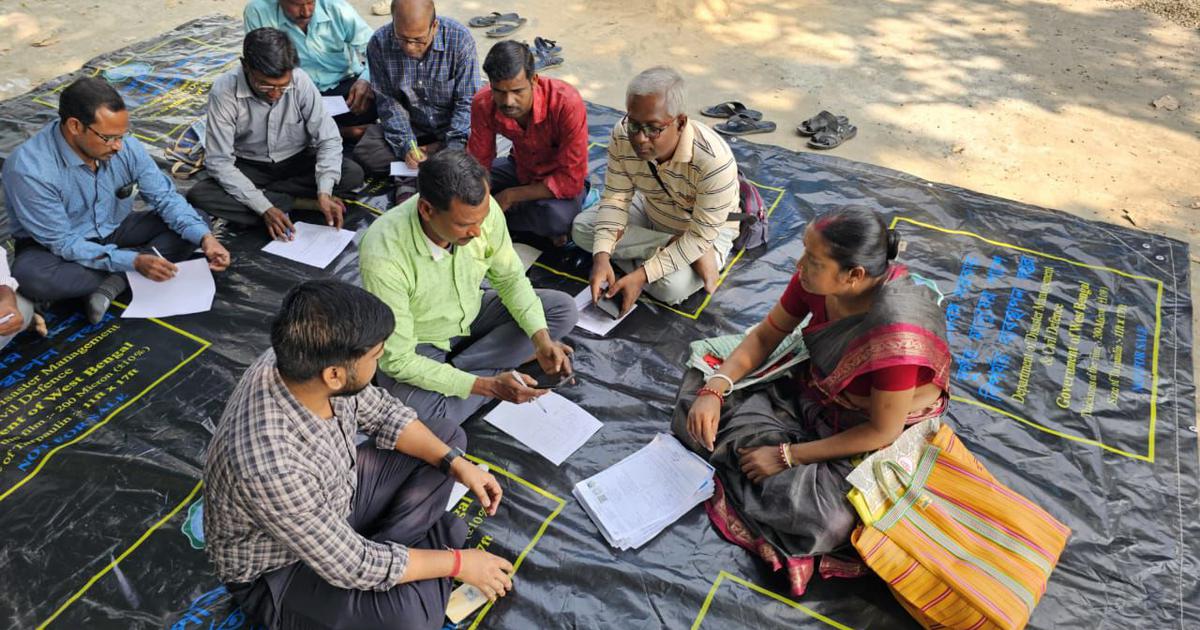
In a significant move aimed at ensuring the safety of judicial officers in West Bengal, the Supreme Court has mandated the deployment of central forces. This directive comes in response to alarming reports of seven judicial officers being gheraoed for several hours by an unruly mob in Malda district. The situation escalated during a special intensive revision of the electoral rolls, where these officers faced protests against alleged mass deletions of voters’ names.
The tense standoff came to an end only after the intervention of the Chief Justice of the Calcutta High Court, who helped secure the release of the officers after midnight. The incident has heightened tensions in the region, with Chief Minister Mamata Banerjee attributing the unrest to the Bharatiya Janata Party (BJP), accusing them of inciting disturbances through financial inducements. She urged the public to remain calm amid the chaos.
Banerjee’s allegations point to a deeper political maneuvering as the state gears up for the upcoming elections. The Trinamool Congress, her party, has explicitly blamed Union Home Minister Amit Shah, asserting that the incident reflects broader issues within the electoral process. These allegations raise questions about the integrity of the voter roll revision process, a mechanism designed to ensure fair participation in the democratic process.
As the controversy unfolds, the potential for millions of voters in Bengal to lose their right to vote looms large—not due to issues of citizenship but rather clerical errors and political machinations. Shoaib Daniyal notes that the implications of such mismanagement could disenfranchise a significant segment of the population, ultimately undermining the democratic framework.
On another political front, the Aam Aadmi Party (AAP) has taken steps to reorganize its leadership in the Rajya Sabha, writing to the Secretariat to recommend the removal of MP Raghav Chadha from his role as deputy leader. The party suggested Ashok Mittal as his successor, marking a shift in strategy as it navigates its political landscape.
These developments come at a time when Indian politics is increasingly polarized, and as the electoral environment grows more complex, the stakes have never been higher for all parties involved. The ongoing scrutiny of the electoral rolls, the deployment of central forces, and the political maneuvering within the Rajya Sabha highlight the critical intersection of law, governance, and civic responsibility in India today.