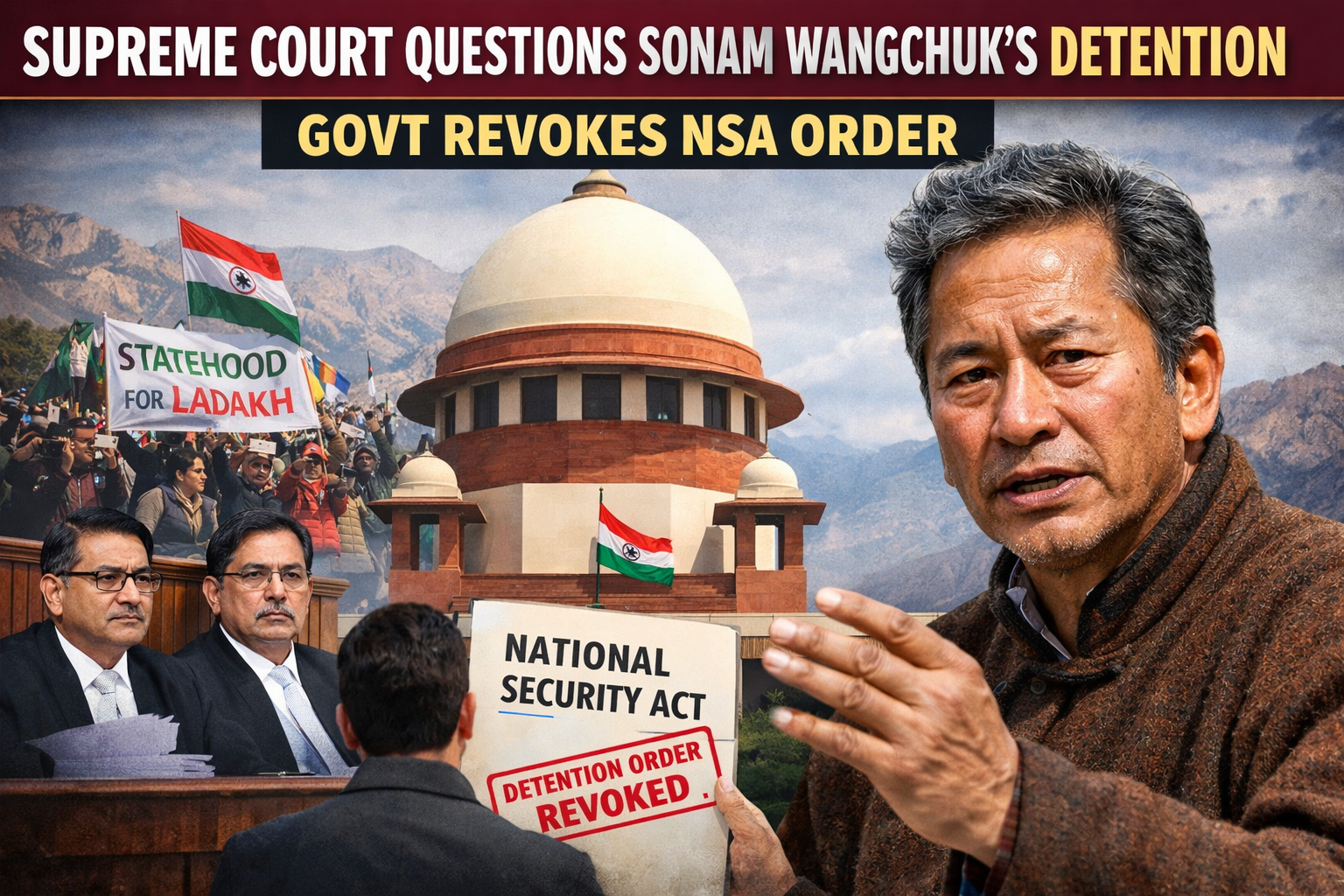
New Delhi: The Supreme Court of India recently examined the controversial detention of Ladakh-based climate activist and innovator Sonam Wangchuk under the National Security Act (NSA), raising several questions about the evidence and interpretation of his speeches during a key hearing.
Wangchuk, widely known for his environmental activism and advocacy for the protection of Ladakh’s fragile ecosystem, had been detained following protests in the Union Territory demanding constitutional safeguards and greater political autonomy.
Petition Challenging the Detention
The case reached the Supreme Court after Wangchuk’s wife filed a habeas corpus petition, challenging the legality of the preventive detention. The petition argued that the activist had not incited violence and that the detention violated his fundamental rights.
During the hearing, the bench sought clarification from the central government on the basis for invoking the stringent National Security Act against the activist.
Court Raises Questions on Speech Interpretation
The Supreme Court closely examined video recordings and transcripts of Wangchuk’s speeches cited by authorities to justify the detention. The judges questioned whether the government had misinterpreted his remarks, suggesting that the statements appeared to caution people against violence rather than provoke unrest.
The bench also expressed concern over inconsistencies in the transcripts submitted by authorities, noting that the translations appeared unusually long compared to the original speech recordings.
Debate Over Judicial Review
During arguments, the government maintained that courts should only examine whether the procedural requirements for preventive detention were followed. However, the court indicated that it must also assess whether the material relied upon by authorities actually justified such a severe measure.
Detention Revoked
While the matter was still under consideration, the Union government revoked the NSA detention order against Wangchuk, leading to his release from custody.
The development effectively brought an end to the immediate legal challenge, though the case sparked a wider debate about the use of preventive detention laws and the protection of free speech in democratic protests.
Wider Implications
The case attracted national attention, with civil society groups and activists arguing that the detention raised concerns about the use of stringent security laws against peaceful protest movements.
Observers say the Supreme Court’s probing questions during the hearing highlighted the need for greater scrutiny when preventive detention laws are invoked, particularly in cases involving political expression and public activism.